Description
Discover the Luminous Skies and Coastal Beauty of France’s Plein Air Pioneer
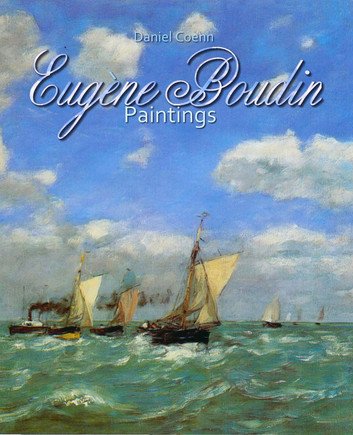
Eugène Boudin Paintings showcases the remarkable works of a French master who revolutionized landscape art in the nineteenth century. This portable digital collection features paintings by an artist who captured light, atmosphere, and coastal life with unprecedented freshness and immediacy.
Moreover, it provides convenient access to the work of Claude Monet’s most influential mentor and teacher. The collection celebrates a painter whose innovative outdoor techniques helped birth the Impressionist movement and transformed European art forever.
Understanding Eugène Boudin Paintings and Their Revolutionary Impact
Eugène Boudin lived from 1824 to 1898 and spent most of his life along France’s Normandy coast. He grew up in the port city of Le Havre, where maritime life shaped his artistic vision profoundly. Furthermore, he worked in his father’s stationery shop before pursuing art seriously in his twenties. His humble origins and self-taught background made his eventual artistic achievements even more remarkable and inspiring.
Boudin became one of the first French landscape painters to work directly from nature outdoors consistently. He rejected studio conventions that dominated academic art and painted en plein air throughout his career. Additionally, he captured fleeting atmospheric effects that could only be observed and recorded in real time. Thus, his commitment to outdoor painting established practices that younger Impressionists would adopt and develop further.
The great landscape painter Camille Corot praised Boudin’s extraordinary ability to depict skies and clouds. Corot called him the “King of the Skies” after seeing his atmospheric coastal paintings firsthand. Moreover, Boudin’s skies demonstrate remarkable variety, capturing different weather conditions, times of day, and seasonal changes. Hence, his technical mastery of atmospheric effects influenced an entire generation of French landscape painters significantly.
Boudin’s Pioneering Plein Air Technique
Boudin embraced plein air painting when most artists still worked exclusively in studios from sketches. He carried his easel, paints, and canvases directly to beaches, harbors, and fields for immediate observation. Furthermore, he painted rapidly to capture changing light and weather before conditions shifted dramatically. This direct approach produced paintings with freshness and spontaneity that studio work could never achieve effectively.
His outdoor painting method required technical adaptations including faster brushwork and simplified compositions for efficiency. He developed a rapid painting style that captured essential visual information without unnecessary detail or elaboration. Moreover, he learned to work in series, returning to favorite locations repeatedly under different conditions. Thus, his working methods anticipated Impressionist practices that would emerge in the 1870s and beyond.
He often painted small oil sketches outdoors that he later used as references for larger works. These pochades captured immediate impressions with remarkable economy and directness of vision and execution. Additionally, many of these small outdoor studies possess complete artistic resolution as independent finished works. Therefore, his plein air sketches demonstrate how outdoor observation could produce fully realized artworks without studio refinement.
The Distinctive Style of Eugène Boudin Paintings
Boudin’s painting style featured loose, fluid brushwork that suggested forms without rigid definition or academic finish. He applied paint in visible strokes that captured the movement of clouds, water, and wind effectively. Furthermore, he used a relatively bright palette that emphasized natural light and atmospheric clarity throughout compositions. Hence, his technical approach differed dramatically from the dark, heavily worked surfaces of conventional academic painting.
His compositions typically featured expansive skies that occupied two-thirds or more of the canvas area. He understood that coastal light and atmosphere created the distinctive character of maritime landscapes fundamentally. Moreover, he rendered clouds with extraordinary variety, showing their volume, movement, and relationship to changing light. Thus, his skies became the true subjects of his paintings rather than mere backgrounds.
He worked rapidly, especially when using pastels, to capture fleeting effects before they disappeared completely. His speed allowed him to record multiple atmospheric conditions during single painting sessions at specific locations. Additionally, his quick execution produced energetic surfaces that convey immediacy and direct observation convincingly. Therefore, his technique perfectly matched his commitment to capturing transient natural phenomena and momentary visual impressions.
Boudin’s Beach Scenes and Fashionable Society
Eugène Boudin Paintings particularly excel at depicting fashionable tourists at Normandy beach resorts during summer seasons. He painted elegant visitors at Trouville, Deauville, and other coastal towns frequented by Parisian society. Moreover, these beach scenes document Second Empire leisure culture with remarkable specificity and sociological insight. Thus, his paintings serve as both artistic achievements and valuable historical records of nineteenth-century French life.
His early beach paintings from the 1860s focused on crowds of tourists enjoying seaside recreation and relaxation. He showed fashionably dressed women with parasols, children playing, and families gathering on sandy shores. Furthermore, he captured the social rituals and leisure activities that characterized bourgeois vacation culture accurately. Hence, these works reveal how modern tourism and beach recreation emerged during France’s industrial transformation.
His later beach scenes from the 1880s and 1890s featured more expansive compositions with fewer figures. He depicted vast stretches of shore with distant silhouettes rather than detailed crowd scenes prominently. Additionally, these mature works emphasized atmospheric effects and the relationship between sea, sky, and land. Therefore, his style evolved toward greater simplification and focus on essential landscape elements over time.
Boudin as Marine Painter and Maritime Observer
Boudin possessed deep knowledge of ships, boats, and maritime life from his coastal upbringing and experience. He depicted vessels with technical accuracy that demonstrated genuine understanding of nautical construction and operation. Furthermore, he showed ships in various conditions including calm harbors and rough seas with convincing realism. Thus, his marine paintings satisfied both artistic and documentary standards for accuracy and visual truth.
His harbor scenes captured the busy commercial activity of French ports including Le Havre and Bordeaux. He painted fishing boats, merchant vessels, and pleasure craft with equal attention and artistic interest. Moreover, he showed how maritime commerce shaped coastal communities and connected France to broader European networks. Hence, his harbor paintings document France’s maritime economy during a period of significant industrial development.
He understood how water reflects light and sky, creating complex visual relationships throughout coastal compositions. His water surfaces shimmer with reflected colors and demonstrate sophisticated observation of optical phenomena naturally. Additionally, he captured the movement of waves and tides with fluid brushwork that suggests motion. Therefore, his technical mastery extended to all aspects of maritime landscape painting comprehensively and convincingly.
Boudin’s Mentorship of Claude Monet
Boudin’s most significant historical contribution was introducing young Claude Monet to outdoor painting in 1858. Monet was only eighteen when Boudin convinced him to abandon studio work and paint nature directly. Furthermore, this mentorship proved transformative for Monet and, consequently, for the entire development of Impressionism. Thus, Boudin’s influence extended far beyond his own paintings to shape modern art’s trajectory fundamentally.
He taught Monet to observe atmospheric effects carefully and record them rapidly before conditions changed. Monet learned Boudin’s techniques for capturing light, color, and weather with immediacy and freshness of vision. Moreover, Boudin encouraged Monet to trust his own visual perceptions rather than academic formulas and conventions. Hence, this mentorship liberated Monet’s natural talents and established his lifelong commitment to plein air painting.
Boudin influenced Monet’s color choices, brushwork, and subject matter selection throughout the younger artist’s early development. Monet adopted Boudin’s bright palette, loose handling, and focus on coastal and atmospheric subjects directly. Additionally, Boudin’s example validated Monet’s instinct to work outdoors despite academic opposition and critical resistance. Therefore, without Boudin’s mentorship and encouragement, Impressionism might have developed very differently or not at all.
Monet later acknowledged his debt to Boudin publicly and maintained their friendship throughout Boudin’s lifetime. He credited Boudin with opening his eyes to nature’s beauty and teaching him to observe carefully. Furthermore, Monet helped organize recognition for Boudin and promoted his work among collectors and critics. Thus, their relationship demonstrates how artistic mentorship can shape art history across generations and movements.
Boudin’s Role in the First Impressionist Exhibition
Boudin exhibited in the first Impressionist exhibition held in Paris in 1874 alongside younger revolutionary artists. He showed six paintings that demonstrated his pioneering plein air techniques and atmospheric observations to audiences. Moreover, his participation validated the younger artists’ radical approaches by connecting them to an established precedent. Hence, his presence in the exhibition provided historical legitimacy for Impressionist innovations and artistic rebellion.
His work in the exhibition showed clear connections to Impressionist concerns including light, atmosphere, and modern subjects. However, his style remained more conservative than Monet’s, Renoir’s, or Pissarro’s radical technical experiments and innovations. Additionally, his beach scenes and harbor views demonstrated how outdoor observation could produce finished exhibition paintings. Therefore, he served as a bridge between traditional landscape painting and Impressionist revolutionary practices effectively.
Critics recognized Boudin’s technical skill and atmospheric sensitivity even when they attacked other Impressionist exhibitors harshly. His paintings received more favorable reviews than most works in the controversial exhibition overall. Furthermore, his established reputation helped protect younger artists from complete critical dismissal and commercial failure. Thus, his participation in the exhibition provided both artistic and strategic benefits for the emerging movement.
The Subjects and Locations in Eugène Boudin Paintings
Eugène Boudin Paintings feature diverse coastal locations throughout France, Belgium, and the Netherlands that he visited. He painted extensively along the Normandy coast including Trouville, Deauville, Honfleur, and Le Havre repeatedly. Moreover, he traveled to Brittany, Bordeaux, Venice, and other locations seeking new atmospheric effects and subjects. Thus, the collection documents his wide-ranging travels and consistent focus on maritime and coastal themes.
His favorite subjects included beaches with fashionable tourists, busy harbors with commercial vessels, and expansive skies. He painted these motifs repeatedly under different conditions to explore atmospheric variations and compositional possibilities. Additionally, he occasionally painted rural landscapes, cattle in pastures, and inland scenes for variety. Hence, while primarily known for coastal subjects, his range extended beyond purely maritime themes.
Key subjects that appear throughout Boudin’s paintings include:
- Beach scenes with fashionable tourists at Normandy resorts
- Harbor views showing fishing boats and commercial vessels
- Expansive skies with dramatic cloud formations and atmospheric effects
- Coastal landscapes emphasizing the relationship between sea, sky, and land
- Ships and boats depicted with technical accuracy and maritime knowledge
- Rural scenes featuring cattle, fields, and agricultural landscapes
- Urban views of ports and coastal towns during different seasons
Boudin’s Pastel Technique and Rapid Execution
Boudin created numerous pastels that demonstrate his ability to work rapidly and capture fleeting effects immediately. He used pastels for quick outdoor sketches that recorded atmospheric conditions with remarkable speed and efficiency. Furthermore, pastel’s direct application allowed him to build forms through layered strokes without waiting for paint. Thus, this medium perfectly suited his commitment to capturing transient natural phenomena before they disappeared.
His pastels feature vibrant colors and energetic surfaces that convey immediacy and spontaneous observation convincingly throughout. He applied pastel with painterly directness, building atmospheric effects through accumulated strokes of pure color. Moreover, he exploited pastel’s unique qualities including its velvety texture and capacity for subtle color modulation. Hence, his pastels possess distinctive visual character that differs from his oil paintings significantly.
He often worked on tinted papers that provided middle tones and reduced labor while creating unity. This technical choice allowed him to work faster and focus on capturing light and atmosphere efficiently. Additionally, the colored grounds influenced overall color harmonies and contributed to works’ distinctive mood and character. Therefore, his material choices demonstrated sophisticated understanding of how supports affect finished artworks’ appearance fundamentally.
The Atmospheric Mastery in Boudin’s Skies
Boudin’s greatest technical achievement was his ability to depict clouds, light, and atmospheric effects with unprecedented realism. He observed how clouds form, move, and dissolve under different weather conditions with scientific precision. Furthermore, he captured the subtle color variations in skies from dawn to dusk with remarkable sensitivity. Thus, his skies demonstrate both artistic skill and genuine understanding of meteorological phenomena and natural processes.
His cloud formations show extraordinary variety including cumulus, cirrus, stratus, and storm clouds rendered accurately. He understood cloud structure and how light interacts with water vapor to create specific visual effects. Moreover, he captured the weight, volume, and movement of clouds with convincing three-dimensionality and spatial depth. Hence, his skies feel alive and dynamic rather than static decorative backgrounds for landscape compositions.
He painted skies in all weather conditions including clear days, overcast conditions, storms, and dramatic sunsets. This range demonstrates his commitment to observing nature comprehensively rather than selecting only picturesque effects. Additionally, his varied skies show how atmospheric conditions transform landscape character and emotional impact dramatically. Therefore, his work reveals how sky and atmosphere determine landscape painting’s mood and meaning fundamentally.
Why Eugène Boudin Paintings Matter for Art History
Boudin’s pioneering plein air techniques established practices that became fundamental to Impressionism and modern landscape painting. He proved that outdoor observation could produce finished artworks without studio refinement or academic conventions. Furthermore, his mentorship of Monet directly influenced Impressionism’s development and the movement’s revolutionary artistic practices. Thus, his historical importance extends beyond individual achievements to broader transformations he catalyzed and enabled.
His atmospheric observations influenced how subsequent artists understood and depicted light, weather, and natural phenomena accurately. He demonstrated that careful observation could reveal visual truths invisible to conventional academic approaches and formulas. Moreover, his technical innovations in rapid outdoor painting solved practical problems that had limited plein air work. Hence, he provided both inspiration and practical methods for younger artists seeking alternatives to studio conventions.
Contemporary landscape painters continue finding inspiration in his atmospheric sensitivity and commitment to direct observation today. His ability to capture fleeting effects remains relevant for artists working in diverse styles and media. Additionally, his integration of careful observation with artistic interpretation provides models for balancing realism and expression. Therefore, his work maintains vitality and relevance for understanding both historical and contemporary landscape painting practice.
The Convenience of Digital Art Collections
Eugène Boudin Paintings in the My Pocket Gallery series offers unprecedented access to this master’s works. Traditional art books are expensive, heavy, and difficult to transport while traveling or studying in various locations. However, digital collections provide instant access to high-quality images on phones, tablets, and computers anywhere with convenience. Moreover, users can zoom in to examine brushwork details that reveal Boudin’s technique and working methods.
Digital formats allow art lovers to study paintings anywhere without visiting distant museums or specialized collections. Students can reference specific works while writing papers or preparing presentations with immediate access and efficiency. Furthermore, the portable format encourages spontaneous viewing and repeated engagement with artworks over extended periods. Thus, technology democratizes access to cultural treasures previously available only to privileged museum visitors or scholars.
The collection preserves Boudin’s legacy for future generations in durable, easily shareable digital formats permanently. Physical books deteriorate over time, but digital files can be copied and preserved indefinitely without degradation. Additionally, digital collections can be updated with new scholarship, higher-resolution images, and supplementary materials easily. Therefore, this format serves both immediate convenience and long-term cultural preservation goals effectively and comprehensively.
For Students, Scholars, and Art Enthusiasts
This collection serves diverse audiences interested in Impressionism, French art, and nineteenth-century landscape painting comprehensively. Students gain convenient reference material for courses in modern art, Impressionism, and plein air painting techniques. Moreover, scholars appreciate having comprehensive image collections for research and teaching without expensive museum visits. The accessible format supports both casual appreciation and serious academic study effectively and efficiently.
Art enthusiasts discover or rediscover a master whose atmospheric paintings reward repeated viewing and careful contemplation. Boudin’s skies and coastal scenes reveal new subtleties and meanings with each encounter and changing perspectives. Furthermore, the collection allows building personal relationships with specific works through frequent, convenient access over time. Hence, it supports the kind of sustained engagement that deepens artistic understanding and appreciation significantly.
Teachers and educators find the portable format ideal for classroom presentations and student assignments across levels. Digital images project clearly for group viewing and discussion of technique, composition, and historical context. Additionally, students can access the same images for homework and independent study outside class time. Therefore, the collection enhances art education at all levels from introductory surveys to advanced graduate seminars.
Building Your Understanding of Impressionism’s Origins
Boudin’s work provides an ideal entry point for understanding Impressionism’s emergence in nineteenth-century France and beyond. His clear compositions and accessible subjects make his works immediately engaging for all viewers regardless of background. Moreover, his technical innovations demonstrate how outdoor observation transformed landscape painting fundamentally and permanently. Thus, studying his work builds appreciation for both traditional skills and revolutionary artistic visions simultaneously.
The collection allows comparing different periods and approaches within Boudin’s career development over five decades. Early works show his initial experiments with outdoor painting while later works reveal mature atmospheric mastery. Furthermore, viewers can trace how his style evolved while his commitment to plein air observation remained consistent. Hence, the collection illustrates artistic growth and development within a coherent vision and distinctive personality.
Understanding Boudin enriches appreciation of Monet and other Impressionists he influenced profoundly and directly throughout careers. His technical innovations and outdoor methods established patterns that younger artists adapted and transformed creatively. Additionally, recognizing his influence helps viewers understand connections between seemingly different artistic movements and historical periods. Therefore, studying his work illuminates broader patterns in modern art’s development and continuing evolution today.
Boudin’s Recognition and Critical Reception
Boudin received increasing recognition during his lifetime though he never achieved the fame of his student Monet. He exhibited regularly at the Paris Salon and received medals for his atmospheric coastal paintings. Furthermore, he gained support from important collectors, critics, and fellow artists who appreciated his distinctive vision. Thus, he achieved modest commercial success and critical respect despite working outside academic mainstream conventions.
His work appealed to collectors who appreciated his technical skill and poetic atmospheric effects without radical innovation. He sold paintings steadily throughout his career and supported himself through art without independent wealth. Moreover, his prices remained affordable compared to academic stars, making his work accessible to middle-class buyers. Hence, he built a sustainable career through consistent quality and reliable productivity over decades.
Major museums worldwide now recognize Boudin’s importance and actively collect his paintings in various media. Retrospective exhibitions have introduced his work to new audiences and sparked renewed critical interest and scholarship. Additionally, art market prices for his paintings have risen as collectors recognize his quality and historical significance. Therefore, his reputation continues growing as more people discover his distinctive atmospheric vision and pioneering achievements.
The Poetry of Light and Atmosphere
Boudin’s paintings possess poetic quality that transcends mere technical skill or documentary accuracy of observation. His atmospheric effects evoke emotional responses and convey the distinctive character of coastal environments beautifully. Furthermore, his skies suggest the sublime power of nature and humanity’s small place within vast landscapes. Thus, his work combines careful observation with genuine aesthetic feeling and emotional depth throughout.
His beach scenes capture the pleasure and leisure of seaside recreation with gentle humor and affection. He showed fashionable tourists enjoying simple pleasures without mockery or social criticism harshly. Moreover, his paintings convey the distinctive light and atmosphere that make coastal environments psychologically restorative. Hence, his work celebrates human connection to nature and the restorative power of natural beauty.
His harbor scenes document maritime labor and commerce while finding beauty in working environments and activities. He showed fishing boats and merchant vessels with the same aesthetic attention he gave fashionable beach scenes. Additionally, his paintings reveal how human activity integrates with natural environments in coastal communities organically. Therefore, his work demonstrates democratic aesthetic vision that finds beauty in diverse subjects and social contexts.
Boudin’s Influence on Landscape Painting
Boudin influenced landscape painting’s development by proving outdoor observation could produce exhibition-quality finished works successfully. He demonstrated that plein air techniques could capture effects impossible to achieve through studio work alone. Furthermore, his example encouraged younger artists to abandon studios and work directly from nature courageously. Thus, his practical achievements validated theoretical arguments for outdoor painting and naturalistic observation methods.
His atmospheric observations raised standards for depicting light, weather, and natural phenomena accurately in landscape painting. He showed that careful observation revealed visual truths that conventional formulas missed or simplified incorrectly. Moreover, his technical solutions for rapid outdoor painting provided practical methods for other artists to adopt. Hence, he contributed both inspiration and practical techniques that transformed landscape painting fundamentally and permanently.
His influence extended beyond France to international artists seeking alternatives to academic landscape conventions and formulas. British, American, and other European painters studied his work and adopted his plein air methods. Additionally, his atmospheric sensitivity influenced how artists worldwide approached sky, light, and weather in landscapes. Therefore, his impact on landscape painting transcended national boundaries and continues resonating in contemporary practice.
What You’ll Find in This Collection
This comprehensive digital collection features Boudin’s paintings from throughout his five-decade career spanning 1850s to 1890s. It includes his famous beach scenes showing fashionable tourists at Normandy resorts during summer seasons. Moreover, it showcases his harbor views, marine paintings, and atmospheric landscapes from diverse French locations. Thus, the collection provides thorough overview of his artistic range and development over time comprehensively.
The collection emphasizes his greatest strength: his extraordinary ability to depict skies, clouds, and atmospheric effects. Viewers will find numerous examples of his varied cloud formations under different weather and lighting conditions. Furthermore, the collection includes works showing his technical evolution from early experiments to mature mastery. Hence, it serves both as introduction for newcomers and comprehensive reference for serious enthusiasts.
High-quality digital images allow close examination of Boudin’s brushwork, color choices, and compositional strategies in detail. Users can zoom in to study how he built atmospheric effects through accumulated brushstrokes and color layers. Additionally, the portable format enables comparing multiple works to understand his working methods and artistic development. Therefore, the collection supports both casual viewing and serious study of his technique and vision.
Conclusion: The Enduring Beauty of Eugène Boudin Paintings
Eugène Boudin created atmospheric landscapes that capture the beauty and poetry of France’s coastal environments permanently. His pioneering plein air techniques revolutionized landscape painting and helped birth the Impressionist movement fundamentally. Moreover, his mentorship of Claude Monet influenced modern art’s development in ways that continue resonating today. Eugène Boudin Paintings in this convenient digital collection ensures his legacy remains accessible to contemporary audiences.
His extraordinary ability to depict skies, light, and atmosphere earned him the title “King of the Skies.” He observed natural phenomena with scientific precision while maintaining genuine aesthetic feeling and emotional depth. Furthermore, he proved that outdoor observation could produce finished artworks without studio refinement or academic conventions. Thus, his artistic achievements carried both technical and philosophical dimensions that transformed landscape painting permanently.
The My Pocket Gallery series makes experiencing his atmospheric masterworks easier than ever before in history. Art lovers can carry hundreds of his paintings in their pockets and view them anywhere with convenience. Additionally, the digital format allows sharing discoveries with friends and family instantly across any distance. Therefore, technology serves democratic ideals by making great art accessible to everyone interested regardless of location.
This essential collection belongs in every art lover’s digital library alongside the great Impressionist masters comprehensively. It offers both immediate visual pleasure and opportunities for deeper study and understanding over extended time. Moreover, it preserves and celebrates an artist whose pioneering vision established modern landscape painting’s foundations permanently. Hence, Eugène Boudin Paintings provides lasting value for anyone interested in art, nature, or atmospheric beauty’s power.



Reviews
There are no reviews yet.