Description
Escape Home: A Powerful Memoir of Survival and Rebuilding After Nazi Occupation
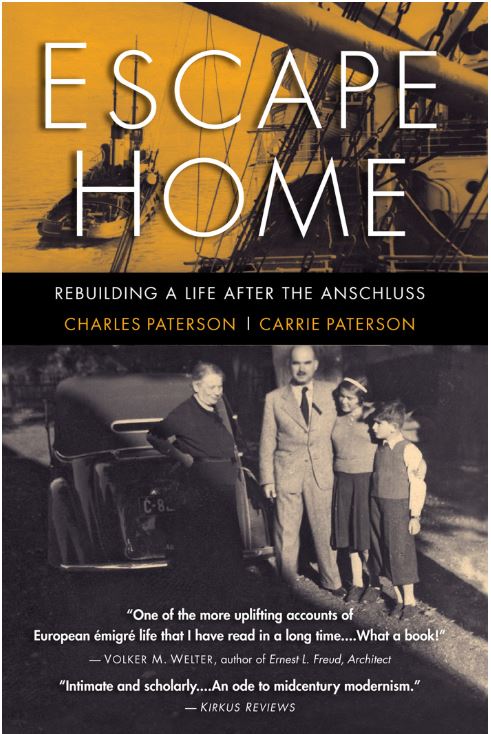
Escape Home: Rebuilding a Life After the Anschluss tells an extraordinary story of resilience. Written by Charles Paterson and Carrie Paterson, this memoir chronicles a Jewish family’s escape from Nazi-occupied Europe. Moreover, it explores how they rebuilt their lives in America after World War II. The book spans 570 pages and includes 200 illustrations that bring history to life.
A Family Torn Apart by the Anschluss
The Anschluss of 1938 changed everything for the Schanzer family. Nazi Germany annexed Austria, forcing Jewish families to flee for their lives. Consequently, Charles Paterson, born Karl Schanzer, became a refugee at a young age. His secular Jewish family faced unimaginable persecution and danger.
The family scattered across continents to survive. Furthermore, they endured years of separation and uncertainty. Stefan Schanzer, Charles’s father, made a harrowing escape through occupied France. Meanwhile, young Charles and his siblings found temporary refuge in Australia. The Paterson family adopted them during this difficult period.
Eight Years of Separation and Survival
The war separated the family for eight long years. Additionally, each member faced unique challenges in different countries. Stefan survived two world wars, demonstrating remarkable strength and determination. His story represents countless others who endured similar hardships.
Communication between family members remained sporadic and uncertain. Nevertheless, they held onto hope of reuniting someday. The children grew up in a foreign land, adapting to new cultures. Their father’s survival remained uncertain for much of this time.
Escape Home: The Journey to Post-War America
After the war ended, the family finally reunited in America. Therefore, they began the difficult process of rebuilding their lives. America offered freedom and opportunities they had lost in Europe. However, starting over required tremendous courage and perseverance.
Charles transformed from Karl Schanzer into Charles Paterson. Similarly, he embraced his new identity while honoring his past. The family worked tirelessly to establish themselves in their adopted homeland. Their story exemplifies the immigrant experience in post-war America.
Architectural Legacy: From Adolf Loos to Frank Lloyd Wright
Charles’s connection to architecture runs deep in his family history. Notably, his uncle was Adolf Loos, the renowned Central European Modernist architect. Loos pioneered new approaches to design and spatial concepts. His influence shaped Charles’s understanding of architecture from an early age.
Escape Home explores how architecture reflects human perseverance and spirit. Moreover, it examines the connection between European and American Modernism. Charles became an apprentice to Frank Lloyd Wright, America’s most famous architect. This apprenticeship bridged two architectural traditions across continents.
Key Architectural Influences in Charles’s Life:
- Adolf Loos: Uncle and Central European Modern architecture pioneer
- Frank Lloyd Wright: Mentor and American Modernism icon
- Vienna’s architectural heritage: Foundation of design philosophy
- Aspen’s mountain architecture: Integration of natural surroundings
Building a New Life in Aspen, Colorado
Charles eventually settled in Aspen, Colorado, where he thrived. Consequently, he became deeply involved in the community for decades. He worked as an architectural designer, creating beautiful mountain structures. Additionally, he operated his own lodge for many years.
Aspen provided the perfect setting for Charles’s diverse talents. Furthermore, the mountain town embraced his European sensibilities and skills. He became a ski instructor, sharing his passion for seventeen years. His lodge welcomed guests and became a beloved local establishment.
Community Leadership and Civic Engagement
Charles dedicated himself to serving his adopted community. Therefore, he volunteered on several important boards and committees. He served on Aspen’s planning and zoning board for years. His architectural expertise proved invaluable in shaping the city’s development.
The Aspen Music Festival became particularly important to Charles and his wife. Moreover, they both served as lifetime trustees of this prestigious institution. Their commitment to arts and culture enriched the entire community. They believed in giving back to the place they called home.
A Partnership Built on Shared Values
Charles married Fonda Paterson, his partner for nearly fifty years. Together, they built a life centered on community and culture. Their marriage exemplified mutual support and shared passions. Both dedicated themselves to making Aspen a better place.
Fonda shared Charles’s commitment to the Aspen Music Festival. Additionally, she supported his architectural work and community involvement. Their partnership strengthened both their personal and civic contributions. They became respected figures in Aspen’s cultural landscape.
Architecture as a Reflection of the Human Spirit
Escape Home examines architecture beyond mere buildings and structures. Instead, it reveals how design reflects our deepest human needs. Architecture simultaneously provides freedom and security, the memoir argues. These dual needs mirror the refugee experience itself.
Charles’s architectural work embodied his personal journey from displacement to belonging. Furthermore, his designs integrated European sophistication with American innovation. He understood that homes represent more than physical shelter. They symbolize safety, identity, and the possibility of new beginnings.
Themes of Perseverance and Resilience
The memoir celebrates the human capacity to overcome tremendous adversity. Moreover, it honors those who survived the Holocaust and rebuilt their lives. Stefan Schanzer’s survival through two world wars inspires readers profoundly. His determination to reunite his family drives the narrative forward.
Charles’s transformation from refugee to respected community leader demonstrates remarkable resilience. Similarly, his success in multiple fields shows extraordinary adaptability. The book reminds us that refugees bring valuable gifts to their new countries. Their contributions enrich the communities that welcome them.
Historical Context: The Anschluss and Its Aftermath
The 1938 Anschluss marked a turning point in European history. Nazi Germany’s annexation of Austria unleashed widespread persecution of Jewish citizens. Consequently, hundreds of thousands fled for their lives across Europe. Those who remained faced deportation and death in concentration camps.
Czechoslovakia soon fell under Nazi control as well. Therefore, Jewish families there faced similar dangers and displacement. The Schanzer family’s experience reflects this broader historical tragedy. Their story personalizes statistics and brings history into sharp focus.
A Reverential Homage to Stefan Schanzer
Charles wrote Escape Home partly as a tribute to his father. Stefan’s survival and strength inspired his son throughout his life. Moreover, the memoir preserves Stefan’s story for future generations. It ensures that his struggles and triumphs will not be forgotten.
Stefan endured unimaginable hardships during both world wars. Nevertheless, he never gave up hope of reuniting with his children. His escape through occupied France required courage and resourcefulness. The memoir details his harrowing journey with vivid, compelling detail.
The Power of Family and Connection
Despite years of separation, the Schanzer family maintained their bonds. Furthermore, their eventual reunion in America fulfilled their deepest hopes. The memoir explores how family ties sustain us through crisis. Love and commitment transcend distance and time.
The children’s experience with the Paterson family in Australia also shaped them. Additionally, this temporary adoption showed kindness amid global chaos. Strangers became family when biological families were torn apart. These connections demonstrate humanity’s capacity for compassion.
Visual Documentation: 200 Illustrations
The book includes 200 illustrations that enhance the narrative significantly. Moreover, these images provide visual context for the family’s journey. Photographs, documents, and architectural drawings bring the story to life. Readers can see the faces and places that shaped this history.
The illustrations span multiple continents and decades of history. Therefore, they create a rich visual tapestry of the family’s experience. Architectural drawings reveal Charles’s professional work and artistic vision. Family photographs capture moments of joy, separation, and reunion.
A Story of Discovery and Coming to Terms
Charles’s memoir represents a journey of personal discovery and understanding. Furthermore, it explores how the past casts long shadows on the present. Writing the book helped him process his family’s traumatic history. It allowed him to honor those who suffered and survived.
The process of remembering and documenting proved both painful and healing. Nevertheless, Charles felt compelled to share this important story. His past shaped his identity, values, and life choices profoundly. Understanding this history helped him appreciate his present more fully.
Connecting Two Architectural Traditions
The memoir bridges Central European and American architectural movements beautifully. Moreover, it shows how ideas and aesthetics cross cultural boundaries. Adolf Loos’s influence on European Modernism was profound and lasting. Frank Lloyd Wright similarly revolutionized American architecture and design philosophy.
Charles absorbed lessons from both traditions throughout his career. Consequently, his work synthesized European sophistication with American innovation. He understood that architecture serves both practical and spiritual needs. Buildings should enhance human life while respecting natural surroundings.
The Refugee Experience in Post-War America
Charles’s story illuminates the broader refugee experience in 1940s America. Additionally, it shows both the challenges and opportunities refugees faced. Starting over in a new country required learning new languages and customs. However, America offered freedoms and possibilities unavailable in war-torn Europe.
Many refugees, like Charles, made significant contributions to American society. Furthermore, they brought skills, knowledge, and perspectives that enriched their communities. The memoir challenges negative stereotypes about refugees and immigrants. It demonstrates how welcoming refugees benefits everyone involved.
Legacy and Lessons for Future Generations
Escape Home preserves important history for readers today and tomorrow. Moreover, it offers timeless lessons about resilience, courage, and human dignity. The book reminds us that refugees are individuals with stories and talents. They deserve compassion, respect, and opportunities to rebuild their lives.
Charles’s success in America validates his family’s difficult choices and sacrifices. Similarly, his contributions to Aspen demonstrate the value of welcoming refugees. The memoir encourages readers to consider their own family histories. It prompts reflection on how displacement and migration shape identities.
Why This Memoir Matters Today
In our current era of global displacement, this story remains deeply relevant. Furthermore, it humanizes statistics about refugees and forced migration. Charles’s journey from Karl Schanzer to respected community leader inspires hope. His story proves that refugees can thrive when given opportunities.
The memoir also preserves Holocaust history through personal narrative. Therefore, it ensures that future generations understand this dark chapter. Personal stories make history accessible and emotionally resonant for readers. They prevent us from forgetting the human cost of hatred and intolerance.
Conclusion: A Testament to the Human Spirit
Escape Home: Rebuilding a Life After the Anschluss stands as a powerful testament to human resilience and determination. Charles Paterson’s memoir weaves together personal history, architectural heritage, and broader historical context into a compelling narrative. Through 570 pages of vivid storytelling and 200 illustrations, readers witness one family’s extraordinary journey from persecution to prosperity.
The book honors Stefan Schanzer’s survival through two world wars and his unwavering commitment to reuniting his family. It celebrates Charles’s transformation from a young refugee into a respected architect, ski instructor, lodge owner, and community leader. Moreover, it explores the profound connections between architecture and the human need for both freedom and security.
By bridging the architectural traditions of Adolf Loos and Frank Lloyd Wright, Charles created a unique legacy that honored both his European heritage and American future. His nearly fifty-year marriage to Fonda and their shared dedication to the Aspen Music Festival and community service exemplify lives well-lived. Their story reminds us that refugees bring invaluable gifts to their adopted countries when welcomed with compassion and opportunity.
This memoir serves multiple purposes simultaneously: it preserves family history, documents an important historical period, explores architectural philosophy, and offers inspiration for anyone facing adversity. The Paterson family’s journey from displacement to belonging demonstrates that home is not just a place but a feeling of safety, connection, and purpose that we can rebuild even after devastating loss.


Reviews
There are no reviews yet.