

Description
Early Works: Tabs & Scores by Noël Akchoté – Book 3 – Complete Synopsis
Introduction to Tabs and Scores from a Guitar Innovator
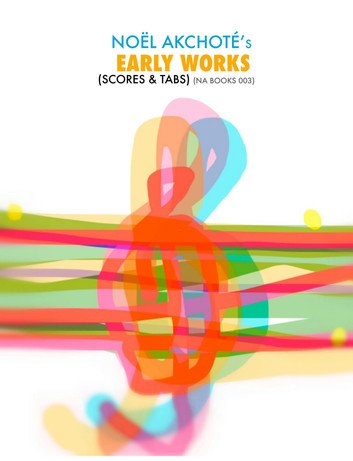
“Early Works: Tabs & Scores” showcases key guitar works by Noël Akchoté. This substantial collection includes tabs and scores from the French guitarist’s pioneering early years. It is Book 3 of the renowned NA Books series. The 233-page volume documents Akchoté’s inventive approach to guitar composition. As such, it remains a vital resource for advanced guitarists globally.
Noël Akchoté transformed modern guitar playing with his distinct style. Born in 1968, he became recognized for free improvisation and experimental jazz. Yet, his influence reaches far beyond any one genre. Accordingly, musicians from various backgrounds analyze his techniques and works. This book grants dedicated players access to his influential early creations.
The collection gathers major works from Akchoté’s formative years. As these pieces shaped today’s guitar music, their relevance endures. The book provides both traditional notation and tablature throughout. This dual presentation enables players of different skill levels to engage fully.
What Makes These Tabs and Scores Essential
This volume features pieces from Akchoté’s most impactful early groups. Yet, the music surpasses mere archival interest. Instead, it offers vibrant, dynamic works that challenge and motivate guitarists. The arrangements expose Akchoté’s distinctive talent as composer and improviser.
The book includes complete tabs and scores from these landmark projects:
- Lust Corner – Experimental compositions exploring texture and space
- NA Unit – Ensemble pieces showcasing collective improvisation techniques
- NA Quartet – Complex arrangements for small group performance
- Soundpages – Innovative works blending notation with improvisational freedom
- The Recyclers – Pieces incorporating found sounds and unconventional approaches
- Close To The Kitchen – Intimate compositions revealing Akchoté’s melodic sensibility
Each section provides detailed notation that accurately captures the original performances. Therefore, guitarists can learn directly from Akchoté’s creative process. Furthermore, the tablature makes even complex passages approachable for dedicated students.
Understanding Noël Akchoté’s Musical Vision
Akchoté’s style melds rigorous classical training with avant-garde exploration. He consistently highlights the guitar’s expressive range. He pushes the instrument’s boundaries while honoring its origins. This approach attracts both traditionalists and experimenters.
The French guitarist draws inspiration from free jazz, contemporary classical, and improvisation. Because he refuses to limit himself to one style, his music remains fresh. Additionally, he seamlessly incorporates techniques from various guitar traditions. This synthesis creates a unique sound that defies easy categorization.
His early works show the development of his distinct musical language. Studying these pieces reveals how innovative ideas emerge and evolve, and the compositions display his growing confidence as a player and composer. Each piece builds on previous discoveries while exploring new sonic possibilities.
Technical Aspects of the Tabs and Scores
This book maintains professional notation standards throughout. Akchoté ensures the material remains accessible to students, with tabs complementing standard notation to clarify complex passages and techniques.
Guitarists will find detailed fingering suggestions throughout the scores. Because Akchoté understands the instrument intimately, these recommendations prove invaluable. Additionally, the book includes performance notes where appropriate. These insights help players better understand the composer’s intentions.
The tablature format makes Akchoté’s innovative techniques easier to grasp. Players can focus on expression instead of deciphering notation. The clear layout prevents confusion and presents information logically for maximum learning.
Who Should Study This Collection
This book effectively serves multiple audiences within the guitar community. However, it particularly benefits players interested in contemporary and experimental music. Advanced students will find challenging material that expands their technical abilities. Moreover, professional guitarists discover fresh approaches to familiar instrumental problems.
Ideal readers include:
- Jazz guitarists exploring free improvisation and avant-garde techniques
- Classical players interested in contemporary composition and extended techniques
- Experimental musicians seeking new approaches to guitar performance
- Composition students studying innovative approaches to writing for guitar
- Music educators teaching advanced guitar techniques and contemporary styles.
- Performers building repertoire that challenges conventional boundaries
Even intermediate players can benefit from carefully studying these scores. Because the music rewards repeated examination, it grows with the player. Additionally, the variety of styles ensures something valuable for every serious guitarist.
The NA Books Series Context
“Early Works” is the third volume in Akchoté’s NA Books series, but it stands alone as a complete collection. The series documents various aspects of the guitarist’s creative output, allowing collectors and students to explore his work systematically.
Book 3 focuses specifically on Akchoté’s formative years and provides crucial context for his later developments. These early compositions contain seeds of ideas he would expand, serving both historical and practical purposes for students.
The NA Books series maintains consistent quality and presentation. Akchoté personally oversees the details to ensure accuracy, making his extensive catalog more accessible and benefiting the guitar community.
Learning from Akchoté’s Early Compositions
These pieces offer more than just notes on a page for guitarists. Instead, they provide windows into a unique, creative mind at work. However, players must approach the material with openness and curiosity. Therefore, the learning process becomes as valuable as the final performances.
The compositions challenge conventional guitar technique and musicality. Akchoté’s questioning leads players to reconsider their own approaches. The music requires technical precision and expressive freedom, creating productive tension for artistic growth.
Working through these scores develops skills applicable to many musical contexts. Moreover, the techniques learned here transfer easily to other contemporary repertoire. Furthermore, players gain confidence tackling challenging modern compositions after mastering this material. The educational value extends far beyond these specific pieces.
Performance Considerations and Interpretation
Akchoté’s scores allow interpretive freedom within structured frameworks. Performers must balance notation and improvisation; the written music is a foundation, not an absolute. Players should study Akchoté’s recordings when possible.
The pieces work effectively in various performance contexts and settings. Because the music adapts to different situations, it remains relevant and fresh. Additionally, some compositions invite collaboration with other instrumentalists or the use of electronic processing. This flexibility makes the repertoire valuable for diverse musical projects.
Performers should approach these works with respect for their experimental nature. Consequently, audiences may need preparation for music that challenges conventional expectations. Moreover, program notes can help listeners appreciate the innovative aspects more fully. A thoughtful presentation significantly enhances the impact of these groundbreaking compositions.
Historical Significance of These Works
The pieces in this collection influenced countless guitarists and composers worldwide. However, their impact extends beyond just the guitar community alone. Instead, they contributed to broader conversations about improvisation and contemporary music. Therefore, the book documents an important chapter in the history of modern music.
Akchoté’s early works emerged during a fertile period for experimental music and reflect diverse influences. He helped bridge jazz, classical, and experimental traditions, creating possibilities that musicians continue to explore.
The compositions remain relevant decades after their original creation and performance. Moreover, new generations of players regularly discover fresh insights within these scores. Furthermore, the music’s fundamental innovations transcend temporary trends and fashions. This timeless quality ensures the book’s continued value for future students.
Practical Applications for Modern Guitarists
Contemporary players can apply Akchoté’s techniques to a wide range of musical situations. However, the approaches work best when adapted thoughtfully to individual contexts. The extended techniques significantly expand any guitarist’s expressive palette. Therefore, even players in traditional genres benefit from studying this material.
The improvisational concepts translate effectively to various styles and settings. Because Akchoté’s methods emphasize listening and responding, they enhance ensemble playing. Additionally, his compositional strategies inspire original creative work in any genre. The book thus serves as both an instruction manual and a creative catalyst.
Guitarists can gradually and naturally incorporate specific techniques into their existing repertoire. Moreover, the concepts inform practice routines and technical development in beneficial ways. Furthermore, studying these scores generally improves sight-reading skills and musical understanding. The practical benefits accumulate over time with consistent study and application.
Technical Challenges and Rewards
The music in this collection demands significant technical facility from performers. However, the challenges serve musical purposes rather than mere display. Each difficult passage contributes meaningfully to the overall artistic vision. Therefore, players develop technique in the service of genuine musical expression.
Some pieces initially require extended techniques unfamiliar to traditionally trained guitarists. Because these approaches expand sonic possibilities, they’re worth mastering thoroughly. Additionally, the music systematically develops independence between hands and fingers. This coordination eventually proves valuable in all guitar-playing contexts.
The rewards of mastering this material extend far beyond performance opportunities. Moreover, players gain a deeper understanding of the guitar’s potential and limitations. Furthermore, the process builds confidence for tackling other challenging contemporary works. The investment of time and effort yields substantial returns for dedicated musicians.
The Book’s Production Quality and Usability
NA Books maintains high standards for notation clarity and page layout throughout. However, the presentation never sacrifices musical accuracy for visual simplicity. The 233 pages balance information density with readability effectively. Therefore, players can use the book comfortably during practice and performance.
The dual format of standard notation and tablature serves diverse learning styles. Because some players read one format more easily than the other, both options prove valuable. Additionally, having both formats allows cross-referencing when questions arise. This redundancy actually enhances understanding rather than creating confusion.
The book’s physical design carefully considers the practical needs of working musicians. Moreover, the binding reliably keeps pages open on music stands. Furthermore, the paper quality withstands repeated use without deteriorating quickly. These practical considerations demonstrate respect for the musicians using this resource.
Connecting with Akchoté’s Broader Catalog
This volume provides an excellent entry point into Akchoté’s extensive discography. However, it represents just one facet of his multifaceted creative output. The guitarist has recorded hundreds of albums spanning numerous styles and approaches. Therefore, students should explore his recordings alongside studying these scores.
Listening to Akchoté’s performances illuminates the scores in ways notation alone cannot. Because his interpretive choices reveal deeper musical intentions, recordings provide essential context. Additionally, hearing the pieces performed helps players understand the desired sound world. This combination of score study and listening creates a comprehensive understanding.
The early works connect to Akchoté’s later developments in fascinating ways. Moreover, themes and techniques from these pieces reappear throughout his subsequent career. Furthermore, understanding these foundations enriches appreciation of his entire artistic journey. The book thus serves as a key to unlocking his broader musical universe.
Educational Value for Music Students
Music schools and private teachers will find this book invaluable for advanced students. However, the material works equally well for self-directed learners with sufficient background. The pieces challenge students while remaining within reach of dedicated practice. Therefore, they provide ideal material for systematically developing advanced skills.
The compositions teach important lessons about contemporary music and improvisation simultaneously. Because they integrate multiple learning objectives, they’re pedagogically efficient. Additionally, students gain exposure to a significant body of work from modern guitar literature. This cultural literacy proves valuable for any serious musician’s development.
Working through this book effectively prepares students for other contemporary guitar music. Moreover, the skills developed transfer naturally to composition and arrangement projects. Furthermore, students learn to think creatively about the guitar’s possibilities and limitations. These broader educational outcomes justify the time invested in mastering this material.
Conclusion: An Essential Resource for Serious Guitarists
“Early Works: Tabs & Scores” by Noël Akchoté stands as essential reading for contemporary guitarists. The 233-page Book 3 from NA Books preserves important compositions from a master innovator. Moreover, it makes challenging material accessible through clear notation and tablature. Therefore, it deserves a place in every serious guitarist’s library permanently.
The collection documents a crucial period in the development of modern guitar music. However, it remains vitally relevant for today’s players and students alike. The pieces continue inspiring new generations of musicians to explore creative possibilities. Consequently, the book’s value extends far beyond mere historical documentation.
Whether you’re a jazz player, classical guitarist, or experimental musician, this book offers valuable insights. Because Akchoté’s vision transcends genre boundaries, everyone finds something meaningful here. Additionally, the technical and musical challenges promote genuine artistic growth. Furthermore, the material rewards are repeated study over many years of development.
Investing in this book means investing in your development as a complete musician. Moreover, you gain access to compositions that fundamentally shaped contemporary guitar playing.y. The tabs and scores provide a direct connection to Akchoté’s innovative musical thinking. Therefore, serious guitarists cannot afford to overlook this essential collection of groundbreaking works.






Reviews
There are no reviews yet.