Description
Discover the Masterful World of Domenico Ghirlandaio Paintings and Drawings
Domenico Ghirlandaio is among the greatest fresco painters of the Early Renaissance. This comprehensive e-book showcases his magnificent paintings and detailed drawings in stunning digital quality. Moreover, it brings his narrative brilliance and technical mastery directly to your device. Furthermore, Ghirlandaio taught the legendary Michelangelo in his Florentine workshop. The My Pocket Gallery series makes his celebrated masterworks accessible to everyone.
Early Life and Artistic Training of Domenico Ghirlandaio
Domenico Ghirlandaio was born Domenico Bigordi in Florence in 1449. His father worked as a skilled goldsmith, creating decorative garlands. Therefore, the family earned the nickname “Ghirlandaio,” meaning “garland-maker” in Italian. Young Domenico trained in his father’s workshop, learning meticulous craftsmanship.
The aspiring artist showed exceptional talent for drawing and painting from an early age. Moreover, he apprenticed with Alesso Baldovinetti to formally study fresco technique. He learned the demanding art of painting on wet plaster walls. Consequently, he developed the technical skills that would define his career.
Ghirlandaio established his own workshop in Florence during the 1470s. Furthermore, he quickly gained recognition for his narrative fresco cycles. His brothers Davide and Benedetto joined him in the family business. Additionally, the workshop became one of Florence’s most successful artistic enterprises.
The young master absorbed influences from both Italian and Northern European art. Moreover, he studied Flemish paintings with their precise attention to detail. He admired the realistic portraiture and rich textures of Northern masters. Therefore, Domenico Ghirlandaio developed a distinctive style combining Italian grandeur with Flemish precision.
Domenico Ghirlandaio’s Masterful Fresco Technique
Domenico Ghirlandaio became renowned for his large-scale narrative fresco cycles. His works featured detailed storytelling with numerous figures and architectural settings. Moreover, he painted with bold, vivid colors that remain brilliant today. Therefore, his frescoes possess both visual impact and narrative clarity.
The master pioneered the inclusion of portraits of contemporary Florentines in religious scenes. Furthermore, he depicted wealthy patrons and their families within biblical narratives. This innovation made sacred stories feel immediate and relevant to viewers. Consequently, his frescoes document Florentine society with remarkable historical accuracy.
Ghirlandaio’s technical skill in fresco painting was virtually unmatched in Florence. Additionally, he worked with exceptional speed without sacrificing quality or detail. He could complete vast wall surfaces in remarkably short timeframes. Therefore, he became the preferred choice for major ecclesiastical commissions.
His compositions demonstrated a sophisticated understanding of perspective and spatial organization. Moreover, he convincingly arranged multiple figures in complex architectural settings. He created depth through careful placement of foreground, middle ground, and background elements. Consequently, Domenico Ghirlandaio’s frescoes achieve an impressive three-dimensional illusion.
The artist’s attention to contemporary fashion and material culture was extraordinary. Furthermore, he depicted clothing, jewelry, and furnishings with meticulous accuracy. His frescoes preserve details of Renaissance Florentine life and luxury. Therefore, they serve as invaluable historical documents beyond their artistic merit.
His early masterpiece, the Santa Fina Chapel frescoes in San Gimignano, established his reputation. Moreover, these 1475 works show his mature style already fully developed. The scenes from Saint Fina’s life demonstrate his narrative gifts. Consequently, this commission launched his career as Florence’s leading fresco painter.
Famous Masterpieces by Domenico Ghirlandaio
The Tornabuoni Chapel frescoes in Santa Maria Novella represent Domenico Ghirlandaio’s greatest achievement. Moreover, he painted these monumental cycles between 1485 and 1490 for wealthy banker Giovanni Tornabuoni. The frescoes depict the Life of the Virgin and the Life of Saint John the Baptist. Therefore, they showcase his narrative brilliance and technical mastery at their peak.
These chapel frescoes include numerous portraits of the Tornabuoni family and associates. Furthermore, they document Florentine aristocratic life with unprecedented detail and accuracy. The scenes feature contemporary architecture, fashion, and social customs throughout. Consequently, they provide an invaluable window into Renaissance Florence’s elite society.
In 1481, Pope Sixtus IV summoned Domenico Ghirlandaio to Rome for prestigious commissions. Additionally, he painted frescoes in the Sistine Chapel alongside Botticelli and Perugino. His “Calling of the First Apostles” demonstrates his compositional skill magnificently. Therefore, he earned recognition as one of Italy’s foremost painters.
“Portrait of Giovanna Tornabuoni” (1488) exemplifies his skill in panel painting. Moreover, this exquisite portrait shows the banker’s daughter in profile with elegant refinement. The Latin inscription references her virtue and untimely death in childbirth. Consequently, the painting combines beauty with poignant memorial function perfectly.
His “Adoration of the Magi” paintings showcase his ability to handle complex compositions. Furthermore, these works feature numerous figures arranged in elaborate architectural settings. He included portraits of the Medici family and other prominent Florentines. Therefore, Domenico Ghirlandaio skillfully merged religious devotion with political allegiance.
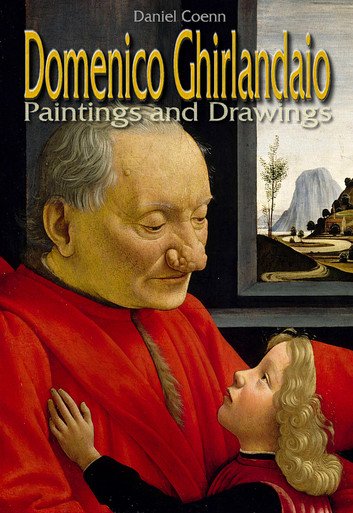
“An Old Man and His Grandson” remains one of Renaissance art’s most touching portraits. Additionally, this intimate painting depicts tender affection across generations despite physical imperfections. The older man’s disfigured nose is rendered with unflinching honesty and dignity. Consequently, the work demonstrates that true beauty lies in human connection.
“St. Jerome in His Study” (1480) reveals his mastery of interior scenes. Moreover, this fresco shows the saint surrounded by books in a detailed study. The architectural space and objects are rendered with convincing three-dimensionality. Therefore, it exemplifies his synthesis of Northern detail with Italian spatial clarity.
Domenico Ghirlandaio’s Drawings and Preparatory Studies
Domenico Ghirlandaio created numerous drawings to plan his ambitious fresco compositions. His preparatory sketches reveal his careful working process and artistic thinking. Moreover, they show his study of figures, drapery, and architectural elements. Therefore, the drawings provide essential insight into Renaissance workshop practices.
The master used drawings to systematically work out complex multi-figure compositions. Furthermore, he made detailed studies of individual figures before transferring them to walls. These preparatory works demonstrate his commitment to careful planning and execution. Consequently, his finished frescoes achieved their remarkable coherence and clarity.
His portrait drawings capture individual likenesses with sensitivity and precision. Additionally, these studies often served as preparation for painted portraits or fresco figures. He drew from life to ensure an accurate representation of his subjects. Therefore, Domenico Ghirlandaio’s drawings possess both documentary and artistic value.
The artist’s drapery studies show his understanding of fabric and form. Moreover, he carefully observed how cloth falls and folds over the human body. These drawings helped him achieve the convincing textile effects in his paintings. Consequently, his figures wear garments that enhance rather than obscure their forms.
His architectural drawings reveal his sophisticated grasp of perspective and spatial construction. Furthermore, he sketched buildings and interior spaces to create convincing settings. These studies ensured the architectural elements in his frescoes appeared structurally sound. Therefore, his painted spaces possess remarkable believability and three-dimensional presence.
Domenico Ghirlandaio as Teacher and Workshop Master
Domenico Ghirlandaio operated one of Florence’s most successful and productive artistic workshops. His brothers Davide and Benedetto worked alongside him as skilled collaborators. Moreover, the family enterprise trained numerous apprentices in fresco and panel painting. Therefore, the Ghirlandaio workshop significantly influenced Florentine art production.
The workshop’s most famous apprentice was the young Michelangelo Buonarroti. Furthermore, Michelangelo trained there from 1488 to 1490 before the age of fourteen. He learned fundamental techniques of drawing and fresco painting from the master. Consequently, Domenico Ghirlandaio played a crucial role in forming the history’s greatest sculptor.
The master taught his apprentices through the traditional Renaissance workshop system. Additionally, students progressed from grinding pigments to drawing to painting backgrounds. Eventually, talented apprentices contributed to major commissions under the master’s supervision. Therefore, the workshop served both as a business and as an educational institution.
Ghirlandaio’s teaching emphasized careful observation and technical precision above all. Moreover, he insisted on accurate drawing as the foundation of good painting. His students learned to study nature and render it faithfully. Consequently, the workshop produced artists who valued both skill and naturalism.
The collaborative nature of the workshop enabled the efficient completion of large projects. Furthermore, the master designed compositions and painted key figures and faces himself. Assistants executed backgrounds, architecture, and secondary elements under his direction. Therefore, Domenico Ghirlandaio maintained quality while accepting numerous lucrative commissions simultaneously.
The Lasting Legacy of Domenico Ghirlandaio
Domenico Ghirlandaio served as a crucial bridge between the Early and High Renaissance. His work combined Quattrocento narrative detail with emerging classical monumentality. Moreover, he significantly influenced the development of fresco painting throughout Italy. Therefore, his impact extended beyond his relatively brief forty-five-year lifespan.
The master’s integration of portraiture into religious narratives became increasingly common afterward. Furthermore, later artists adopted his practice of including contemporary figures in sacred scenes. This innovation made religious art more personally meaningful to Renaissance patrons. Consequently, Domenico Ghirlandaio helped transform the relationship between art and society.
His meticulous documentation of Florentine life provides invaluable historical evidence today. Additionally, his frescoes preserve details of Renaissance fashion, architecture, and customs. Scholars study his works to understand fifteenth-century Florentine material culture. Therefore, his paintings serve both aesthetic and documentary functions for modern viewers.
The artist’s influence on his most famous student cannot be overstated. Moreover, Michelangelo learned fundamental techniques in Ghirlandaio’s workshop that he would use throughout his career. The younger artist’s early drawings show clear influence from his master’s style. Consequently, Domenico Ghirlandaio indirectly shaped the entire High Renaissance through his teaching.
His workshop model of collaborative production influenced artistic practice for generations. Furthermore, the family business approach proved highly successful both artistically and commercially. Later Renaissance workshops adopted similar organizational structures and training methods. Therefore, his legacy includes both artistic and professional innovations.
Ghirlandaio died suddenly in 1494 at the height of his powers. Moreover, he left behind an extraordinary body of work despite his relatively early death. His frescoes continue to attract visitors to Florence’s churches and chapels. Consequently, Domenico Ghirlandaio remains one of the Renaissance’s most admired masters.
What’s Inside This Domenico Ghirlandaio Collection
Daniel Coenn has assembled a comprehensive collection of Ghirlandaio’s greatest achievements. This e-book features both his monumental frescoes and his exquisite panel paintings. Moreover, it showcases his preparatory drawings that reveal his creative process. Readers can explore the full range of his narrative and technical brilliance.
The digital format presents each artwork with exceptional clarity and color accuracy. Furthermore, viewers can appreciate his meticulous attention to detail and vivid colors up close. The collection includes his famous Tornabuoni Chapel frescoes and intimate portraits alike. Additionally, it features his contributions to the Sistine Chapel and lesser-known devotional works.
This volume fully demonstrates the breadth of Domenico Ghirlandaio’s artistic achievement. Moreover, it highlights his mastery of fresco technique and portrait painting. Readers will discover why he became Florence’s most sought-after painter. Therefore, the collection serves as both a visual pleasure and an art education.
The My Pocket Gallery series ensures optimal viewing on all digital devices. Furthermore, the interface allows easy navigation through the artist’s extensive oeuvre. Art lovers can conveniently carry this treasury of Renaissance painting everywhere. Consequently, inspiration and beauty are always readily available at your fingertips.
Key Features of This Art Collection
This comprehensive e-book offers exceptional value for Renaissance art enthusiasts everywhere:
- High-resolution images of Domenico Ghirlandaio’s most magnificent frescoes and panel paintings
- Complete coverage of his narrative brilliance and technical mastery in fresco painting
- Famous masterpieces, including the Tornabuoni Chapel and Sistine Chapel fresco cycles
- Exquisite portraits showing his skill in capturing individual likenesses with sensitivity
- Religious narratives featuring contemporary Florentines in biblical scenes with remarkable detail
- Preparatory drawings revealing his careful planning process and workshop methods are clearly
- Historical documentation of Renaissance Florentine fashion, architecture, and aristocratic life
- Workshop insights showing his role as a teacher to Michelangelo and other artists
- Devotional paintings demonstrating his range beyond monumental fresco commissions
- Portable format for art appreciation anywhere, anytime, on any device
- Affordable access to museum-quality reproductions of his celebrated Renaissance works.
- Perfect reference for students of Early Renaissance art, fresco technique, and Florentine culture
Moreover, the digital format preserves these masterworks without deterioration or fading. The quality remains pristine for endless viewing and detailed study. Consequently, this represents a lasting investment in art appreciation and education.
Perfect for Renaissance Art Enthusiasts
This e-book serves art lovers who appreciate narrative painting and technical mastery. Furthermore, it appeals to those interested in Early Renaissance Florence and art history. Students of fresco technique will value studying Ghirlandaio’s methods closely and carefully. Collectors and enthusiasts will appreciate having his works readily available always.
Its portability makes it ideal for reference and creative inspiration. Additionally, you can study the paintings during commutes or travel time. The digital format allows zooming in to examine details and brushwork carefully. Therefore, it supports both casual viewing and serious artistic study equally.
Teachers and professors will find this an invaluable educational resource. Moreover, the high-quality reproductions facilitate classroom discussions about Renaissance art and society. Students can analyze how Domenico Ghirlandaio documented Florentine life through religious narratives. Consequently, it significantly enhances art history and cultural studies education.
Why Choose the My Pocket Gallery Series
The My Pocket Gallery series democratizes access to fine art masterpieces. Furthermore, it conveniently brings museum collections to your smartphone or tablet. Art lovers no longer need to rely solely on expensive books or museum visits. Instead, they can carry entire collections effortlessly in their pockets.
Daniel Coenn has established this series as a trusted art resource. Moreover, each volume maintains exceptional standards of image quality and curation. The series comprehensively covers major artists from various periods and movements. Consequently, readers can build a comprehensive digital art library affordably.
This format is particularly valuable for modern, mobile lifestyles today. Additionally, it serves as an excellent reference for creative professionals everywhere. Painters and artists can access inspiration whenever needed for projects. Therefore, the series supports both learning and creative work seamlessly.
The Enduring Appeal of Domenico Ghirlandaio’s Art
Domenico Ghirlandaio’s paintings continue to captivate viewers over five centuries later. His works possess both timeless beauty and remarkable historical interest. Moreover, his technical mastery and narrative skill remain impressive and influential. Few artists documented their era so thoroughly while creating such beauty.
The artist’s work represents the pinnacle of Florentine Early Renaissance painting. Furthermore, his frescoes embody the Renaissance emphasis on humanism and naturalism. Many viewers find his detailed narratives still deeply engaging and visually satisfying. Therefore, his cultural and aesthetic value extends beyond mere historical importance.
Ghirlandaio’s ability to combine technical perfection with human warmth was extraordinary. Additionally, he maintained his artistic vision while successfully satisfying demanding patrons. His legacy continues to influence contemporary painters and art historians in countless ways. Consequently, understanding Domenico Ghirlandaio enriches appreciation of all Renaissance art.
Conclusion: A Renaissance Master’s Complete Legacy
This Domenico Ghirlandaio e-book delivers exceptional value to art enthusiasts everywhere. Moreover, it preserves the legacy of Early Renaissance Florence’s greatest fresco master in its entirety. The My Pocket Gallery series continues to make fine art accessible and affordable. Therefore, this volume deserves a place in every digital art collection.
Discover the narrative brilliance of Domenico Ghirlandaio’s paintings and drawings today. Furthermore, experience Renaissance Florence through the eyes of its most meticulous documenter. This comprehensive collection will inspire and educate viewers for years to come.



Reviews
There are no reviews yet.