

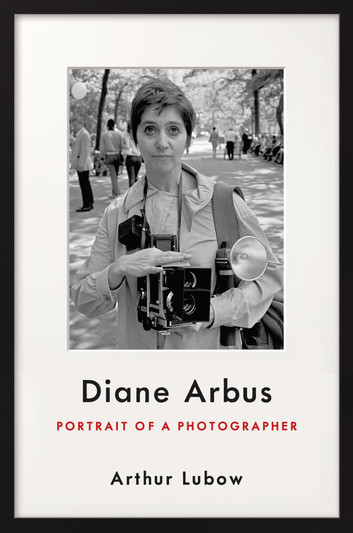
Description
Diane Arbus Biography: An In-Depth Look at Arthur Lubow’s Masterful Portrait
Arthur Lubow’s “Diane Arbus biography” asserts itself as the definitive account of one of photography’s most enigmatic figures by examining how Arbus’s life and personal struggles directly shaped her revolutionary vision.
This comprehensive work argues that understanding Arbus’s choices, challenges, and complex journey is essential to grasping both her artistic achievements and her impact on American visual culture.
Who Was Diane Arbus?
Diane Arbus revolutionized photography in the 1960s and early 1970s. She photographed subjects often ignored by mainstream society, creating unflinching portraits of those at society’s margins, including circus performers, transgender individuals, nudists, and people with disabilities.
Born in 1923 to a wealthy New York family, Arbus was expected to follow a conventional path. She rejected this privileged background to pursue her own artistic truth, developing a unique vision that challenged perceptions.
Arthur Lubow’s Comprehensive Research
Lubow’s biography is the result of decades of research and interviews. He spoke with hundreds who knew Arbus, gaining access to previously unavailable archives and documents. This thorough work creates an unprecedented portrait of her.
The author examines her early life in the context of her family’s fur business. He also explores her marriage to Allan Arbus at age eighteen. Together, they initially worked as fashion photographers for major magazines. Nevertheless, Diane felt creatively unfulfilled by commercial work.
Breaking Free from Convention
Arbus left fashion photography to pursue her artistic vision, studying under Lisette Model, who encouraged her bold approach. Arbus began seeking subjects that fascinated and unsettled her, challenging conventional ideas of beauty and normalcy.
Lubow shows how Arbus’s personal struggles shaped her art. She battled depression and intense periods of doubt and anxiety. These challenges fueled her empathy for outsiders.
Key Themes in Lubow’s Biography
The biography explores interconnected themes that shaped Arbus’s life and work:
Major themes include:
- The tension between privilege and artistic authenticity
- Mental illness and creative expression
- The ethics of photographing vulnerable subjects
- Gender expectations in mid-century America
- The relationship between photographer and subject
- Fame’s impact on artistic integrity
Lubow critically examines controversial aspects of Arbus’s methods, not simply recounting events but interrogating the ethics behind her work. He explores how she gained her subjects’ trust and why this has sparked debates about exploitation. This analytical approach exposes the complexities underlying her legacy.
Arbus’s Revolutionary Photographic Style
Diane Arbus developed a distinctive aesthetic that remains instantly recognizable. She used a square-format camera that created intimate, confrontational images. Additionally, she often photographed subjects looking directly at the camera. This technique created an unsettling sense of connection between the viewer and the subject.
Her photographs stripped away social pretenses and comfortable distances, intentionally forcing viewers to confront their own prejudices. Lubow critiques the acclaim and controversy provoked by her work, arguing that Arbus’s imagery unsettles precisely because it exposes unconscious biases and complicity within viewers themselves.
Lubow analyzes specific photographs and their creation stories in fascinating detail. He explains the circumstances behind iconic images like “Identical Twins” and “Child with Toy Hand Grenade.” These insights illuminate Arbus’s working methods and artistic intentions.
Personal Struggles and Artistic Triumph
The biography doesn’t romanticize Arbus’s struggles. Lubow honestly portrays her battles with depression and relationships. She separated from her husband Allan in 1959, though they remained close, and faced financial challenges.
Despite obstacles, Arbus gained significant recognition in her lifetime, receiving Guggenheim Fellowships in 1963 and 1966. Her work appeared in major publications and exhibitions, though commercial success never fully arrived. Success never fully materialized before Diane Arbus died by suicide in 1971 at forty-eight. Her death shocked the art world, yet her influence grew in the decades that followed.
Lubow examines how her reputation evolved after her death. A 1972 Museum of Modern Art retrospective drew huge crowds and became among the most attended photography exhibitions ever. Arbus’s work influenced generations of photographers and artists. Generations of photographers and visual artists.
Lubow’s biography stands apart by drawing on sources unavailable to earlier biographers, offering a balanced perspective, and presenting complex insights in clear, elegant prose. hological insights accessible to general readers.
The biography contextualizes Arbus within broader cultural and artistic movements. Lubow connects her work to the transformation of postwar American society. He also examines her relationships with other artists and intellectuals. These connections enrich our understanding of her art.
Lubow’s “Diane Arbus biography” earned widespread acclaim for its thorough research and nuanced portrayal. Critics praised his sophisticated photo analysis. The book won numerous awards and appeared on best-of-year lists.
It is now the standard reference for Arbus’s life and work, showing how biography can illuminate art without reducing it to psychology. ic achievement without reducing it to psychology.
Conclusion: A Portrait Worth Examining
Arthur Lubow’s comprehensive “Diane Arbus biography” offers readers an intimate look at a complex artist. It reveals how personal struggle and artistic vision are intertwined in her groundbreaking work. Additionally, it examines the ethical questions her photography continues to raise.
This biography succeeds because it respects both Arbus’s achievements and her contradictions. Lubow presents her as neither a saint nor a villain, but as a flawed human being. She pursued her artistic vision with remarkable courage and determination.
For anyone interested in photography, American culture, or artistic biography, this book is essential reading because it reveals how Arbus’s personal and artistic journey redefined the boundaries of art and society. Consequently, readers gain insight into how art challenges society’s comfortable assumptions, aligning with Lubow’s main claim.
Diane Arbus changed how we see the world and each other. Lubow’s biography ensures her story receives the depth and complexity it deserves.






Reviews
There are no reviews yet