Description
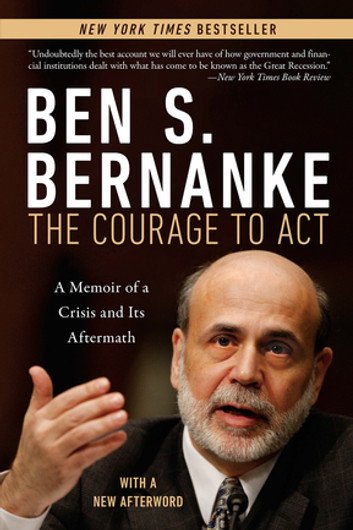
Courage to Act: Ben Bernanke’s Inside Story of Saving the American Economy
Courage to Act stands as one of the most important financial memoirs of our time. Ben S. Bernanke, former Federal Reserve Chair, offers readers an unprecedented look inside the 2008 financial crisis. This gripping account reveals how critical decisions prevented a second Great Depression. Moreover, it provides invaluable insights into modern economic policy and crisis management.
Understanding Courage to Act: A Memoir That Changed Economic Literature
Ben Bernanke’s Courage to Act transforms complex economic events into compelling narrative. Published in 2015, this memoir chronicles eight tumultuous years at America’s economic helm. Bernanke served as Federal Reserve Chair from 2006 to 2014. During this period, he faced the worst financial crisis since the 1930s.
The book’s title reflects the decisive action required during unprecedented times. Bernanke made controversial choices that saved the financial system. However, these decisions sparked intense public debate and political backlash. Therefore, this memoir serves both as historical record and personal vindication.
The Author Behind Courage to Act: Ben Bernanke’s Journey to the Fed
Before leading the Federal Reserve, Bernanke built an impressive academic career. He grew up in small-town South Carolina during the 1950s and 1960s. His father worked as a pharmacist and part-time theater manager. Meanwhile, his mother taught elementary school when Ben and his siblings attended.
Bernanke excelled academically from an early age. He graduated summa cum laude from Harvard University in 1975. Subsequently, he earned his Ph.D. in economics from MIT in 1979. His doctoral research focused on the Great Depression’s causes and consequences.
This early fascination with economic catastrophe proved prophetic. Bernanke became a leading scholar on the 1930s financial collapse. He taught at Stanford and Princeton, publishing groundbreaking research. Consequently, his expertise made him uniquely qualified for the challenges ahead.
The Crisis Unfolds: Courage to Act Chronicles Economic Catastrophe
Courage to Act begins with Bernanke’s appointment as Fed Chair in February 2006. Initially, the economy appeared stable and growing steadily. However, warning signs emerged in the housing market almost immediately. Home prices had risen dramatically throughout the early 2000s. Additionally, lending standards had deteriorated significantly across the mortgage industry.
By 2007, subprime mortgage defaults began accelerating rapidly. Financial institutions held trillions in mortgage-backed securities. These complex instruments spread risk throughout the global financial system. Therefore, problems in housing quickly threatened the entire economy.
Bernanke describes the crisis escalating through several distinct phases. First came the collapse of Bear Stearns in March 2008. The investment bank required an emergency Fed-backed rescue. Then Fannie Mae and Freddie Mac, giant mortgage companies, needed government takeover. Furthermore, Lehman Brothers filed for bankruptcy in September 2008.
The Lehman collapse triggered worldwide panic. Credit markets froze as banks stopped lending to each other. Stock markets plummeted, destroying trillions in wealth. Moreover, unemployment soared as businesses cut jobs and investment.
Bold Decisions: How Courage to Act Details Unprecedented Federal Reserve Actions
Bernanke’s memoir reveals the extraordinary measures taken to prevent collapse. The Federal Reserve deployed tools never before used in its history. Traditional interest rate cuts proved insufficient for the crisis’s magnitude. Therefore, Bernanke and his team innovated aggressively.
The Fed implemented several groundbreaking programs:
- Emergency lending facilities that provided liquidity to failing institutions
- Quantitative easing programs purchasing trillions in bonds and securities
- Near-zero interest rates maintained for years to stimulate borrowing
- Stress tests for major banks to restore confidence
- Currency swap lines with foreign central banks to stabilize global markets
- Direct intervention in specific markets like commercial paper
These actions sparked fierce controversy. Critics accused Bernanke of overstepping the Fed’s authority. Some argued he rewarded reckless behavior by bailing out banks. However, Bernanke maintains these steps prevented economic Armageddon.
Courage to Act provides detailed justification for each controversial decision. Bernanke explains the legal authority and economic reasoning behind interventions. He acknowledges mistakes and decisions he would reconsider. Nevertheless, he firmly defends the overall crisis response strategy.
Political Pressure: Courage to Act Reveals Washington’s Role in Crisis Management
The memoir extensively covers interactions with political leaders during the crisis. Bernanke worked closely with Treasury Secretary Henry Paulson initially. Together, they convinced Congress to pass the Troubled Asset Relief Program. This $700 billion bailout fund proved crucial for stabilizing banks.
However, political support proved fragile and inconsistent. Many lawmakers faced constituent anger over bank bailouts. Tea Party movements emerged partly in response to crisis interventions. Consequently, Bernanke endured harsh congressional hearings and public criticism.
The transition from President Bush to President Obama added complexity. Bernanke had to build relationships with new Treasury Secretary Timothy Geithner. Additionally, he navigated different political priorities and communication styles. Despite these challenges, bipartisan cooperation generally held during the crisis’s worst moments.
Courage to Act reveals frustrations with political constraints on economic policy. Bernanke advocated for more aggressive fiscal stimulus from Congress. He believed government spending could accelerate recovery significantly. However, political gridlock limited fiscal policy’s effectiveness after 2010.
Personal Toll: The Human Side of Courage to Act
Beyond policy discussions, Bernanke shares the crisis’s personal impact. The stress affected his health, sleep, and family life. He describes sleepless nights worrying about financial system collapse. Moreover, he felt the weight of millions depending on his decisions.
The memoir reveals Bernanke’s self-doubt during the darkest moments. He questioned whether his actions would prove sufficient. The possibility of failure haunted him throughout the crisis. Therefore, he relied heavily on his team’s expertise and support.
Bernanke also discusses the toll on his family. His wife Anna provided crucial emotional support throughout. However, the demands of crisis management limited family time significantly. He missed important personal events and struggled with work-life balance.
Public criticism particularly stung Bernanke personally. He faced protests, death threats, and constant media scrutiny. Some accused him of being a tool of Wall Street. Others blamed him for not preventing the crisis entirely.
The Recovery: How Courage to Act Explains Economic Healing
Courage to Act chronicles the slow, painful recovery following the crisis. The recession officially ended in June 2009. However, unemployment remained elevated for years afterward. Economic growth returned but at disappointingly modest rates.
Bernanke explains why recovery proved so sluggish. The financial crisis damaged the economy’s productive capacity. Banks remained cautious about lending despite Fed support. Additionally, households focused on paying down debt rather than spending. Meanwhile, Europe’s debt crisis created new global headwinds.
The Fed maintained extraordinary stimulus measures throughout Bernanke’s remaining tenure. Interest rates stayed near zero from 2008 through 2014. Quantitative easing continued in multiple rounds totaling trillions. These policies gradually restored economic health and confidence.
Critics argued these measures created dangerous asset bubbles. Some worried about future inflation from monetary expansion. However, Bernanke counters that inflation remained persistently low. Furthermore, he argues premature policy tightening would have derailed recovery.
Lessons Learned: Courage to Act’s Insights for Future Crises
The memoir offers valuable lessons for policymakers and citizens alike. Bernanke emphasizes the importance of swift, decisive action during crises. Hesitation and half-measures allow problems to metastasize dangerously. Therefore, authorities must act boldly despite uncertainty and criticism.
Financial regulation requires constant vigilance and adaptation. The crisis revealed gaps in oversight and risk management. Consequently, reforms like Dodd-Frank aimed to prevent future catastrophes. However, Bernanke warns against complacency as memories fade.
Central bank independence proves crucial during economic emergencies. Political pressure can lead to suboptimal policy decisions. The Fed’s ability to act without congressional approval enabled rapid response. Nevertheless, this independence requires accountability and clear communication.
Courage to Act also highlights the importance of studying economic history. Bernanke’s expertise on the Great Depression directly informed his crisis response. Understanding past mistakes helps avoid repeating them. Moreover, historical knowledge provides templates for addressing new challenges.
Criticism and Controversy: Courage to Act Addresses Its Detractors
Bernanke dedicates significant space to addressing his critics. From both left and right, he faced intense opposition. Some argued he did too much to help banks. Others claimed he did too little for ordinary Americans.
The “audit the Fed” movement gained traction during his tenure. Critics demanded more transparency and congressional oversight. Bernanke defended the Fed’s independence while improving communication. He instituted regular press conferences and enhanced public reporting.
Some economists argued for even more aggressive monetary stimulus. They believed the Fed should have targeted higher inflation temporarily. However, Bernanke worried about losing credibility and creating instability. Therefore, he pursued a more cautious approach than some preferred.
Others criticized quantitative easing as benefiting wealthy asset owners disproportionately. Stock market gains during recovery increased inequality concerns. Bernanke acknowledges this tension but maintains the alternative was worse. Without Fed action, unemployment would have remained higher longer.
Nobel Recognition: Courage to Act and Bernanke’s Academic Vindication
In 2022, Ben Bernanke received the Nobel Prize in Economics. The award recognized his research on banks and financial crises. Specifically, the Nobel Committee cited his work on the Great Depression. This recognition validated his academic contributions and crisis management approach.
The prize came years after Courage to Act’s publication. However, it reinforced the memoir’s central arguments about crisis response. Bernanke’s research showed how bank failures deepened the 1930s depression. This understanding directly informed his determination to prevent bank collapses.
The Nobel also acknowledged his co-laureates Douglas Diamond and Philip Dybvig. Together, their research explained why banks are vulnerable to runs. Moreover, they demonstrated why government intervention sometimes proves necessary. These insights underpinned many crisis-era policies Bernanke implemented.
The recognition provided some vindication after years of criticism. It affirmed that his actions rested on solid economic foundations. Nevertheless, Bernanke remains modest about his crisis management legacy. He acknowledges mistakes while defending the overall strategy’s necessity.
Legacy and Impact: Why Courage to Act Matters Today
Courage to Act remains essential reading for understanding modern economic policy. The 2008 crisis fundamentally changed central banking and financial regulation. Bernanke’s memoir provides the definitive insider account of this transformation. Moreover, it offers lessons applicable to future economic challenges.
The book influenced subsequent crisis responses worldwide. When COVID-19 struck in 2020, central banks acted swiftly. They deployed tools pioneered during Bernanke’s tenure without hesitation. Therefore, his legacy includes not just specific policies but institutional learning.
The memoir also contributes to ongoing debates about inequality and capitalism. Bernanke grapples with tensions between financial stability and fairness. He acknowledges that crisis responses sometimes benefit the wealthy disproportionately. However, he argues that preventing collapse ultimately helps everyone.
For students of economics and history, the book provides invaluable insights. It demonstrates how theory translates into real-world policy decisions. Additionally, it shows the human dimension of economic leadership. Bernanke emerges as thoughtful, principled, and deeply committed to public service.
Reading Courage to Act: What to Expect from This Essential Memoir
Readers approaching Courage to Act should expect a detailed, substantive narrative. Bernanke writes clearly but doesn’t oversimplify complex economic concepts. He assumes some familiarity with financial markets and institutions. However, he explains technical terms and provides necessary context.
The memoir balances personal reflection with policy analysis. Bernanke shares his background, values, and decision-making process. He also provides extensive detail about specific programs and interventions. Therefore, the book satisfies both casual readers and policy professionals.
At over 600 pages, the book requires commitment. However, Bernanke’s prose remains engaging throughout. He includes vivid descriptions of crisis meetings and tense negotiations. Moreover, he conveys the uncertainty and fear pervading those years.
The memoir works both as historical document and personal story. It chronicles one of history’s most significant economic events. Simultaneously, it reveals the man who helped navigate that crisis. Consequently, readers gain both knowledge and human understanding.
Conclusion: The Enduring Importance of Courage to Act
Ben Bernanke’s Courage to Act stands as a landmark contribution to economic literature. This comprehensive memoir illuminates the 2008 financial crisis from the ultimate insider perspective. Bernanke’s account reveals the decisions, pressures, and uncertainties facing crisis managers. Moreover, it provides crucial lessons for preventing and managing future economic catastrophes.
The book’s title captures its essential message perfectly. During unprecedented crises, leaders must act decisively despite incomplete information. Hesitation and timidity allow problems to spiral beyond control. Therefore, courage becomes as important as technical expertise.
Courage to Act also reminds us that economic policy profoundly affects ordinary lives. Behind statistics about unemployment and GDP lie real human suffering. Bernanke never loses sight of this human dimension. His commitment to preventing another Great Depression stemmed from understanding its devastating impact.
For anyone seeking to understand modern economic policy, this memoir proves indispensable. It explains how the Federal Reserve operates during normal times and crises. Additionally, it reveals the political and personal pressures facing central bankers. The book demystifies institutions that shape our economic lives daily.
Ultimately, Courage to Act offers hope alongside its sobering crisis narrative. It demonstrates that knowledgeable, principled leadership can prevent catastrophe. The financial system came perilously close to complete collapse. However, swift action and innovative thinking averted the worst outcomes. This message remains relevant as new economic challenges inevitably emerge.





Reviews
There are no reviews yet.