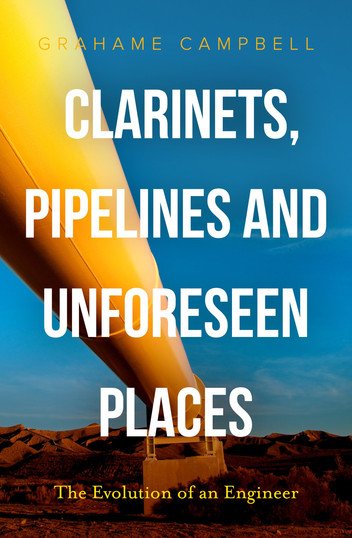
Description
The Evolution of an Engineer: Grahame Campbell’s Journey Through Music, Pipelines, and Unexpected Destinations
Discovering the Evolution of an Engineer Through an Unconventional Lens
The evolution of an engineer rarely follows a straight line. Grahame Campbell’s memoir, “Clarinets, Pipelines and Unforeseen Places,” proves this truth magnificently. His journey interweaves musical passion with technical precision. Moreover, it demonstrates how seemingly unrelated interests create extraordinary professional outcomes. This compelling narrative reveals how one man’s diverse talents shaped a remarkable engineering career.
Campbell’s story begins with an unexpected combination: clarinets and pipelines. Furthermore, these two worlds—music and engineering—rarely intersect in professional memoirs. However, Campbell shows how artistic sensibility enhances technical problem-solving. His clarinet training developed discipline, pattern recognition, and attention to detail. Consequently, these skills became invaluable assets throughout his engineering career.
How Music Shaped an Engineering Mind
The connection between music and engineering runs deeper than most realize. Campbell’s musical background provided unique advantages in his technical work. Additionally, his clarinet practice taught him patience and precision. These qualities proved essential when designing complex pipeline systems. Therefore, readers discover how creative pursuits strengthen analytical capabilities.
Musical training develops spatial reasoning and mathematical thinking. Moreover, it cultivates the ability to see patterns and relationships. Campbell leveraged these skills throughout his engineering projects. His story demonstrates that diverse interests create well-rounded professionals. Furthermore, it challenges the notion that engineers must focus solely on technical subjects.
The Pipeline Engineering Journey: From Theory to Global Practice
Campbell’s engineering career took him to unforeseen places across the globe. His pipeline expertise opened doors to international projects and challenging environments. However, each location presented unique technical and cultural obstacles. The memoir chronicles his experiences in remote regions and bustling industrial centers. Consequently, readers gain insight into the realities of international engineering work.
Pipeline engineering demands both theoretical knowledge and practical problem-solving skills. Campbell’s narrative explores the complexities of designing, constructing, and maintaining pipeline systems. Additionally, he addresses environmental considerations and safety protocols. His experiences span decades of technological advancement in the field. Therefore, the book serves as both personal memoir and industry chronicle.
Unforeseen Places: The Geographic Tapestry of an Engineering Career
The “unforeseen places” in Campbell’s title represent more than geographic locations. They symbolize unexpected career opportunities and personal growth moments. Moreover, they reflect the unpredictable nature of engineering careers. Campbell worked in diverse environments, from harsh climates to politically complex regions. Each location taught him valuable lessons about adaptability and resilience.
His international assignments required cultural sensitivity alongside technical expertise. Furthermore, working in different countries expanded his professional network and worldview. Campbell shares stories of collaboration with local teams and international colleagues. These experiences highlight the human element often overlooked in engineering narratives. Additionally, they demonstrate how technical work connects people across cultural boundaries.
The Evolution of an Engineer: Key Themes and Lessons
Campbell’s memoir explores several interconnected themes throughout its pages. The evolution of an engineer encompasses technical skill development and personal growth. However, it also includes learning to navigate corporate structures and industry changes. His story offers valuable insights for both aspiring and experienced engineers.
Core Lessons from Campbell’s Journey:
- Diverse interests strengthen professional capabilities rather than distract from them
- Adaptability proves essential when working in unforeseen places and situations
- Creative thinking enhances technical problem-solving in unexpected ways
- International experience broadens perspective and increases professional value
- Lifelong learning drives career evolution across decades of industry changes
- Personal passions sustain motivation through challenging professional periods
These lessons resonate beyond engineering into any professional field. Moreover, they challenge conventional career advice about specialization. Campbell’s success stemmed partly from his willingness to embrace diverse interests. Therefore, his story encourages readers to pursue multifaceted development.
Creativity Meets Technical Expertise: A Powerful Combination
The intersection of creativity and technical expertise forms the memoir’s philosophical core. Campbell demonstrates how artistic sensibility enhances engineering work. Furthermore, he shows that technical precision can inform creative expression. This synergy created his unique approach to problem-solving and project management.
Engineers often face complex challenges requiring innovative solutions. Traditional technical training provides essential tools and knowledge. However, creative thinking enables engineers to approach problems from novel angles. Campbell’s musical background gave him this creative edge. Consequently, he could envision solutions others might overlook.
His projects required balancing multiple constraints: budget, timeline, safety, and environmental impact. Additionally, he navigated stakeholder expectations and regulatory requirements. Creative problem-solving helped him find optimal solutions within these constraints. Therefore, his memoir illustrates the practical value of cultivating diverse skills.
Professional Development Through Unexpected Pathways
The evolution of an engineer involves continuous learning and adaptation. Campbell’s career spanned significant technological and industry changes. Moreover, he witnessed shifts in engineering practices, safety standards, and environmental regulations. His ability to evolve with these changes sustained his long career.
Professional development often happens through unexpected opportunities rather than planned progression. Campbell embraced assignments that pushed him beyond his comfort zone. Furthermore, he sought learning experiences in unfamiliar territories and technical areas. This openness to uncertainty accelerated his professional growth. Additionally, it prepared him for leadership roles requiring broad perspective.
His memoir encourages engineers to view career development as exploration rather than linear advancement. Each project and location contributed unique lessons to his professional toolkit. Therefore, readers learn to recognize growth opportunities in unexpected situations.
What Readers Will Gain from This Memoir
“Clarinets, Pipelines and Unforeseen Places” offers multiple layers of value for readers. Engineers will find technical insights and career guidance throughout the narrative. However, the book appeals equally to those interested in unconventional career paths. Campbell’s storytelling makes complex engineering concepts accessible to general audiences.
Key Takeaways for Different Reader Groups:
For Engineers:
- Practical insights into pipeline engineering across different eras and locations
- Career development strategies that embrace diverse interests and experiences
- Real-world examples of technical problem-solving in challenging environments
- Understanding how industry changes affect long-term career trajectories
For Career Professionals:
- Evidence that non-linear career paths can lead to success
- Strategies for leveraging diverse skills in professional contexts
- Insights into international work experiences and cultural adaptation
- Inspiration to pursue personal passions alongside professional obligations
For Students and Early-Career Professionals:
- Realistic portrayal of engineering career possibilities and challenges
- Encouragement to develop broad skill sets and interests
- Understanding of how personal qualities contribute to professional success
- Perspective on long-term career evolution and continuous learning
Why This Engineering Memoir Matters Today
Engineering memoirs often focus narrowly on technical achievements or corporate success. However, Campbell’s narrative takes a more holistic approach. Moreover, it arrives at a time when professionals increasingly seek work-life integration. His story demonstrates that personal passions and professional excellence can coexist productively.
The modern engineering landscape demands more than technical competence alone. Furthermore, globalization requires engineers who understand cultural contexts and human factors. Campbell’s international experiences provide valuable lessons for today’s globally-connected profession. Additionally, his emphasis on adaptability resonates in rapidly-changing technical fields.
His memoir challenges the stereotype of engineers as narrowly-focused technicians. Instead, it presents engineering as a creative, dynamic profession requiring diverse capabilities. Therefore, the book contributes to broader conversations about professional identity and development.
The Intersection of Art and Science in Engineering Practice
Campbell’s clarinet playing represents more than a hobby in his narrative. It symbolizes the artistic dimension present in all engineering work. Moreover, it demonstrates how seemingly disparate skills create synergistic benefits. The discipline required for musical mastery translates directly to engineering excellence.
Both music and engineering require attention to detail and systematic thinking. Furthermore, both involve creating something functional and elegant from basic components. Campbell recognized these parallels early in his career. Consequently, he cultivated both interests rather than choosing between them. His success validates this integrated approach to professional development.
The memoir explores how creative thinking enhances technical work in practical ways. Engineers design systems that must function reliably under various conditions. However, they also seek elegant solutions that optimize multiple variables simultaneously. This optimization process benefits from creative, non-linear thinking. Therefore, Campbell’s artistic background provided competitive advantages throughout his career.
Navigating Unforeseen Challenges in Engineering Projects
Every engineering project encounters unexpected obstacles and complications. Campbell’s memoir provides numerous examples of such challenges across different contexts. Moreover, it reveals how experienced engineers approach problem-solving under pressure. His stories illustrate the gap between theoretical knowledge and practical application.
Pipeline projects face unique challenges related to geography, geology, and environmental conditions. Additionally, they involve complex logistics and coordination among multiple stakeholders. Campbell worked on projects in remote locations with limited infrastructure. Furthermore, he managed teams across cultural and linguistic boundaries. These experiences taught him valuable lessons about flexibility and resourcefulness.
His approach to unforeseen challenges combined technical expertise with interpersonal skills. He understood that engineering problems often have human dimensions requiring diplomatic solutions. Therefore, his memoir emphasizes the importance of communication and collaboration skills. These soft skills proved as crucial as technical knowledge throughout his career.
The Global Perspective: Engineering Across Cultures and Continents
International engineering work exposes professionals to diverse approaches and perspectives. Campbell’s career took him to multiple continents and cultural contexts. Moreover, each location presented unique technical and social learning opportunities. His experiences demonstrate the value of cultural intelligence in engineering practice.
Working internationally requires adapting to different regulatory frameworks and industry standards. Furthermore, it demands sensitivity to local customs and communication styles. Campbell learned to navigate these differences while maintaining project objectives and safety standards. His memoir shares both successes and challenges from these cross-cultural experiences.
The global nature of modern engineering makes Campbell’s experiences particularly relevant today. Additionally, his stories provide practical guidance for engineers pursuing international careers. He addresses topics like team building, stakeholder management, and technical adaptation. Therefore, readers gain actionable insights alongside engaging narratives.
Career Evolution: Adapting to Industry Changes Over Decades
The evolution of an engineer reflects broader changes in technology and industry practices. Campbell’s career spanned significant transformations in pipeline engineering and related fields. Moreover, he witnessed shifts in safety culture, environmental awareness, and project management approaches. His ability to adapt to these changes exemplifies successful long-term career management.
Early in his career, engineering practices relied heavily on manual calculations and traditional methods. However, computerization gradually transformed design, analysis, and project management processes. Campbell embraced these technological changes rather than resisting them. Furthermore, he recognized that continuous learning was essential for remaining relevant. His memoir chronicles this technological evolution through personal experience.
Industry consolidation and globalization also reshaped the engineering landscape during Campbell’s career. Companies merged, creating larger organizations with different cultures and priorities. Additionally, projects became more complex and internationally distributed. Campbell navigated these structural changes while maintaining his professional identity and values.
Lessons for Non-Linear Career Paths
Traditional career advice often emphasizes specialization and linear progression through organizational hierarchies. However, Campbell’s story demonstrates the value of non-linear career development. Moreover, it shows how diverse experiences create unique professional value. His unconventional path led to opportunities unavailable through traditional routes.
Non-linear careers require comfort with uncertainty and willingness to take calculated risks. Campbell accepted assignments in unforeseen places that others might have declined. Furthermore, he pursued projects outside his immediate expertise area. These choices expanded his capabilities and professional network. Consequently, they opened doors to increasingly interesting and challenging opportunities.
His memoir encourages readers to view career development as portfolio building rather than ladder climbing. Each experience contributes unique skills and perspectives to one’s professional toolkit. Therefore, seemingly tangential experiences often prove valuable in unexpected ways. Campbell’s musical background exemplifies this principle perfectly.
The Human Side of Engineering: Stories Beyond Technical Specifications
Engineering memoirs risk becoming dry recitations of technical achievements and project specifications. However, Campbell’s narrative maintains human interest throughout. Moreover, it reveals the personal dimensions of engineering work often overlooked in technical literature. His stories feature memorable characters, challenging situations, and personal growth moments.
The people Campbell worked with across his career form an essential part of his story. He shares anecdotes about colleagues, mentors, and team members from various cultures. Furthermore, he acknowledges how these relationships shaped his professional development. These human connections made challenging projects manageable and successful projects memorable.
His memoir also addresses the personal costs and rewards of an international engineering career. Long assignments away from home tested family relationships and personal resilience. Additionally, they provided extraordinary experiences and personal growth opportunities. Campbell presents these trade-offs honestly, helping readers understand the full reality of such careers.
Practical Wisdom for Aspiring Engineers
Beyond storytelling, Campbell’s memoir offers practical guidance for engineering professionals at all career stages. His experiences provide lessons applicable to contemporary engineering practice. Moreover, his reflections on career decisions offer valuable perspective for those facing similar choices.
He emphasizes the importance of building diverse skills beyond core technical competencies. Furthermore, he advocates for seeking challenging assignments that push professional boundaries. Campbell’s career demonstrates that calculated risk-taking often yields significant rewards. Additionally, he stresses the value of maintaining personal interests alongside professional obligations.
His advice on international work proves particularly valuable for globally-minded engineers. He discusses practical considerations like family impacts, cultural preparation, and career implications. Therefore, readers gain realistic expectations about international engineering careers. His balanced perspective helps professionals make informed decisions about such opportunities.
The Legacy of an Engineering Career: Reflections and Insights
As Campbell reflects on his career, he considers what made it meaningful and successful. The evolution of an engineer ultimately involves more than technical achievements or career advancement. Moreover, it encompasses personal growth, relationships built, and contributions made. His memoir explores these deeper dimensions of professional life.
He identifies key factors that sustained his engagement throughout decades of engineering work. Curiosity and willingness to learn remained constant throughout his career. Furthermore, his diverse interests prevented burnout and maintained fresh perspectives. Campbell’s story suggests that longevity in engineering requires more than technical competence alone.
His reflections also address the changing nature of engineering careers and future challenges. The profession continues evolving with new technologies, environmental concerns, and global dynamics. However, fundamental principles of problem-solving, collaboration, and continuous learning remain essential. Therefore, his experiences offer timeless wisdom despite industry changes.
Why “Clarinets, Pipelines and Unforeseen Places” Deserves Your Attention
This memoir stands out in the engineering literature for several compelling reasons. It combines technical insight with engaging storytelling and personal reflection. Moreover, it addresses the full complexity of an engineering career beyond project descriptions. Campbell’s unique background and experiences create a narrative unlike typical engineering memoirs.
The book appeals to multiple audiences with different interests and needs. Engineers find practical insights and career inspiration throughout the narrative. However, general readers discover an engaging story about pursuing excellence across diverse fields. Additionally, the memoir contributes to broader conversations about career development and work-life integration.
Campbell’s writing makes complex engineering concepts accessible without oversimplification. Furthermore, his storytelling ability keeps readers engaged through technical discussions and personal anecdotes. The memoir balances professional content with human interest effectively. Therefore, it succeeds both as engineering literature and compelling personal narrative.
Conclusion: Embracing the Unexpected in Engineering Careers
“Clarinets, Pipelines and Unforeseen Places: The Evolution of an Engineer” offers a refreshing perspective on engineering careers. Grahame Campbell’s journey demonstrates that professional success doesn’t require abandoning personal passions or following predetermined paths. Moreover, his story shows how diverse interests and unexpected opportunities create unique professional value.
The memoir’s central message resonates across professions and career stages. Embracing uncertainty and cultivating diverse capabilities leads to richer professional experiences. Furthermore, the intersection of creativity and technical expertise produces innovative solutions and sustained engagement. Campbell’s career exemplifies these principles through decades of engineering practice across global contexts.
For engineers seeking inspiration or guidance, this memoir provides both practical wisdom and encouragement. It validates non-traditional career paths while offering concrete lessons from real-world experience. Additionally, it reminds readers that engineering careers involve human relationships, personal growth, and continuous adaptation. Therefore, Campbell’s story enriches our understanding of what it means to evolve as an engineer.
Whether you’re an engineering student, experienced professional, or simply interested in unconventional career journeys, this memoir offers valuable insights. Campbell’s unique combination of musical artistry and engineering expertise created a remarkable career spanning unforeseen places and unexpected opportunities.
His story invites readers to consider how their own diverse interests might enhance their professional lives. Ultimately, “Clarinets, Pipelines and Unforeseen Places” celebrates the evolution of an engineer who refused to choose between passion and profession—and thrived because of it.





Reviews
There are no reviews yet.