Description
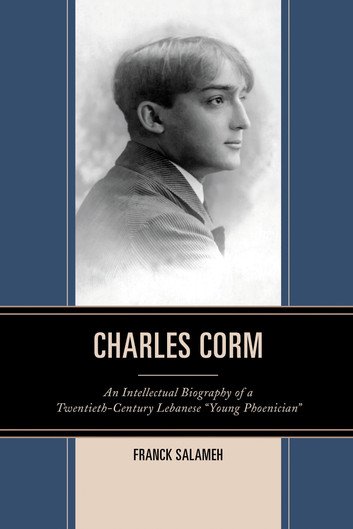
Charles Corm: An Intellectual Biography of a Twentieth-Century Lebanese “Young Phoenician”
Introduction: Charles Corm and Lebanese Intellectual History
Charles Corm stands as a towering figure in twentieth-century Lebanese thought. This intellectual biography by Franck Salameh comprehensively explores the remarkable life of its subject. Moreover, it examines his role as poet laureate of the Young Phoenicians. Consequently, readers discover a visionary who shaped modern Lebanese national identity.
Charles Corm was a guiding spirit behind Lebanese nationalism and cultural revival. Furthermore, he advocated for identity narratives rooted in Phoenician heritage. His vision profoundly emphasized coexistence, liberal democracy, and cultural pluralism. Therefore, his ideas remain significantly relevant to contemporary Middle Eastern discourse.
The book thoroughly delves into Corm’s multifaceted contributions to Lebanese society. Additionally, it situates his work within broader twentieth-century intellectual movements. Salameh presents Corm as both a poet and a political thinker simultaneously. Consequently, the biography reveals the complexity of Lebanese identity formation.
Charles Corm: Early Life and Formative Years
Charles Corm was born into a prominent Lebanese family during tumultuous times. His upbringing exposed him to diverse cultural and intellectual influences from an early age. Moreover, he received an education that harmoniously combined Eastern and Western traditions. This background fundamentally shaped his unique perspective on Lebanese identity.
He grew up during the Ottoman Empire’s final decades in Lebanon. Furthermore, he witnessed the transition from Ottoman rule to French mandate. These political transformations profoundly influenced his intellectual development and nationalist convictions. Consequently, he became deeply invested in clearly defining Lebanese distinctiveness.
His family’s position allowed him access to elite educational opportunities. Additionally, he engaged with European intellectual currents while maintaining Lebanese roots. This dual exposure informed his later advocacy for cultural hybridity. Therefore, his formative years prepared him for his role as cultural leader.
He developed literary talents and business acumen simultaneously during his youth. Moreover, he understood that cultural movements required both vision and resources. His entrepreneurial success later funded his cultural and intellectual initiatives. Consequently, he could pursue his nationalist vision without financial constraints.
The Young Phoenicians Movement and Charles Corm’s Leadership
The Young Phoenicians movement emerged as a distinctive Lebanese nationalist ideology. Charles Corm served as its poet laureate and intellectual guiding force. Furthermore, the movement advocated for a Lebanese identity rooted in ancient Phoenician civilization. Consequently, it offered an alternative to pan-Arab and pan-Syrian nationalisms.
The movement specifically emphasized Lebanon’s unique historical and cultural trajectory. Additionally, it celebrated the country’s Mediterranean heritage and commercial traditions. Young Phoenicians rejected the notion that Lebanon was merely Arab. Therefore, they sought to establish a distinct Lebanese national consciousness.
Corm articulated the movement’s principles through poetry, essays, and cultural initiatives. Moreover, he organized intellectual gatherings and cultural events promoting Phoenician identity. His charisma and eloquence attracted followers from Lebanon’s educated elite. Consequently, the movement gained significant influence during the mandate period.
The Young Phoenicians advocated for several core principles:
- Lebanese distinctiveness is rooted in Phoenician ancestry and heritage.
- Cultural pluralism embraces Lebanon’s diverse religious communities equally.
- Liberal democracy is the appropriate political system for Lebanon.
- Economic development through commerce and entrepreneurship traditionally
- Mediterranean orientation rather than exclusive Arab identification
- Coexistence among different faiths and ethnic groups is peaceful.
- Modern education combines Western knowledge with Lebanese cultural values.
- Preservation of Lebanon’s unique linguistic and cultural characteristics
These principles subsequently shaped Lebanese political discourse for generations. Furthermore, they significantly influenced the development of Lebanese national institutions. The movement’s legacy remains visible in contemporary debates over Lebanese identity. Therefore, understanding Corm’s role illuminates modern Lebanese political culture.
Charles Corm’s Intellectual Contributions and Philosophy
Charles Corm developed a sophisticated philosophy of Lebanese national identity. He argued that Lebanon possessed a distinct civilization predating Arab conquest. Moreover, he emphasized continuity between ancient Phoenicians and modern Lebanese people. Consequently, he challenged dominant narratives about the formation of Middle Eastern identity.
His intellectual framework carefully combined historical analysis with cultural observation. Furthermore, he drew on archaeology, linguistics, and anthropology to support arguments. His approach was scholarly yet accessible to educated general audiences. Therefore, his ideas gained effective traction beyond academic circles.
He advocated for what Salameh calls “Lebanese-Phoenician hybridity” as an identity model. Additionally, this concept acknowledged Lebanon’s complex cultural composition without denying diversity. Corm believed Lebanese identity could encompass multiple influences harmoniously simultaneously. Consequently, his vision promoted unity while respecting communal differences.
He paid tribute to the efforts to revive the Arabic language and literature. Moreover, he specifically honored figures like Nasif Yazigi and Ibrahim Yazigi. These intellectuals modernized Arabic and significantly enriched its literary traditions. Therefore, Corm’s Phoenicianism didn’t reject Arabic culture but contextualized it.
His philosophy emphasized that Lebanese identity transcended religious sectarianism fundamentally. Furthermore, he believed Phoenician heritage united all Lebanese regardless of faith. This inclusive vision contrasted with sectarian political arrangements emerging then. Consequently, his ideas offered an alternative to confessional politics.
He promoted liberal democracy as the system best suited for Lebanon. Additionally, he advocated for individual rights, the rule of law, and constitutional governance. His political philosophy reflected European Enlightenment values adapted to the Lebanese context. Therefore, he sought to modernize Lebanon while preserving its distinctiveness.
Corm as Poet and Literary Figure
Charles Corm achieved recognition as an accomplished poet in French and Arabic. His poetry masterfully expressed nationalist themes through sophisticated literary techniques. Moreover, his verses eloquently celebrated Lebanon’s natural beauty and historical grandeur. Consequently, his literary work reinforced his political and cultural messages.
He wrote primarily in French, reflecting Lebanon’s francophone intellectual culture at the time. Furthermore, his choice of language connected Lebanese literature to European traditions. His poetry demonstrated technical mastery and emotional depth simultaneously and consistently. Therefore, he earned respect as a serious literary artist rather than as a political activist.
His poems often vividly invoked Phoenician imagery and Mediterranean landscapes. Additionally, he used historical references to connect past glory with present potential. His literary style combined romanticism with nationalist didacticism effectively throughout. Consequently, his poetry served both aesthetic and ideological purposes.
He published several poetry collections that received regional critical acclaim. Moreover, his work was discussed in literary circles across the Francophone world. His reputation as a poet enhanced his credibility as a cultural and political thinker. Therefore, his literary achievements amplified his influence on Lebanese society.
His poetry passionately expressed a longing for Lebanese independence and cultural renaissance. Furthermore, it articulated hope for Lebanon’s future as a distinct Mediterranean nation. His verses inspired fellow nationalists and profoundly shaped Lebanese cultural consciousness. Consequently, his literary legacy remains integral to Lebanese cultural heritage.
Charles Corm’s Role in Lebanese Society and Politics
Charles Corm became known as “the conscience” of Lebanese society during critical periods. He courageously spoke out on political issues affecting Lebanon’s future. Moreover, he consistently used his influence to advocate for Lebanese interests. Consequently, he shaped public discourse during the mandate and independence eras.
He participated in debates about Lebanon’s constitutional structure and political system. Furthermore, he argued for arrangements that would permanently protect Lebanese distinctiveness. His interventions influenced the development of Lebanon’s confessional political framework. Therefore, his political engagement had significant lasting institutional consequences.
He deliberately maintained relationships with Lebanese political leaders across sectarian lines. Additionally, he sought to build a broad consensus around Lebanese national identity. His ability to bridge communal divides enhanced his effectiveness as a cultural leader. Consequently, he commanded respect from diverse Lebanese communities simultaneously.
He vigorously opposed both pan-Arab nationalism and the Greater Syria movements. Moreover, he argued these ideologies threatened Lebanon’s unique identity and independence. His resistance to these movements shaped Lebanese political alignments for decades. Therefore, his political stance had profound implications for regional politics.
He advocated for strong strategic ties with France and Western powers. Furthermore, he believed these connections would protect Lebanese independence and development. His pro-Western orientation reflected his cultural philosophy and political calculations. Consequently, he influenced Lebanon’s international orientation during its formative years.
Entrepreneurial Activities and Cultural Initiatives
Charles Corm succeeded as an entrepreneur in addition to his intellectual pursuits. He built successful businesses that consistently generated substantial wealth. Moreover, his commercial success enabled him to pursue his cultural work independently. Consequently, he could fund nationalist initiatives without relying on external support.
He actively invested his resources in cultural projects promoting Lebanese identity. Furthermore, he generously sponsored publications, cultural events, and educational initiatives. His patronage supported other intellectuals and artists sharing his vision. Therefore, his entrepreneurial success significantly amplified his cultural impact.
He understood that cultural movements required institutional and financial foundations. Additionally, he worked to create sustainable structures for promoting Phoenician identity. His business acumen informed his approach to cultural and political organizing. Consequently, he built lasting institutions beyond his personal influence.
He used his business connections to advance Lebanese economic interests internationally. Moreover, he promoted Lebanon as a commercial hub connecting East and West. His vision combined cultural nationalism with strategic, effective economic development. Therefore, he saw commerce and culture as mutually reinforcing elements.
Historical Context: Twentieth-Century Lebanon
Understanding Charles Corm requires a thorough examination of Lebanon’s tumultuous twentieth-century history. The period witnessed Ottoman collapse, French mandate, and eventual independence. Moreover, Lebanon navigated competing nationalist ideologies and regional power struggles. Consequently, Corm’s ideas emerged within a complex and contested political environment.
The Ottoman Empire’s dissolution created opportunities for new national identities. Furthermore, the European powers sought to reshape the Middle East in line with their interests. Lebanon’s future remained fundamentally uncertain and subject to competing visions. Therefore, intellectuals like Corm played crucial roles in defining possibilities.
The French mandate period (1920-1943) shaped Lebanese political and cultural development. Additionally, French influence reinforced Lebanon’s connections to European culture and politics. This period saw intense debates about Lebanese identity and political structure. Consequently, Corm’s interventions occurred during formative moments of nation-building.
Lebanon’s religious diversity complicated efforts to forge a unified national identity. Moreover, different communities held varying visions for Lebanon’s future and orientation. Corm’s Phoenicianism offered a specific solution to this challenge of diversity. Therefore, his ideas must be understood within Lebanon’s sectarian complexity.
Regional developments, including Arab nationalism and Zionism, influenced Lebanese politics. Furthermore, Lebanon’s small size made it vulnerable to constant regional pressures. Corm’s advocacy for Lebanese distinctiveness responded to these external challenges. Consequently, his nationalism served both defensive and affirmative purposes.
Franck Salameh’s Scholarly Approach and Methodology
Franck Salameh brings rigorous scholarship to this intellectual biography of Charles Corm. He effectively combines historical research, cultural analysis, and political theory. Moreover, he situates Corm within the broader history of Middle Eastern intellectual life. Consequently, the biography serves multiple scholarly purposes simultaneously.
Salameh draws on extensive archival research, including Corm’s writings and correspondence. Furthermore, he thoroughly examines contemporary sources documenting Corm’s activities and influence. His methodology skillfully combines biographical narrative with intellectual history. Therefore, the book illuminates both individual and broader historical patterns.
He analyzes Corm’s ideas within their historical context while assessing contemporary relevance. Additionally, he evaluates Corm’s contributions to Lebanese and Middle Eastern thought. His approach is sympathetic yet critical and analytically rigorous throughout. Consequently, the biography avoids hagiography while appreciating Corm’s significance.
Salameh connects Corm’s story to broader themes in Middle Eastern studies. Moreover, he explores questions of identity, nationalism, and modernity in the region. His analysis contributes to ongoing scholarly debates about Middle Eastern history. Therefore, the book serves academic audiences beyond specialists in Lebanese studies.
He writes accessibly while maintaining scholarly standards and analytical depth. Furthermore, he makes Corm’s complex ideas understandable to general educated readers. His prose effectively and consistently combines narrative engagement with intellectual substance. Consequently, the biography successfully reaches both academic and general audiences.
The Levant and Near East Book Series Context
This biography appears in The Levant and Near East: A Multidisciplinary Book Series. The series comprehensively examines the region’s history, culture, and politics. Moreover, it publishes scholarship employing diverse methodological approaches and perspectives. Consequently, Salameh’s work contributes to the broader scholarly conversation about the region.
The series emphasizes multidisciplinary approaches to understanding the Levant and Near East. Furthermore, it welcomes historical, anthropological, literary, and political science perspectives. This methodological openness suits Salameh’s approach to Corm’s intellectual biography. Therefore, the book fits naturally within the series’ scholarly framework.
The series addresses both historical and contemporary issues affecting the region. Additionally, it examines how past developments shape present realities and future possibilities. Corm’s story illuminates the historical roots of contemporary debates over Lebanese identity. Consequently, the biography contributes to understanding current Middle Eastern dynamics.
The series publishes works accessible to scholars across disciplines and regions. Moreover, it seeks to advance knowledge about an often-misunderstood region globally. Salameh’s biography makes Lebanese intellectual history available to international audiences. Therefore, it serves the series’ mission of promoting regional understanding.
Charles Corm’s Vision for Middle Eastern Coexistence
Charles Corm articulated a humanitarian vision for Middle Eastern coexistence and pluralism. He believed diverse communities could live together peacefully under appropriate frameworks. Moreover, he advocated political systems that respect communal identities while fostering unity. Consequently, his ideas consistently addressed the region’s fundamental challenges.
His vision emphasized cultural pluralism as a strength rather than a weakness. Furthermore, he argued that Lebanon’s diversity uniquely positioned it for success. His philosophy rejected homogenizing nationalisms that denied legitimate differences among communities. Therefore, he offered an alternative to both assimilationist and separatist ideologies.
He promoted liberal democracy as the system best suited to accommodate diversity peacefully. Additionally, he believed constitutional protections could safeguard minority rights while enabling governance. His political philosophy sought to balance communal autonomy with national unity. Consequently, his ideas significantly influenced Lebanon’s confessional democratic system.
He advocated for education, promoting mutual understanding and respect across communities. Moreover, he believed cultural exchange could reduce sectarian tensions and prejudices. His vision included institutions fostering dialogue and cooperation among different groups. Therefore, he saw culture and education as essential to peaceful coexistence.
His humanitarian vision extended beyond Lebanon to the broader Middle East. Furthermore, he hoped that Lebanese pluralism could serve as a model of coexistence for the entire region. His optimism about diversity’s potential contrasted with exclusivist nationalist movements elsewhere. Consequently, his ideas represented a road not taken in Middle Eastern history.
Identity Narratives and Phoenician Hybridity
Charles Corm’s concept of Phoenician hybridity offered a sophisticated approach to Lebanese identity. He acknowledged Lebanon’s complex cultural composition resulting from historical layering. Moreover, he argued this complexity constituted Lebanon’s distinctive character and strength. Consequently, his framework embraced rather than denied Lebanon’s multifaceted heritage.
He traced Lebanese identity to ancient Phoenician civilization and its achievements. Furthermore, he emphasized the Phoenicians’ commercial prowess, cultural sophistication, and Mediterranean orientation. His narrative directly connected modern Lebanese to this glorious ancient heritage. Therefore, he provided the Lebanese with a proud historical identity transcending sectarianism.
He recognized that Lebanon had absorbed multiple influences throughout its history. Additionally, he acknowledged Arab, Ottoman, and European contributions to Lebanese culture. His concept of hybridity integrated these influences coherently within the Phoenician foundational framework. Consequently, his approach was inclusive rather than exclusionary regarding cultural influences.
He argued that Lebanese identity could honor the Arabic language and literature. Moreover, he celebrated figures who enriched Arabic cultural traditions, such as the Yazidis. His Phoenicianism didn’t require rejecting Arabic culture; rather, it required contextualizing it appropriately. Therefore, his vision allowed for cultural complexity and multiple loyalties simultaneously.
His identity narrative challenged both Arab nationalist and isolationist Maronite narratives. Furthermore, it offered a middle ground between competing visions of Lebanese identity. His sophisticated approach recognized legitimate concerns from different communities respectfully. Consequently, his framework fostered greater national unity.
Connection to Arabic Language and Literature Revival
Charles Corm maintained a deep appreciation for the Arabic language and literary traditions. He honored intellectuals who modernized Arabic and significantly enriched its literature. Moreover, he specifically praised Nasif Yazigi and Ibrahim Yazigi for their contributions to Arabic. Consequently, his Phoenicianism coexisted with respect for Arabic cultural achievements.
Nasif Yazigi (1800-1871) helped revive Arabic belle lettres during the nineteenth century. Furthermore, he contributed to modernizing Arabic for contemporary use. His work laid the foundations for the Arabic literary renaissance in the Levant. Therefore, Corm recognized his importance to Lebanese and Arab cultural heritage.
Ibrahim Yazigi (1847-1906) continued his father’s work in modernizing the Arabic language and literature. Additionally, he rigorously promoted linguistic purism and literary excellence in Arabic. His contributions advanced Arabic as a vehicle for modern thought and expression. Consequently, Corm honored his role in the development of Arabic culture.
Corm’s tribute to these figures demonstrated his nuanced understanding of Lebanese identity. Moreover, it showed that Phoenicianism didn’t require rejecting Arabic cultural contributions. His approach integrated Arabic literary heritage within a broader Lebanese cultural framework. Therefore, his vision was more inclusive than critics sometimes acknowledged.
He believed Lebanese intellectuals could contribute to Arabic culture while maintaining distinctiveness. Furthermore, he saw no contradiction between Lebanese nationalism and Arabic literary participation. His position reflected the practical complexities of Lebanese cultural identity. Consequently, his approach offered flexibility that rigid nationalisms lacked.
Influence on Modern Lebanese Intellectual History
Charles Corm profoundly influenced Lebanese intellectual history throughout the twentieth century. His ideas shaped how generations of Lebanese understood their national identity. Moreover, his vision informed political debates and cultural movements for decades. Consequently, his intellectual legacy extends far beyond his lifetime significantly.
He established frameworks for discussing Lebanese identity that remain relevant today. Furthermore, his emphasis on distinctiveness continues to influence Lebanese nationalist discourse currently. His ideas resurface whenever Lebanon faces identity crises or external pressures. Therefore, his intellectual contributions maintain contemporary political significance.
He inspired subsequent generations of Lebanese intellectuals and cultural figures. Additionally, his work provided a foundation for later scholarship on Lebanese identity. Academics continue to engage with his ideas, whether in agreement or disagreement. Consequently, he remains central to Lebanese intellectual history and identity studies.
His vision influenced the development of Lebanese educational and cultural institutions. Moreover, his ideas shaped curricula and cultural programming promoting Lebanese identity. His impact extended beyond abstract philosophy to concrete institutional manifestations. Therefore, his influence operated at both ideological and practical levels.
He contributed to establishing intellectual traditions emphasizing Lebanese exceptionalism and distinctiveness. Furthermore, his work legitimized scholarly inquiry into pre-Arab Lebanese history. His intellectual legacy enabled later research into Phoenician and ancient Lebanese heritage. Consequently, he opened scholarly pathways that continue producing knowledge today.
Reception and Criticism of Corm’s Ideas
Charles Corm’s ideas generated both enthusiastic support and vigorous criticism during his lifetime. His Phoenician nationalism appealed to many Lebanese seeking a distinctive identity. Moreover, his vision resonated particularly with Christian communities fearing Arab nationalism. Consequently, his movement gained significant following among certain Lebanese populations.
Critics argued that his Phoenicianism was historically dubious and politically divisive. Furthermore, they claimed it served sectarian interests rather than genuine national unity. Arab nationalists particularly opposed his rejection of Arab identity for Lebanon. Therefore, his ideas remained controversial and contested throughout his career.
Some scholars questioned the historical continuity he claimed between the Phoenicians and Lebanese. Additionally, they argued that his narrative oversimplified Lebanon’s complex demographic history. His critics saw his ideas as myth-making rather than serious historiography. Consequently, academic debates about his claims continue among historians today.
Supporters praised his vision as offering an inclusive framework for Lebanese diversity. Moreover, they appreciated his emphasis on coexistence and liberal democratic values. His advocates argued that his ideas promoted unity while respecting differences. Therefore, they saw his philosophy as constructive rather than divisive.
Contemporary scholars increasingly reassess his contributions with more nuanced perspectives. Furthermore, they recognize both the limitations and the insights of his intellectual project. Modern analysis situates his ideas more carefully within their historical context. Consequently, current scholarship offers a balanced evaluation of his legacy and significance.
Salameh’s Argument for Corm’s Contemporary Relevance
Franck Salameh argues that Charles Corm’s ideas remain relevant to contemporary Lebanon. He suggests that Corm’s vision offers alternatives to current political dysfunction. Moreover, he contends that Corm’s humanitarian values could address ongoing sectarian tensions. Consequently, Salameh presents the biography as more than a historical exercise.
Salameh portrays Corm’s story as a “breath of fresh air” for the region. Furthermore, he argues that the Middle East has forgotten its homegrown humanistic traditions. Corm’s liberal democratic vision contrasts with the authoritarian and sectarian politics that dominate today. Therefore, Salameh suggests that recovering Corm’s ideas could inspire positive change.
He argues that Corm advocated for coexistence, culture, and liberal democracy. Additionally, these values remain desperately needed in contemporary Middle Eastern politics. Salameh presents Corm as representing possibilities that the region tragically abandoned. Consequently, the biography serves as a reflection on paths not taken.
Salameh acknowledges that the Middle East remains “mostly unreceptive” to Corm’s ideas. Moreover, he recognizes that current political realities differ dramatically from Corm’s era. His argument is not that Corm’s specific proposals remain applicable directly. Therefore, he advocates for recovering Corm’s spirit rather than the literal program.
He suggests that Corm’s emphasis on pluralism and coexistence offers timeless wisdom. Furthermore, he argues that Corm’s humanitarian vision transcends its specific historical context. Salameh presents the biography as both historical scholarship and contemporary intervention. Consequently, the book engages present debates while illuminating past intellectual history.
Educational and Cultural Influence
Charles Corm’s influence extended significantly into Lebanese educational and cultural spheres. He promoted educational initiatives emphasizing Lebanese history and cultural distinctiveness. Moreover, he supported institutions teaching Phoenician heritage and Lebanese national identity. Consequently, his impact shaped how generations of Lebanese learned about themselves.
He advocated for curricula that balanced Arabic language instruction with Lebanese history. Furthermore, he believed education should foster both cultural literacy and national consciousness. His vision influenced educational policy debates during the mandate and independence periods. Therefore, his ideas affected practical educational outcomes beyond abstract philosophy.
He supported cultural institutions promoting Lebanese arts, literature, and historical research. Additionally, he patronized artists and writers exploring Lebanese themes and identity. His cultural initiatives created infrastructure for Lebanese cultural production and preservation. Consequently, his influence operated through institutions outlasting his personal involvement.
He actively promoted archaeological research into Lebanon’s Phoenician and ancient heritage. Moreover, he believed material evidence could substantiate claims about Lebanese historical continuity. His support for archaeology contributed to the development of Lebanese historical consciousness. Therefore, his influence extended significantly into scientific and scholarly domains.
His cultural legacy includes inspiring artistic and literary works exploring Lebanese identity. Furthermore, subsequent generations of Lebanese artists engaged with themes he championed. His vision provided a framework for Lebanese cultural production across multiple genres. Consequently, his influence permeates Lebanese cultural life beyond direct political impact.
The Biography’s Contribution to Middle Eastern Studies
Salameh’s biography makes significant contributions to Middle Eastern studies as an academic field. It thoroughly illuminates understudied aspects of Lebanese and Levantine intellectual history. Moreover, it demonstrates the diversity of nationalist ideologies in the modern Middle East. Consequently, the book enriches scholarly understanding of regional intellectual traditions.
The biography challenges simplistic narratives about Middle Eastern nationalism and identity. Furthermore, it shows that the region produced diverse and sophisticated political philosophies. Salameh’s work complicates standard accounts emphasizing only Arab nationalism or Islamism. Therefore, it contributes to a more nuanced understanding of Middle Eastern political thought.
It demonstrates the importance of studying minority and alternative nationalist movements. Additionally, it shows how these movements shaped regional politics even when unsuccessful. The biography reveals complexity often obscured in dominant historical narratives. Consequently, it encourages scholars to examine overlooked intellectual traditions and movements.
It contributes to understanding the relationship between identity, nationalism, and state formation. Moreover, it explores how intellectuals actively construct and contest national identities. Salameh’s analysis illuminates processes of identity formation in postcolonial contexts. Therefore, the book offers insights applicable beyond the Lebanese case specifically.
It provides a model for intellectual biography combining rigorous scholarship with accessibility. Furthermore, it demonstrates how individual lives effectively illuminate broader historical patterns. Salameh’s methodological approach could inspire similar studies of other regional intellectuals. Consequently, the book contributes methodologically and substantively to the field.
Conclusion: The Enduring Legacy of Charles Corm
Charles Corm: An Intellectual Biography of a Twentieth-Century Lebanese “Young Phoenician” recovers a crucial figure. Franck Salameh presents Corm as a visionary whose ideas deserve serious reconsideration. Moreover, the biography illuminates Lebanese intellectual history and the formation of identity in comprehensive detail. Consequently, the book serves both scholarly and contemporary political purposes effectively.
Charles Corm articulated a sophisticated vision for Lebanese national identity and political organization. Furthermore, his Phoenician nationalism offered an alternative to the dominant regional ideologies at the time. His emphasis on pluralism, coexistence, and liberal democracy remains relevant today. Therefore, his intellectual legacy transcends his specific historical moment significantly.
The biography demonstrates that the Middle East produced diverse intellectual traditions. Additionally, it shows that homegrown humanistic philosophies existed alongside authoritarian ideologies. Salameh’s work challenges stereotypes about Middle Eastern political thought and possibilities. Consequently, it contributes to a more nuanced understanding of the region.
Corm’s story represents both achievement and tragedy in Middle Eastern history. Moreover, it illustrates possibilities that the region largely failed to realize. His vision for Lebanese and Middle Eastern coexistence remains unfulfilled substantially. Therefore, the biography serves as a reflection on what might have been.
Salameh’s scholarly achievement makes Corm accessible to international contemporary audiences. Furthermore, the biography carefully preserves and analyzes an important intellectual legacy. The book ensures that Corm’s contributions to Lebanese and Middle Eastern thought endure. Consequently, it serves an essential role in Lebanese studies and regional scholarship.
Charles Corm’s humanitarian vision and intellectual sophistication deserve recognition and study. Moreover, his ideas offer resources for addressing contemporary Middle Eastern challenges. This intellectual biography ensures his legacy informs future generations of scholars and citizens. Therefore, Salameh’s work makes an invaluable contribution to comprehensively and accessibly understanding Lebanese identity and Middle Eastern intellectual history.


Reviews
There are no reviews yet.