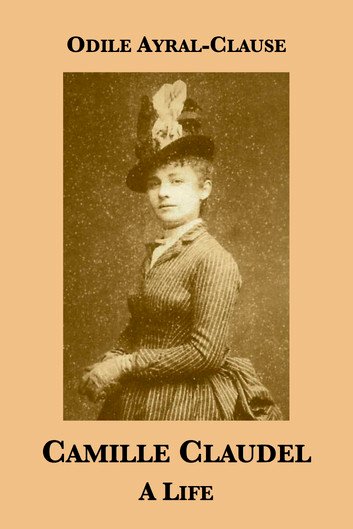
Description
Camille Claudel: A Life – A Comprehensive Synopsis of Odile Ayral-Clause’s Definitive Biography
Introduction: Understanding Camille Claudel’s Extraordinary Journey
Camille Claudel stands as one of history’s most talented yet tragic sculptors. Her story combines artistic brilliance with personal suffering. Moreover, her life reveals the challenges women artists faced in 19th-century France. This biography by Odile Ayral-Clause explores every dimension of her existence.
The book offers unprecedented insight into Camille Claudel’s creative genius. Furthermore, it examines her tumultuous relationship with Auguste Rodin. Ayral-Clause spent years researching archives, letters, and medical records. Therefore, this work represents the most complete portrait available. Additionally, it challenges many myths surrounding this remarkable woman.
Camille Claudel: Early Life and Artistic Awakening
Camille Claudel was born in 1864 in Fère-en-Tardenois, France. Her family soon recognized her exceptional artistic talent. However, her father initially opposed her artistic ambitions. Nevertheless, young Camille remained determined to pursue sculpture. She moved to Paris in 1881 to study art formally.
Paris offered Camille unprecedented opportunities for artistic development. She enrolled at the Académie Colarossi because women were not allowed to attend the École des Beaux-Arts. Moreover, she quickly distinguished herself among her peers. Her early works demonstrated remarkable technical skill and emotional depth. Consequently, she attracted attention from established artists and critics.
The Rodin Years: Camille Claudel’s Most Productive Period
In 1883, Camille Claudel joined Auguste Rodin’s workshop as an assistant. This partnership would define her life for fifteen years. Initially, their relationship was purely professional and mutually beneficial. However, it soon evolved into a passionate romantic affair. Additionally, their artistic collaboration produced some extraordinary works.
Camille contributed significantly to Rodin’s most famous sculptures. She worked on “The Gates of Hell” and influenced “The Burghers of Calais.” Furthermore, she served as his model, muse, and creative partner. Yet Rodin often failed to publicly acknowledge her contributions. Therefore, tension gradually developed between them despite their deep connection.
During this period, Camille Claudel created her most celebrated independent works. Her sculptures included “The Waltz,” “Sakuntala,” and “The Age of Maturity.” Moreover, these pieces showcased her unique artistic vision and technical mastery. Critics praised her ability to capture movement and emotion in marble. However, she struggled constantly for recognition separate from Rodin’s shadow.
Camille Claudel’s Artistic Style and Innovations
Camille Claudel developed a distinctive sculptural style that set her apart. Her works emphasized fluidity, sensuality, and psychological depth. Additionally, she excelled at capturing intimate human moments and relationships. Her technique combined classical training with bold modern sensibilities. Therefore, her sculptures felt both timeless and revolutionary.
Key characteristics of her artistic approach included:
- Dynamic composition: She portrayed bodies in motion rather than static poses
- Emotional intensity: Her figures conveyed deep psychological states and relationships
- Technical mastery: She worked confidently in marble, bronze, and onyx
- Intimate scale: Many works focused on small, personal moments rather than grand themes
- Innovative groupings: She created complex multi-figure compositions with narrative depth
Her sculpture “The Age of Maturity” exemplifies her genius perfectly. It depicts three figures representing youth, maturity, and old age. Moreover, it symbolically portrayed her relationship with Rodin and his longtime companion. The work demonstrates her ability to merge personal experience with universal themes. Consequently, it remains one of her most powerful and moving creations.
The Break with Rodin: Camille Claudel’s Descent into Isolation
By 1898, Camille Claudel permanently ended her relationship with Auguste Rodin. The breakup devastated her emotionally and professionally. Furthermore, Rodin’s influence made it difficult for her to secure commissions. She became increasingly isolated from the Parisian art world. Additionally, financial difficulties compounded her growing desperation and paranoia.
During this period, Camille began destroying many of her own sculptures. She believed Rodin was stealing her ideas and sabotaging her career. Moreover, she suspected conspiracies against her at every turn. Her behavior became erratic, and she withdrew from friends and family. However, she continued creating powerful works despite her deteriorating mental state.
The book reveals how society failed Camille during this critical period. Male artists received support and understanding during creative struggles. However, women exhibiting similar behavior faced harsh judgment and isolation. Therefore, Camille’s mental health crisis was both personal and systemic. Additionally, her family grew increasingly concerned about her welfare and reputation.
Camille Claudel: The Asylum Years
In 1913, Camille Claudel’s family committed her to a psychiatric institution. Her father had recently died, removing her primary protector. Moreover, her mother and brother, Paul, orchestrated her involuntary commitment. She would spend the remaining thirty years of her life institutionalized. Furthermore, she never sculpted again after entering the asylum.
The conditions at the asylum were harsh and dehumanizing. Camille repeatedly requested release but was consistently denied. Additionally, her family rarely visited despite her desperate pleas. Medical records show she was likely not severely mentally ill. However, the stigma and her family’s shame kept her imprisoned. Therefore, her confinement represents one of history’s great artistic tragedies.
Ayral-Clause’s research reveals shocking details about this period. Letters show Camille remained lucid and articulate throughout her confinement. Moreover, doctors noted she could have lived independently with minimal support. Yet her family refused to take responsibility for her care. Consequently, she died in the asylum in 1943, forgotten and alone.
Camille Claudel’s Artistic Legacy and Rediscovery
For decades after her death, Camille Claudel remained largely forgotten. Art historians dismissed her as merely Rodin’s student and mistress. However, feminist scholars began reassessing her work in the 1980s. Moreover, a major retrospective in 1984 sparked renewed international interest. Therefore, her reputation has grown tremendously in recent decades.
Today, Camille Claudel is recognized as a major sculptor independently. Museums worldwide display her works prominently in their collections. Additionally, her life has inspired films, plays, and numerous biographies. Her story resonates with contemporary discussions about women artists and mental health. Furthermore, she symbolizes the countless talented women history has overlooked.
The Musée Camille Claudel opened in Nogent-sur-Seine, France, in 2017. It houses the world’s largest collection of her sculptures. Moreover, it contextualizes her work within the broader artistic movements. Visitors can now appreciate her genius without Rodin’s overshadowing presence. Consequently, new generations discover her remarkable talent and tragic story.
What Odile Ayral-Clause’s Biography Reveals
Ayral-Clause’s “Camille Claudel: A Life” offers the most comprehensive examination available. The author spent years researching in French archives and medical facilities. Moreover, she interviewed descendants and examined previously unavailable documents. Therefore, this biography corrects many misconceptions and fills crucial gaps. Additionally, it presents Camille as a complete, complex human being.
The book challenges the romantic myth of the “mad artist.” Instead, it shows how societal structures destroyed a brilliant woman. Furthermore, it documents the specific ways gender discrimination limited her opportunities. Ayral-Clause demonstrates that Camille’s “madness” was partly justified anger and frustration. However, she also acknowledges genuine mental health struggles without sensationalizing them.
Key revelations in the biography include:
- Professional sabotage: Documentation of how Rodin’s circle actively undermined her career
- Family dynamics: Complex relationships with her mother and brother, Paul Claudel
- Financial struggles: Detailed accounts of her poverty and desperate attempts to survive
- Asylum conditions: Shocking evidence of neglect and inappropriate long-term institutionalization
- Artistic development: Analysis of her evolving style and technical innovations
The biography also explores Camille Claudel’s personality beyond the tragic narrative. She was witty, passionate, and fiercely independent. Moreover, she maintained deep friendships and inspired loyalty among supporters. Therefore, readers encounter a fully realized person rather than a stereotype. Additionally, the book celebrates her achievements while acknowledging her suffering.
The Historical Context: Women Artists in 19th-Century France
Ayral-Clause situates Camille Claudel effectively within her historical moment. The 19th century offered limited opportunities for women artists. Furthermore, sculpture was considered particularly inappropriate for women due to physical demands. Society expected women to pursue “genteel” arts, such as watercolor painting. Therefore, Camille’s choice of sculpture was itself a radical act.
Women couldn’t attend the prestigious École des Beaux-Arts until 1897. Moreover, they were excluded from studying nude models, essential for sculptors. Female artists also struggled to secure studio space and materials. Additionally, critics often dismissed their work as derivative or merely decorative. Consequently, even talented women faced enormous obstacles to professional success.
The book examines how these barriers specifically affected Camille’s career. Male sculptors received government commissions that provided financial stability. However, Camille was repeatedly passed over despite her obvious talent. Furthermore, her relationship with Rodin damaged her reputation more than his. Society judged her harshly while excusing his behavior completely. Therefore, gender double standards profoundly shaped her tragic trajectory.
Camille Claudel and Auguste Rodin: A Complex Relationship
The relationship between Camille Claudel and Rodin remains endlessly fascinating. Ayral-Clause examines it with nuance and careful documentation. Initially, they were teacher and student with mutual respect. However, their connection quickly deepened into passionate love and artistic partnership. Moreover, they influenced each other’s work in profound ways.
Rodin was already established when they met, while Camille was emerging. He was also involved with Rose Beuret, his longtime companion. Nevertheless, his relationship with Camille became intensely important to both. Furthermore, they shared a studio and collaborated on numerous projects. Their artistic dialogue pushed both toward greater innovation and emotional depth.
However, the relationship was fundamentally unequal in several ways. Rodin had fame, connections, and financial security that Camille lacked. Moreover, he could afford to support Rose while pursuing Camille romantically. Camille, conversely, sacrificed everything for their relationship and her art. Additionally, when she became pregnant, Rodin pressured her to terminate the pregnancy. Therefore, the relationship ultimately cost her far more than it cost him.
The Role of Paul Claudel: Brother and Betrayer
Camille Claudel’s relationship with her brother Paul deserves special attention. Paul Claudel became a famous poet, playwright, and diplomat. Initially, he enthusiastically supported his sister’s artistic ambitions. However, their relationship deteriorated as both pursued their careers. Moreover, Paul’s religious conversion further strained their relationship.
Paul played a crucial role in Camille’s institutionalization. After their father’s death, he assumed legal responsibility for her. Furthermore, he signed the commitment papers that imprisoned her for life. He rarely visited her in the asylum despite her desperate letters. Additionally, he refused to authorize her release even when doctors recommended it.
Ayral-Clause explores Paul’s motivations with psychological insight and historical context. He was deeply concerned about family reputation and social standing. Moreover, his conservative Catholicism made him judgmental about Camille’s unconventional life. He may have also felt guilty about his own success while she struggled. However, his actions ultimately constituted a profound betrayal of his talented sister.
Camille Claudel’s Most Important Works
The biography provides a detailed analysis of Camille Claudel’s major sculptures. “Sakuntala” (1888) depicts a scene from Indian mythology with remarkable sensuality. The embracing couple demonstrates her ability to capture the intimacy of human connection. Moreover, the work shows her technical mastery of complex multi-figure composition. It received critical acclaim when first exhibited at the Paris Salon.
“The Waltz” (1893) portrays two dancers in ecstatic motion. The figures seem to float, defying the heaviness of bronze or marble. Furthermore, the sculpture captures a fleeting moment with extraordinary dynamism. Critics praised its originality and emotional power. However, some found its sensuality shocking and inappropriate for a female artist.
“The Age of Maturity” (1899) represents her most autobiographical and powerful work. Three figures enact a drama of love, loss, and aging. Moreover, the composition brilliantly conveys psychological complexity through physical positioning. Youth kneels pleading while Old Age pulls away Maturity. Therefore, the sculpture functions as both a personal statement and a universal meditation. Additionally, it demonstrates her ability to merge form with profound emotional content.
Mental Health and Institutionalization: A Critical Examination
Ayral-Clause examines Camille Claudel’s mental health with sensitivity and critical analysis. She clearly experienced psychological distress, particularly after breaking with Rodin. Moreover, her paranoia about persecution had some basis in reality. However, the diagnosis of “systematic persecution delirium” was likely exaggerated. Furthermore, her symptoms didn’t justify permanent institutionalization by modern standards.
The book reveals how mental illness was understood differently then. Women exhibiting anger, independence, or unconventional behavior faced psychiatric labeling. Moreover, families could easily commit relatives without substantial evidence. The asylum system functioned partly as social control for inconvenient individuals. Therefore, Camille’s confinement reflected both personal crisis and systemic gender oppression.
Medical records show Camille adapted to asylum life and remained coherent. She wrote articulate letters and maintained awareness of current events. Additionally, she never exhibited violent or dangerous behavior toward others. Yet doctors and family kept her imprisoned for three decades. Consequently, her story raises disturbing questions about psychiatric power and women’s autonomy.
The Feminist Reclamation of Camille Claudel
Ayral-Clause situates her biography within feminist art history scholarship. The women’s movement of the 1970s sparked interest in forgotten female artists. Moreover, scholars began questioning why so many talented women disappeared from history. Camille Claudel became a symbol of artistic genius destroyed by patriarchy. Therefore, her rediscovery carried both scholarly and political significance.
Feminist interpretations emphasize the structural barriers Camille faced throughout her career. They document how male artists received opportunities systematically denied to women. Furthermore, they analyze how her relationship with Rodin was interpreted through sexist assumptions. Critics dismissed her as derivative while praising his originality. However, evidence suggests she influenced him as much as he influenced her.
The book also cautions against reducing Camille to a feminist symbol. She was a complex individual with her own contradictions and flaws. Moreover, her story involves mental health issues that transcend simple political narratives. Therefore, Ayral-Clause balances feminist analysis with biographical nuance and complexity. Additionally, she honors Camille’s humanity while acknowledging the injustices she suffered.
Artistic Techniques and Materials: Camille Claudel’s Craftsmanship
The biography explores Camille Claudel’s technical mastery in impressive detail. She worked primarily in clay, which she then cast in bronze or carved in marble. Moreover, she occasionally used onyx and other precious materials. Her technical skills equaled or surpassed those of her male contemporaries. Furthermore, she innovated new approaches to capturing movement and emotion.
Camille excelled at the demanding process of marble carving. This required immense physical strength, precision, and patience. Moreover, mistakes in marble are essentially irreversible, demanding absolute confidence. She also mastered bronze casting, including the complex lost-wax technique. Therefore, her technical accomplishments alone deserve recognition regardless of artistic vision.
Her approach to composition was particularly innovative and distinctive. She often created multi-figure groups with complex spatial relationships. Moreover, she used negative space brilliantly to enhance emotional impact. Her figures interact dynamically with each other and their environment. Additionally, she captured transient moments rather than static, idealized poses. Consequently, her work feels immediate and psychologically penetrating in ways that remain modern.
The Book’s Structure and Methodology
Ayral-Clause organizes “Camille Claudel: A Life” chronologically with thematic depth. The biography moves through childhood, artistic training, the Rodin years, and institutionalization. Moreover, each chapter combines narrative with analysis of specific artworks. Therefore, readers understand both life events and artistic development simultaneously. Additionally, the book includes extensive notes that meticulously document sources.
The author’s research methodology sets this biography apart from earlier works. She accessed medical records from the asylum previously unavailable to scholars. Moreover, she examined family correspondence and financial documents in French archives. She also consulted art historical records, exhibition catalogs, and contemporary reviews. Furthermore, she interviewed descendants and visited all significant locations in Camille’s life.
Ayral-Clause writes with scholarly rigor but maintains accessibility for general readers. She avoids excessive jargon while providing sophisticated analysis. Moreover, she lets primary sources speak directly through extensive quotations. Therefore, readers encounter Camille’s own voice through her letters and statements. Additionally, the book includes photographs of sculptures and archival materials throughout.
Critical Reception and Impact of the Biography
“Camille Claudel: A Life” received widespread acclaim from critics and scholars. Reviewers praised its thorough research and balanced perspective. Moreover, they appreciated Ayral-Clause’s sensitive handling of mental health issues. The biography became an essential resource for anyone studying Camille’s life. Furthermore, it influenced subsequent films, plays, and artistic interpretations.
The book corrected numerous errors and myths from earlier biographical accounts. It established definitive dates, clarified relationships, and documented previously unknown facts. Moreover, it challenged romanticized narratives that diminished Camille’s agency and complexity. Therefore, it reset the scholarly conversation about her life and work. Additionally, it provided a model for biographical writing about marginalized artists.
Some critics noted the book’s occasionally dense academic style. However, most agreed this was necessary given the complexity of the subject. Moreover, the thorough documentation allows readers to verify claims and pursue further research. The biography has been translated into multiple languages since its publication. Consequently, it introduced Camille Claudel to new international audiences and sparked renewed interest.
Lessons from Camille Claudel’s Life
Ayral-Clause’s biography offers profound lessons about art, gender, and society. Camille’s story demonstrates how structural inequality destroys individual talent. Moreover, it shows the specific mechanisms through which women artists were marginalized. Her life reveals the intersection of gender discrimination, mental health stigma, and family dynamics. Therefore, her tragedy was both personal and systemic.
The book also illustrates the importance of institutional support for artists. Male sculptors received government commissions, studio space, and professional networks. However, women were systematically excluded from these crucial resources. Additionally, they faced social censure for the same behaviors men exhibited freely. Consequently, even exceptional talent couldn’t overcome these compounded disadvantages.
Camille Claudel’s rediscovery demonstrates how history can be rewritten and corrected. Feminist scholarship recovered her from obscurity and restored her reputation. Moreover, museums now display her work prominently alongside recognized masters. Therefore, her story offers hope that other forgotten artists might be rediscovered. Additionally, it reminds us to question whose stories history tells and whose it erases.
Conclusion: Why This Biography Matters Today
“Camille Claudel: A Life” by Odile Ayral-Clause remains essential reading for multiple reasons. It provides the most complete and accurate account of an extraordinary artist’s life. Moreover, it examines broader issues of gender, creativity, and mental health with nuance. The book challenges readers to think critically about artistic genius and historical memory. Furthermore, it honors Camille’s humanity while documenting the injustices she endured.
The biography’s relevance extends beyond art history to contemporary social issues. Questions about women’s opportunities, mental health treatment, and family dynamics remain urgent today. Moreover, discussions about recognizing marginalized artists continue in museums and academia. Therefore, Camille’s story speaks directly to current cultural conversations and debates. Additionally, it provides historical context for understanding ongoing struggles for equality.
Ayral-Clause’s work ensures that Camille Claudel will not be forgotten again. The biography preserves her legacy for future generations of artists and scholars. Moreover, it demonstrates the power of careful research and compassionate storytelling.
Readers finish the book with deep appreciation for Camille’s genius and tragedy. Consequently, this biography stands as both a scholarly achievement and a moving human portrait. It reminds us that behind every forgotten artist lies a complete, complex life worth remembering.




Reviews
There are no reviews yet.