

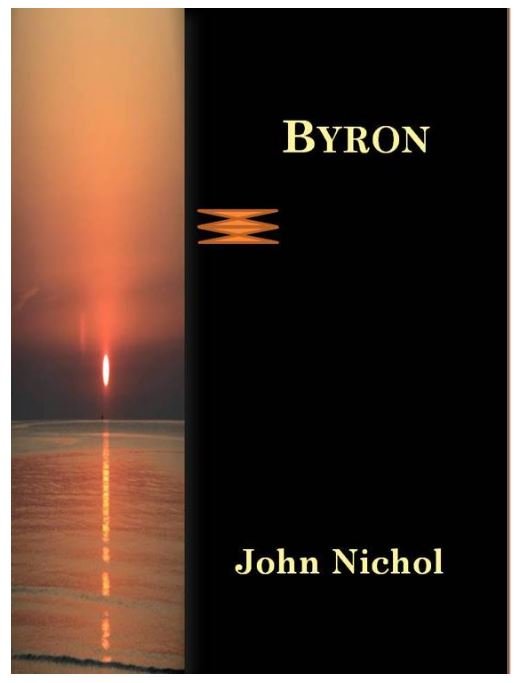
Description
Byron by John Nichol: Biography of the Genius Poet and His Revolutionary Impact on Literature
Introduction: Discovering Byron Through John Nichol’s Literary Biography
Byron by John Nichol presents a comprehensive exploration of Lord Byron’s extraordinary life and literary genius. This biographical masterwork examines one of the most fascinating figures in English literary history. Furthermore, Nichol’s analysis reveals how Byron transformed Romantic poetry and captivated nineteenth-century society. Therefore, this book serves as essential reading for understanding Byron’s enduring cultural impact.
John Nichol wrote this biography as part of the prestigious English Men of Letters series. He provides readers with a detailed examination of Byron’s complex personality and revolutionary poetic vision. Moreover, Nichol contextualizes Byron’s work within the social and historical forces of his era. Consequently, readers gain a profound understanding of both the poet and his turbulent times.
The biography traces Byron’s journey from his birth in 1788 to his death in 1824. Nichol explores how personal experiences shaped Byron’s poetic themes and literary innovations. Additionally, the book examines society’s contradictory responses to Byron, both as an idol and an outcast. Thus, readers discover the full complexity of this legendary poet’s life and legacy.
Published in the late nineteenth century, Nichol’s Byron remains influential in literary scholarship and biographical writing. The work balances scholarly rigor with accessible prose that engages general readers. Furthermore, Nichol’s insights illuminate Byron’s continuing relevance to modern audiences and contemporary literary studies. Therefore, this biography stands as a definitive introduction to understanding Lord Byron’s genius.
Byron: Life of a Literary Rebel and Romantic Icon
Lord Byron lived one of the most dramatic and controversial lives in literary history. Born George Gordon Byron in 1788, he inherited his title at age ten. Moreover, his aristocratic status gave him social privileges while his physical disability created personal struggles. Consequently, Byron developed the complex personality that would define his poetry and public persona.
Byron attended Harrow School and Trinity College, Cambridge, where he began writing poetry seriously. He published his first collection while still a young man seeking literary recognition. Additionally, early reviews proved harsh, yet Byron responded with satirical verse that showcased his wit. Thus, he established himself as a poet unafraid of controversy or confrontation.
The publication of “Childe Harold’s Pilgrimage” in 1812 made Byron instantly famous throughout England. He famously remarked that he “awoke one morning and found myself famous” after this success. Furthermore, London society embraced him as a romantic hero and a fascinating personality. Therefore, Byron became a cultural phenomenon as much as a literary figure during this period.
However, Byron’s personal life soon generated a scandal that would eventually force him into exile. His affairs, rumored incest, and failed marriage created social outrage among respectable Victorian society. Moreover, creditors and critics pursued him relentlessly as his reputation deteriorated. Consequently, Byron left England in 1816, never to return to his homeland again.
Understanding Byron’s Poetic Genius and Literary Innovation
Byron’s poetry revolutionized Romantic literature through its emotional intensity and technical brilliance. He mastered multiple poetic forms, including narrative verse, satire, and lyric poetry. Furthermore, Byron created the “Byronic hero” archetype that influenced countless subsequent literary works. Therefore, his innovations shaped English poetry for generations after his death.
Nichol examines how Byron’s poetic voice combined classical learning with contemporary emotional expression. The poet drew inspiration from Greek and Roman literature while addressing modern themes. Additionally, Byron incorporated his personal experiences directly into his verse with unprecedented honesty. Thus, his poetry achieved a unique blend of intellectual sophistication and raw emotional power.
The biography analyzes Byron’s major works, including “Don Juan,” his comic masterpiece of satirical verse. This unfinished epic showcases Byron’s wit, social criticism, and narrative skill simultaneously. Moreover, Nichol explores how “Don Juan” challenged conventional morality and literary expectations. Consequently, readers understand why this work remains Byron’s most celebrated and controversial achievement.
Byron also excelled at shorter lyric poems that captured intense emotional moments with remarkable economy. Works like “She Walks in Beauty” demonstrate his ability to create perfect verbal music. Furthermore, these poems reveal Byron’s capacity for tenderness alongside his more famous rebellious attitudes. Therefore, Nichol presents a complete picture of Byron’s diverse poetic talents and achievements.
Byron’s Revolutionary Literary Themes: Love, Loss, Rebellion, and Identity
Nichol’s biography examines the major themes that dominate Byron’s poetic works throughout his career. Love appears constantly in Byron’s verse, explored in all its complexity and contradiction. Moreover, the poet addresses both romantic passion and its inevitable disappointments with equal intensity. Consequently, Byron’s love poetry resonates with readers across centuries and cultural boundaries.
Loss pervades Byron’s work as he confronts mortality, failed relationships, and exile from his homeland. He writes movingly about personal grief and universal human suffering with profound empathy. Additionally, Byron explores how loss shapes identity and drives creative expression. Thus, his poetry transforms personal pain into art that speaks to shared human experience.
Rebellion defines Byron’s literary persona and his approach to social conventions and artistic traditions. He challenged political tyranny, religious hypocrisy, and social injustice through his verse. Furthermore, Byron defied literary conventions by mixing genres and breaking established poetic rules. Therefore, his rebellious spirit made him a hero to liberal thinkers and a threat to conservative authorities.
The search for identity emerges as a central concern throughout Byron’s poetry and personal life. He struggled with his aristocratic heritage, physical disability, and bisexual desires in a restrictive society. Moreover, Byron explored questions of authenticity, self-knowledge, and personal freedom in his work. Consequently, his poetry addresses timeless questions about human identity that remain relevant today.
Society’s Fascination with Byron: Idol and Moral Outcast
Nichol explores the paradoxical relationship between Byron and the society that simultaneously worshipped and condemned him. English society initially embraced Byron as a romantic hero embodying aristocratic glamour and poetic genius. However, his scandalous personal life soon transformed him into a moral outcast and a social pariah. Therefore, Byron experienced both extremes of fame and infamy during his lifetime.
The public’s fascination with Byron extended beyond his poetry to his personality and lifestyle. People consumed gossip about his affairs, debts, and unconventional behavior with an insatiable appetite. Moreover, Byron deliberately cultivated his public image, understanding that fame enhanced his literary influence. Consequently, he became one of the first modern celebrities whose personal life fascinated audiences.
Women particularly idolized Byron, seeing him as the embodiment of romantic passion and dangerous attraction. His physical beauty, despite his club foot, added to his appeal as a tragic hero. Additionally, Byron’s poetry spoke directly to female readers about love and emotional authenticity. Thus, he achieved unprecedented popularity among women readers of all social classes.
Yet respectable society ultimately rejected Byron for violating moral codes and social expectations too flagrantly. His separation from his wife and rumors of incest proved unforgivable to Victorian morality. Furthermore, his political liberalism and sympathy for revolutionary causes made him suspect to the authorities. Therefore, Byron’s exile reflected society’s inability to reconcile genius with perceived moral corruption.
Historical Context: Byron’s Era and the Romantic Movement
Nichol situates Byron’s life and work within the turbulent historical context of early nineteenth-century Europe. The Napoleonic Wars dominated this period, reshaping political boundaries and social structures across the continent. Moreover, revolutionary ideas about individual freedom and political rights challenged traditional authority everywhere. Consequently, Byron lived during an era of unprecedented change and intellectual ferment.
The Romantic movement transformed literature and the arts during Byron’s lifetime by emphasizing emotion and imagination. Poets rejected Enlightenment rationalism in favor of individual feeling and natural beauty as inspiration. Additionally, Romantic writers celebrated genius, rebellion, and the sublime in nature and human experience. Thus, Byron emerged as a quintessential Romantic poet embodying the movement’s ideals and contradictions.
Byron’s aristocratic background gave him a unique perspective on the social changes transforming English society. He witnessed the rise of industrial capitalism and the decline of traditional aristocratic power. Furthermore, Byron sympathized with working-class struggles and supported political reform despite his privileged position. Therefore, his poetry reflects a complex understanding of class conflict and social transformation.
The Greek War of Independence particularly captured Byron’s imagination and political commitment in his final years. He personally traveled to Greece to support the revolutionary cause against Ottoman rule. Moreover, Byron invested his own money and reputation in the Greek struggle for freedom. Consequently, he died in Greece in 1824, becoming a martyr to the cause of liberty.
Byron’s Travels and Adventures: From England to Greece
Byron’s extensive travels profoundly influenced his poetry and expanded his literary imagination beyond English boundaries. After leaving England in 1816, he extensively journeyed through Belgium, Switzerland, and Italy. Moreover, these travels provided settings and inspiration for much of his greatest poetry. Consequently, Byron became a truly cosmopolitan writer whose work transcended national literary traditions.
Switzerland offered Byron temporary refuge, where he wrote “The Prisoner of Chillon” and continued “Childe Harold.” He spent time with Percy Shelley and Mary Shelley during this productive period. Additionally, the Swiss Alps inspired Byron’s sublime descriptions of natural beauty and power. Thus, Switzerland proved crucial to his artistic development during exile.
Italy became Byron’s adopted home for several years, where he lived in Venice, Ravenna, and Pisa. The Italian landscape, culture, and political situation deeply influenced his later poetry and thinking. Furthermore, Byron engaged in Italian revolutionary politics and had numerous romantic affairs during this period. Therefore, Italy represented both artistic inspiration and personal freedom for the exiled poet.
Byron’s final journey to Greece in 1823 demonstrated his commitment to political ideals over personal comfort. He joined the Greek independence movement as both a financial supporter and an active participant. Moreover, Byron planned to lead troops in battle despite his lack of military experience. Consequently, his death from fever in Missolonghi made him a legendary figure in Greek history.
Byron’s Major Works: Poetry That Changed Literature Forever
Nichol provides a detailed analysis of Byron’s most significant poetic works and their literary innovations. “Childe Harold’s Pilgrimage” established Byron’s reputation through its romantic hero and exotic settings. The poem follows a disillusioned aristocrat traveling across Europe in search of meaning and escape. Moreover, readers immediately identified the protagonist with Byron himself, enhancing the work’s appeal. Therefore, “Childe Harold” created a template for Romantic poetry and the Byronic hero archetype.
“Don Juan” represents Byron’s masterpiece, combining epic scope with satirical wit and social commentary. This sprawling narrative poem follows its hero through picaresque adventures across Europe and beyond. Additionally, Byron uses the story to critique English society, politics, and moral hypocrisy. Thus, “Don Juan” showcases his full range of poetic talents and intellectual concerns.
Byron’s shorter works demonstrate his mastery of lyric poetry and emotional expression in concentrated form. Poems like “She Walks in Beauty” achieve a perfect balance of form and feeling. Furthermore, these lyrics reveal Byron’s capacity for tenderness and aesthetic beauty alongside satirical edge. Therefore, they remain among the most beloved poems in English literature.
The dramatic poems, including “Manfred” and “Cain,” explore philosophical and theological questions through theatrical form. Byron addresses themes of guilt, redemption, and rebellion against divine authority in these works. Moreover, these dramas influenced later writers, including the Brontës and European Romantic dramatists. Consequently, Byron’s dramatic poetry extended his influence beyond traditional lyric and narrative forms.
Byron’s Key Literary Characteristics and Poetic Techniques
Byron’s distinctive literary voice emerges from several characteristic techniques and stylistic choices that define his work:
- Conversational tone – Byron writes with informal directness that engages readers as equals
- Satirical wit – Sharp humor and social criticism pervade his poetry constantly.
- Autobiographical elements – Personal experiences directly inform his poetic subjects and themes
- Ottava rima mastery – Byron perfected this Italian verse form for English poetry
- Romantic heroism – Creation of the Byronic hero archetype influenced countless subsequent works
- Political engagement – Poetry addresses contemporary social and political issues directly
- Emotional intensity – Passionate expression of love, anger, and despair throughout his work
- Classical allusions – References to Greek and Roman literature demonstrate his learning.
Nichol’s Analytical Approach: Understanding Byron’s Life and Art
John Nichol brings scholarly rigor and biographical insight to his examination of Byron’s life and work. He analyzes how personal experiences directly shaped Byron’s poetic themes and literary innovations. Moreover, Nichol avoids both uncritical hero worship and moralistic condemnation of his subject. Consequently, readers receive a balanced portrait of Byron as a complex human being and literary genius.
The biography examines the intersection of Byron’s life and poetry with particular attention to autobiographical elements. Nichol demonstrates how Byron transformed personal experiences into universal artistic statements about human nature. Additionally, he explores how Byron’s poetry functioned as both self-expression and social commentary. Thus, readers understand the intimate connection between the poet’s life and art.
Nichol contextualizes Byron’s work within the broader Romantic movement while emphasizing his unique contributions. He compares Byron with contemporaries such as Wordsworth, Coleridge, and Shelley to highlight distinctive qualities. Furthermore, Nichol traces Byron’s influence on subsequent Victorian and modern literature extensively. Therefore, the biography establishes Byron’s central importance to English literary tradition.
The author also addresses controversial aspects of Byron’s life with scholarly objectivity and historical perspective. He examines the scandals, affairs, and rumors that surrounded Byron without sensationalism or judgment. Moreover, Nichol considers how these controversies affected Byron’s poetry and public reception. Consequently, readers gain a complete understanding of both the man and the cultural phenomenon.
Byron as Cultural Icon: Influence Beyond Literature
Byron’s impact extended far beyond poetry, influencing fashion, politics, and popular culture throughout Europe. His distinctive appearance and style inspired countless imitators who adopted “Byronic” dress and mannerisms. Moreover, Byron became a symbol of romantic rebellion and artistic genius for an entire generation. Consequently, his cultural influence rivaled his literary achievements in shaping nineteenth-century consciousness.
Political radicals and revolutionaries claimed Byron as inspiration for their causes across Europe and beyond. His support for Greek independence and criticism of tyranny made him a hero to liberals. Additionally, Byron’s poetry articulated ideals of individual freedom and resistance to oppressive power. Thus, he influenced political movements and literary traditions throughout the century.
Byron’s personal life and scandalous reputation contributed to his status as a cultural icon and cautionary tale. Moralists used him as an example of a genius corrupted by vice and lack of restraint. However, others celebrated Byron as a martyr to conventional morality and a champion of authentic living. Therefore, debates about Byron’s character and legacy continued long after his death.
The “Byronic hero” archetype influenced literature, film, and popular culture for two centuries after his death. This figure—brooding, rebellious, passionate, and morally ambiguous—appears in countless subsequent works. Furthermore, Byron essentially created a template for the romantic anti-hero that remains popular today. Consequently, his influence on storytelling and character development proves immeasurable and ongoing.
Byron’s Legacy: Enduring Impact on Literature and Culture
Byron’s poetry continues to influence writers and readers nearly two centuries after his death in 1824. His innovations in verse form, tone, and subject matter expanded possibilities for English poetry. Moreover, Byron demonstrated that poetry could address contemporary issues while achieving lasting artistic value. Therefore, his work remains vital to understanding Romantic literature and its continuing legacy.
Modern readers still respond to Byron’s emotional honesty and willingness to challenge social conventions and moral hypocrisy. His poetry speaks to timeless human experiences of love, loss, and the search for meaning. Additionally, Byron’s rebellious spirit and defense of individual freedom resonate with contemporary audiences. Thus, his work transcends its historical moment to address universal human concerns.
Literary scholars continue to study Byron’s life and work, regularly producing new interpretations and biographical insights. His influence on subsequent writers from the Brontës to contemporary poets remains the subject of ongoing research. Furthermore, Byron’s letters and journals provide fascinating documentation of Romantic-era literary culture. Therefore, he remains a central figure in literary studies and cultural history.
Byron’s life story itself has inspired numerous biographies, novels, plays, and films over the decades. The dramatic events of his life and his fascinating personality continue to captivate new generations. Moreover, debates about Byron’s character, sexuality, and legacy persist in academic and popular discussions. Consequently, Byron remains a living presence in cultural consciousness rather than merely a historical figure.
Educational Value: Why Read Byron by John Nichol Today
Nichol’s Byron biography offers an essential introduction to one of English literature’s most important and influential poets. Students and general readers gain a comprehensive understanding of Byron’s life, work, and cultural significance. Moreover, the book provides an accessible entry point to Romantic poetry and nineteenth-century literary culture. Therefore, it serves a valuable educational purpose for diverse audiences and reading levels.
The biography illuminates the relationship between historical context and literary creation through Byron’s example. Readers learn how political events, social changes, and personal experiences shape artistic expression. Additionally, Nichol demonstrates how literature both reflects and influences the society that produces it. Thus, the book offers lessons about literature’s social function and cultural power.
Understanding Byron helps readers appreciate his influence on subsequent literature and popular culture more fully. The Byronic hero appears throughout Western storytelling traditions in various forms and contexts. Furthermore, Byron’s themes of rebellion, identity, and authentic self-expression remain relevant to contemporary concerns. Therefore, studying Byron enriches understanding of both historical and modern literature.
Nichol’s analytical approach models how to read poetry critically while appreciating its emotional and aesthetic power. He demonstrates how biographical knowledge enhances literary interpretation without reducing art to mere autobiography. Moreover, the book shows how to contextualize literature historically while recognizing its universal human dimensions. Consequently, readers develop sophisticated skills for engaging with poetry and literary biography.
Conclusion: Byron’s Continuing Relevance and Literary Genius
Byron by John Nichol stands as an essential biography for understanding one of literature’s most fascinating figures. The book successfully balances scholarly analysis with an engaging narrative that brings Byron to life. Moreover, Nichol illuminates both the poet’s genius and his human complexity with insight and fairness. Therefore, this biography remains a valuable resource for students, scholars, and general readers alike.
Lord Byron’s revolutionary poetry and dramatic life continue to captivate readers nearly two centuries after his death. His emotional honesty, technical brilliance, and rebellious spirit speak to timeless human experiences and aspirations. Furthermore, Byron introduced literary innovations and character archetypes that continue to influence contemporary writing and culture. Consequently, his work maintains remarkable vitality and relevance for modern audiences.
Nichol’s biography provides a comprehensive introduction to Byron’s life, poetry, and cultural impact for contemporary readers. The book contextualizes Byron within his historical moment while demonstrating his continuing significance today. Additionally, Nichol’s analysis helps readers appreciate Byron’s artistic achievements and understand his complex personality. Thus, the biography serves as an ideal starting point for discovering this extraordinary poet.
Read Byron by John Nichol to discover the genius poet who transformed English literature forever. Learn how personal experience, historical forces, and artistic vision combined in Byron’s revolutionary poetry. Furthermore, understand why Byron remains a central figure in literary history and cultural consciousness today. This comprehensive biography offers essential insights into one of literature’s most influential and enduring voices.
Reviews
There are no reviews yet.