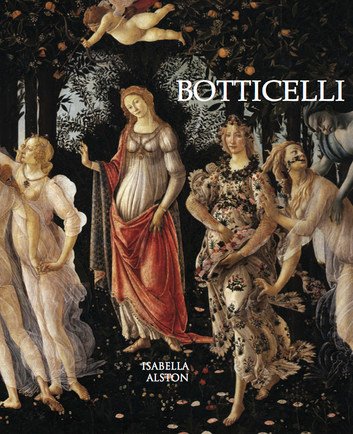
Description
Sandro Botticelli: Isabella Alston’s Essential Guide to Florence’s Renaissance Master
Sandro Botticelli transformed Renaissance art with his ethereal vision and revolutionary approach to mythological painting. Isabella Alston’s “Botticelli” from the TAJ Mini Books series presents an accessible introduction to this Florentine master. Moreover, this compact biography illuminates how Alessandro di Mariano di Vanni Filipepi became one of history’s most celebrated artists. His work bridged medieval traditions and Renaissance humanism with unprecedented grace and beauty throughout his career.
Alston’s concise study reveals how Medici patronage shaped Botticelli’s distinctive artistic vision and commercial success. Furthermore, it demonstrates why his mythological masterpieces remain among the world’s most recognizable artworks today. The book provides essential context for understanding his evolution from apprentice to Renaissance icon worldwide.
The Early Life and Training of Sandro Botticelli
Alessandro di Mariano di Vanni Filipepi was born around 1445 in Florence, Italy’s artistic capital. His father worked as a tanner, providing the family with modest means for survival. Therefore, young Alessandro entered an artistic apprenticeship around age fourteen to learn a profitable trade quickly.
The nickname “Botticelli” likely derives from “botticello,” meaning “little barrel” in Italian dialect. Some historians suggest it referred to his older brother’s profession or perhaps his own physique. Additionally, this nickname became the name by which the world would remember this extraordinary artist.
He trained under Fra Filippo Lippi, one of Florence’s most respected painters of religious subjects. This apprenticeship taught him techniques in tempera painting, composition, and the characteristic, graceful linear style. Moreover, Lippi’s influence appears clearly in Botticelli’s early Madonna paintings and devotional works throughout.
By his early twenties, Botticelli had established his own workshop in Florence’s artistic quarter. He quickly gained recognition for his technical skill and distinctive approach to traditional religious themes. Consequently, his reputation attracted the attention of Florence’s most powerful family, which was seeking talented artists for commissions.
The Medici Years: Patronage and Prolific Commissions
The Medici family became Botticelli’s primary patrons, commissioning works for nearly three decades of productivity. Lorenzo de’ Medici, known as “il Magnifico,” particularly appreciated his artistic vision and technical mastery. Therefore, Botticelli spent almost his entire career working for this influential family and their circle.
In 1481, Pope Sixtus IV summoned him to Rome to paint frescoes in the Sistine Chapel. He worked alongside other Renaissance masters, including Perugino, Ghirlandaio, and Rosselli, on this prestigious project. Additionally, he completed several scenes from the life of Moses and Christ with remarkable skill.
A year later, Botticelli returned to Florence to continue the most prolific stage of his career. He regularly produced numerous religious paintings, portraits, and increasingly ambitious secular works for Medici patrons. Furthermore, his workshop became one of Florence’s busiest, training apprentices and fulfilling constant commissions successfully.
Sandro Botticelli’s major artistic achievements and masterworks included:
- “The Birth of Venus” – iconic mythological scene showing Venus emerging from the sea
- “Primavera” – allegorical celebration of spring with mythological figures in a garden setting
- “Portrait of a Lady at the Window” – revolutionary portrait with direct viewer engagement
- Sistine Chapel frescoes – scenes from the lives of Moses and Christ.
- “Adoration of the Magi” – religious painting featuring Medici family members as figures
- “Madonna of the Magnificat” – circular devotional painting with Virgin and Child
- “The Mystical Nativity” – a late religious work reflecting spiritual crisis and devotion
- Numerous Madonna and Child paintings – workshop productions for private devotional use
Masterpieces: The Birth of Venus and Primavera
“The Birth of Venus” represents Botticelli’s most famous achievement and Renaissance art’s most iconic image. Painted in the mid-1480s, it depicts the goddess Venus arriving on the shore of Cyprus, standing gracefully. Moreover, this work revolutionized Western art by reintroducing the nude female figure after centuries’ absence.
The painting draws inspiration from classical mythology, particularly Ovid’s “Metamorphoses,” and from contemporary Neoplatonic philosophy. Venus stands on a giant scallop shell while wind gods blow her toward shore. Additionally, a nymph rushes forward with a flowered cloak to cover the goddess’s divine nakedness.
“Primavera,” painted around the same period, presents an elaborate allegorical scene in a garden setting. It features mythological figures, including Venus, Mercury, the Three Graces, and Flora, in a complex arrangement. Therefore, scholars continue to debate the painting’s precise meaning and symbolic significance even after centuries.
Lorenzo di Pierfrancesco de’ Medici likely commissioned both paintings for his villa residence. They demonstrate Botticelli’s mastery of linear design, graceful figures, and poetic sensibility throughout their composition. Furthermore, these works established him as the preeminent painter of mythological subjects in Renaissance Florence.
His innovative approach to portraiture also revolutionized Italian art during this period. He became the first Italian artist to paint a woman looking directly at the viewer. Consequently, this technique created unprecedented psychological engagement and intimacy between the subject and audience members.
Later Years and Enduring Legacy of Sandro Botticelli
During the 1490s, Botticelli became a follower of Dominican friar Girolamo Savonarola’s religious reform movement. Savonarola preached against worldly vanity, luxury, and secular art, delivering fiery sermons that condemned contemporary society. Therefore, Botticelli’s later works reflect increasingly pious sentiment and religious devotion, replacing earlier mythological themes.
After 1495, he appears to have painted no more large mythological works or ambitious compositions. His workshop continued producing Madonna paintings, but his style seemed increasingly outdated compared to that of younger artists. Additionally, the rise of High Renaissance masters like Leonardo and Michelangelo overshadowed his earlier achievements.
By the time Sandro Botticelli died on May 17, 1510, his art had completely fallen out of fashion. According to Giorgio Vasari’s “Lives of the Artists,” he became melancholic and depressed in later years. Moreover, his work remained largely forgotten for nearly four centuries until the Pre-Raphaelites rediscovered him.
Isabella Alston brings strong credentials to this TAJ Mini Books biography of the Florentine master painter. Her concise approach highlights the most important aspects of his life and revolutionary artistic contributions. Furthermore, the book includes approximately 80 high-quality reproductions of his most significant works throughout.
The TAJ Mini Books format makes Botticelli’s complex artistic legacy accessible to general readers everywhere. Alston’s portable guide serves as an ideal introduction for those discovering this Renaissance master for the first time. Therefore, readers gain an understanding of both his technical innovations and his profound cultural impact worldwide.
The biography demonstrates why his graceful, linear style and poetic vision have influenced countless artists across the centuries. His mythological paintings established templates for depicting classical subjects that endure in contemporary culture today. Additionally, his artistic courage in reviving nude figures helped shape Western art’s trajectory.
Isabella Alston’s “Botticelli” ultimately celebrates an artist whose vision transcended the limitations of his own era. It honors his contributions to Renaissance painting and the development of modern art across five centuries. Consequently, this accessible biography serves both as an introduction and an invitation to explore his remarkable legacy.




Reviews
There are no reviews yet.