Description
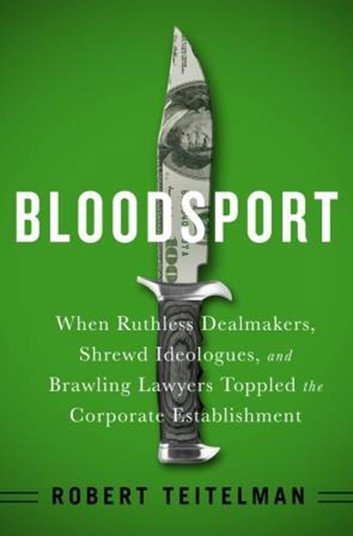
Bloodsport: How Hostile Takeovers and Ruthless Dealmakers Revolutionized Corporate America
Robert Teitelman’s “Bloodsport” chronicles the explosive era when hostile takeovers transformed American business forever. The book examines how aggressive dealmakers, cunning lawyers, and bold corporate raiders dismantled the old corporate establishment during the 1970s and 1980s. Moreover, it reveals the dramatic shift from stakeholder capitalism to shareholder-focused business models. This transformation fundamentally changed how companies operate today. Consequently, the modern deal culture was born from this turbulent period.
The story centers on key figures who weaponized hostile takeovers. These individuals challenged entrenched management and reshaped Wall Street. Furthermore, their tactics created entirely new legal strategies and financial instruments. The book captures the intensity and drama of this corporate revolution. Therefore, readers gain insight into the origins of today’s merger and acquisition landscape.
The Architects of the Takeover Era: Joe Flom and Marty Lipton
Two lawyers stand at the center of Teitelman’s narrative. Joe Flom and Marty Lipton became the most influential legal minds of the takeover boom. However, they represented opposing sides of every major corporate battle. Flom championed the raiders and aggressive acquirers. Meanwhile, Lipton defended target companies against unwanted advances.
Flom built his practice at Sklar & Flom, later Sklar, Flom & Fried. He specialized in representing clients pursuing hostile acquisitions. His innovative legal strategies enabled raiders to circumvent traditional defenses. Moreover, Flom understood that old-guard management often failed shareholders. Therefore, he believed hostile takeovers served a valuable economic purpose.
Lipton took the opposite approach at Wachtell, Lipton, Rosen & Katz. He viewed hostile takeovers as destructive forces threatening American business. Consequently, he developed defensive strategies to protect his clients. His most famous invention was the poison pill defense. This tactic revolutionized how companies fought back against raiders. Nevertheless, both lawyers profited enormously from the takeover wars.
Corporate Raiders and Dealmakers: The Rise of Pickens and Icahn
T. Boone Pickens emerged as the quintessential corporate raider. The Texas oilman targeted undervalued energy companies throughout the 1980s. Furthermore, he argued that entrenched management destroyed shareholder value. Pickens launched hostile bids against Gulf Oil, Phillips Petroleum, and Unocal. His aggressive tactics terrified corporate boardrooms across America.
Carl Icahn became another legendary figure in takeover history. He built his fortune by identifying mismanaged companies. Moreover, Icahn used hostile takeovers to force management changes. His battles included TWA, Texaco, and numerous other corporations. Additionally, he pioneered the greenmail strategy. This controversial tactic involved threatening takeovers to extract premium buyouts.
These raiders shared a common philosophy. They believed shareholders deserved maximum returns on their investments. However, existing management prioritized other stakeholders over owners. Therefore, hostile takeovers became tools for enforcing shareholder capitalism. The raiders portrayed themselves as champions of efficient markets.
The Poison Pill Defense and Legal Innovations in Mergers and Acquisitions
Marty Lipton’s poison pill defense changed the takeover game completely. This strategy allowed target companies to flood the market with new shares. Consequently, hostile bidders faced massive dilution of their ownership stakes. The poison pill made acquisitions prohibitively expensive for raiders. Nevertheless, it sparked intense legal and ethical debates.
The defense worked through shareholder rights plans. These plans triggered when raiders acquired specific ownership percentages. Moreover, existing shareholders received rights to purchase additional shares at discounts. However, the raider was excluded from these rights. Thus, the poison pill protected management from unwanted suitors.
Critics argued the poison pill entrenched incompetent executives. They claimed it prevented beneficial corporate restructurings. Furthermore, opponents believed it violated shareholder rights and free markets. Nevertheless, courts generally upheld the legality of poison pills. Therefore, the balance of power shifted back toward target companies.
The Transformation from Stakeholder to Shareholder Capitalism
Teitelman explores the philosophical shift underlying the takeover era. Traditional American corporations embraced stakeholder capitalism for decades. This model balanced interests of shareholders, employees, communities, and customers. However, hostile takeovers challenged this balanced approach fundamentally.
The raiders promoted pure shareholder capitalism instead. They argued corporations existed solely to maximize shareholder value. Moreover, they claimed other stakeholder interests were secondary concerns. This ideology justified aggressive tactics and hostile acquisitions. Consequently, American business culture underwent a profound transformation.
The shift had far-reaching consequences for corporate governance. Companies began prioritizing stock prices above all else. Furthermore, short-term financial performance became the primary management focus. Employee loyalty and community relationships diminished in importance. Therefore, the social contract between corporations and society fundamentally changed.
Key elements of this transformation included:
- Emphasis on quarterly earnings and stock price performance
- Reduction in employee benefits and job security
- Increased executive compensation tied to shareholder returns
- Decline of corporate loyalty to local communities
- Rise of financial engineering over operational excellence
- Growing power of institutional investors and activist shareholders
Wall Street’s Evolution During the Dealmaking Revolution
The 1970s and 1980s witnessed Wall Street’s complete transformation. Investment banks shifted from relationship-based advisory services to transaction-driven businesses. Moreover, hostile takeovers became enormously profitable for financial intermediaries. Consequently, banks actively promoted merger and acquisition activity.
New financial instruments emerged to facilitate hostile bids. Junk bonds, pioneered by Michael Milken, provided raiders with necessary capital. These high-yield securities financed previously impossible acquisitions. Furthermore, leveraged buyouts became standard tools for corporate restructuring. Therefore, the scale and frequency of takeovers increased dramatically.
The legal profession also transformed during this period. Takeover specialists commanded unprecedented fees for their expertise. Moreover, law firms expanded rapidly to serve the booming M&A market. The adversarial nature of hostile takeovers created a litigation bonanza. Thus, lawyers became central players in reshaping corporate America.
The Legacy of Hostile Takeovers and Modern Corporate Culture
Teitelman’s “Bloodsport” ultimately examines the lasting impact of this era. The hostile takeover wave permanently altered American capitalism’s character. Moreover, the shareholder-first ideology became deeply embedded in corporate governance. Today’s business landscape directly reflects the changes these dealmakers initiated.
The book raises important questions about these transformations. Did hostile takeovers improve corporate efficiency and shareholder returns? Or did they sacrifice long-term stability for short-term gains? Furthermore, has shareholder capitalism served society’s broader interests effectively? These debates continue resonating in contemporary business discussions.
The legacy includes both positive and negative consequences. Companies became more responsive to shareholder concerns and market pressures. However, they also became more short-sighted and financially focused. Nevertheless, the takeover era fundamentally democratized corporate control. Shareholders gained unprecedented power to challenge entrenched management teams.
Teitelman’s narrative captures the drama, conflict, and personalities that defined this pivotal period. The book reveals how ruthless dealmakers, shrewd ideologues, and brawling lawyers toppled the corporate establishment. Their weapons were hostile takeovers, innovative legal strategies, and unwavering commitment to shareholder value. Consequently, they created the modern deal culture that dominates business today. The story serves as essential reading for understanding contemporary corporate America’s origins.






Reviews
There are no reviews yet.