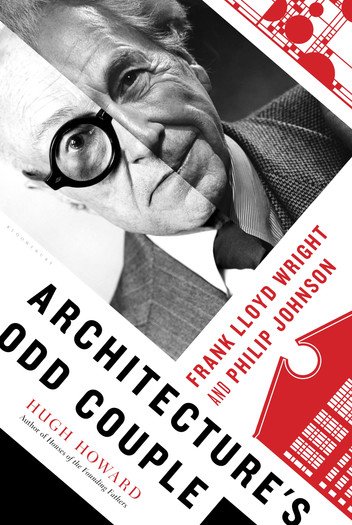
Description
A Rivalry of Icons
Hugh Howard examines the fascinating relationship between two giants of American architecture. Frank Lloyd Wright and Philip Johnson occupied very different worlds. Wright represented the organic tradition and the 19th-century spirit. Meanwhile, Johnson championed the sleek International Style and modern corporate design. The book tracks their interactions over several decades. Consequently, the reader sees how their competition pushed American design forward.
Clashing Philosophies
The two men held deeply opposing views on the purpose of a building. Wright believed that structures should grow naturally from their surroundings. He favored warm materials like wood and stone. In contrast, Johnson loved the incredible precision of glass and steel. He often prioritized aesthetic theory over organic harmony. Moreover, their public debates were usually sharp and witty. Thus, they became the ultimate “odd couple” of the architectural world.
The Master and the Challenger
Wright was already a legend when Johnson began his career as a critic. Johnson famously snubbed Wright in a major 1932 exhibition at the MoMA. This act sparked a lifelong professional feud. However, they also shared a strange kind of mutual respect. They watched each other’s work with intense curiosity. Furthermore, each architect influenced the other in subtle, unexpected ways. Therefore, their rivalry was as productive as it was tense.
Key Projects and Milestones
The book explores several landmark buildings that defined their careers:
Fallingwater: Wright’s masterpiece of organic integration with nature.
The Glass House: Johnson’s transparent tribute to minimalist modernism.
The Guggenheim Museum: Wright’s radical spiral design in New York City.
The Seagram Building: Johnson’s collaborative triumph in corporate skyscraper design.
Shaping the American Skyline
Ultimately, this work serves as a double biography of two complex personalities. Howard brings the mid-century architectural scene to life with rich detail. He shows how their conflicting visions created the diversity of modern cities. Additionally, the book highlights the ego and ambition required to change history. In conclusion, their story is the story of 20th-century architecture itself. It remains a compelling study of creative genius.



Reviews
There are no reviews yet.