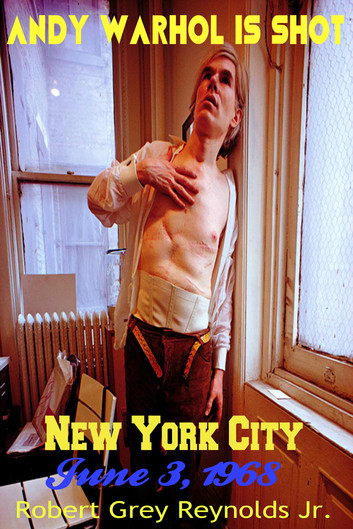
Andy Warhol Is Shot New York City June 3, 1968

Price range: $1.49 through $21.99

Robert Grey Reynolds reconstructs the dramatic assassination attempt on Andy Warhol in New York City. This gripping account explores Valerie Solanas’s motives and the aftermath. Readers discover a pivotal cultural moment.

Additional information

Publisher

Robert Grey Reynolds Jr

Release Date

September 22, 2016

Language

English

ISBN

9781370099603

Download options

Epub

Format

Digital Book, Paper Book

Description

Andy Warhol Shot: A Comprehensive Synopsis of Robert Grey Reynolds’ Historical Account

Introduction: The Day That Changed Art History Forever

The Andy Warhol shot incident remains one of art history’s most shocking moments. On June 3, 1968, radical feminist Valerie Solanas entered The Factory in New York City. She carried a gun and a burning rage. Within minutes, she would change Andy Warhol’s life forever. Moreover, she would alter the trajectory of contemporary art itself.

Robert Grey Reynolds documents this pivotal event in his e-book “Andy Warhol Is Shot New York City June 3, 1968” (ISBN: 9781370099603). Furthermore, Reynolds provides readers with unprecedented detail about that fateful day. The book explores the circumstances leading to the shooting. Additionally, it examines the aftermath that rippled through the art world.

The shooting occurred at Warhol’s famous studio near Union Square. The Factory served as a creative hub for artists, musicians, and cultural revolutionaries. However, on that summer day, it became a crime scene. Consequently, the art world would never be the same.

The Shooter: Who Was Valerie Solanas?

Valerie Solanas was a radical feminist writer and activist. She authored “The SCUM Manifesto,” a controversial feminist text. The manifesto called for the elimination of men from society. Therefore, her worldview was extreme and uncompromising.

Solanas first met Warhol in 1967 outside The Factory. She approached him with a play called “Up Your Ass.” Warhol told her the play was “well typed” and agreed to read it. However, he later claimed he lost the manuscript.

Some Factory insiders believed Warhol found the play too explicit. They thought he suspected it was a police entrapment scheme. Nevertheless, Solanas continued to orbit Warhol’s world. She even appeared in his 1968 film “I, a Man.”

Reynolds explores Solanas’s troubled background in detail. She experienced homelessness, poverty, and mental health struggles. Additionally, she felt exploited by the men around her. These experiences fueled her radical feminist ideology.

The relationship between Solanas and Warhol grew increasingly tense. She believed Warhol was stealing her ideas. Furthermore, she thought he was controlling her work. Consequently, her paranoia and anger intensified.

Key factors that led to the shooting:

  • Solanas believed Warhol lost her play intentionally
  • She felt he was exploiting her creative work
  • Mental health issues intensified her paranoia
  • Financial desperation added to her frustration
  • She saw Warhol as representing male control

The Shooting: What Happened on June 3, 1968

The Andy Warhol shot event unfolded quickly and violently. Solanas arrived at The Factory around 4:00 PM. She wore a heavy coat despite the warm weather. The coat concealed a .32 caliber pistol.

Warhol was on the phone when Solanas entered. Art critic Mario Amaya was also present that day. Additionally, several Factory regulars were working in the studio. The atmosphere was initially calm and routine.

Solanas pulled out her gun without warning. She fired multiple shots at Warhol. The first bullet missed its target completely. However, the second shot struck Warhol in the chest. The bullet traveled through his body, damaging multiple organs.

Amaya tried to escape, but Solanas shot him too. His injuries were less severe than Warhol’s. Meanwhile, Factory manager Fred Hughes confronted Solanas. He begged her not to shoot him. Surprisingly, she listened and left the building.

Warhol collapsed on the floor, bleeding profusely. His injuries were catastrophic and life-threatening. Paramedics rushed him to Columbus Hospital. Doctors initially pronounced him dead on the operating table. However, they managed to revive him after extensive surgery.

The surgery lasted nearly five hours. Surgeons removed Warhol’s spleen and parts of other organs. They worked desperately to save his life. Consequently, Warhol survived but remained critically ill for weeks.

The Aftermath: How the Shooting Changed Everything

The shooting transformed Warhol both physically and psychologically. He wore a surgical corset for the rest of his life. Moreover, he lived with chronic pain and health complications. The trauma affected his artistic output significantly.

Warhol became more reclusive after the attack. He installed better security at The Factory. Furthermore, he became more cautious about who he allowed into his space. The open, chaotic atmosphere of the 1960s Factory disappeared forever.

Solanas turned herself in to police hours after the shooting. She told officers, “He had too much control over my life.” Additionally, she claimed Warhol was stealing her work. The court found her guilty of attempted murder.

However, Solanas received only a three-year sentence. She served less time due to mental health considerations. Many people found this sentence shockingly lenient. Nevertheless, the legal system treated her as mentally ill rather than purely criminal.

The shooting’s lasting impacts included:

  1. Warhol’s artistic style became darker and more introspective
  2. The Factory transformed from open studio to secured workspace
  3. Pop art’s innocent optimism gave way to cynicism
  4. Feminist discourse grappled with Solanas’s violent act
  5. The 1960s counterculture lost some of its naive idealism

Reynolds examines how the shooting marked a cultural turning point. The optimism of the 1960s was fading. Violence was becoming more common in American society. Therefore, the Warhol shooting symbolized this darker shift.

Why This Book Matters: Reynolds’ Unique Contribution

Robert Grey Reynolds brings meticulous research to this historical event. His e-book provides comprehensive documentation of the shooting. Furthermore, he includes details that other accounts have overlooked. Consequently, readers gain a fuller understanding of that day.

Reynolds explores the psychological dimensions of both Solanas and Warhol. He examines their complex relationship with empathy and nuance. Additionally, he places the shooting within its broader cultural context. The late 1960s were turbulent times in America.

The book analyzes how the shooting affected Warhol’s later work. His art became more focused on death and mortality. Moreover, his celebrity portraits took on a darker quality. The shooting clearly left permanent psychological scars.

Reynolds also examines the feminist debate surrounding Solanas. Some feminists celebrated her radical stance against patriarchy. However, others condemned her violence as counterproductive. This debate continues in feminist circles today.

The e-book format allows Reynolds to include extensive documentation. He provides photographs, witness statements, and medical records. Therefore, readers can examine primary sources directly. This transparency strengthens the book’s credibility significantly.

The Cultural Legacy: Understanding the Shooting’s Significance

The Andy Warhol shot incident resonates beyond art history. It represents the collision of radical politics and celebrity culture. Furthermore, it illustrates the dangers of untreated mental illness. Consequently, the event offers multiple lessons for contemporary society.

Warhol’s near-death experience influenced an entire generation of artists. They saw how quickly violence could destroy creative genius. Moreover, they recognized the vulnerability of public figures. The shooting shattered assumptions about artistic immunity from violence.

Solanas became a controversial figure in feminist history. Some view her as a martyr for women’s liberation. However, others see her as a dangerous extremist. Reynolds presents both perspectives without imposing judgment on readers.

The shooting also highlighted issues of mental health care. Solanas clearly needed psychiatric treatment she never received. Additionally, the criminal justice system struggled to handle her case appropriately. These systemic failures contributed to the tragedy.

Reynolds connects the 1968 shooting to contemporary concerns. Celebrity stalking and violence remain serious problems today. Furthermore, debates about mental health and gun access continue. Therefore, the book offers relevant insights for modern readers.

Conclusion: A Must-Read Historical Account

Robert Grey Reynolds’ “Andy Warhol Is Shot New York City June 3, 1968” provides essential reading for art history enthusiasts. The book combines thorough research with accessible writing. Moreover, it illuminates a pivotal moment in American cultural history.

The e-book format makes this important story widely available. Reynolds’ detailed account helps readers understand the shooting’s complexity. Furthermore, he avoids sensationalism while maintaining engaging narrative flow. Consequently, the book succeeds both as history and as compelling storytelling.

Anyone interested in Andy Warhol should read this book. Additionally, students of 1960s culture will find valuable insights. The shooting marked the end of an era. Therefore, understanding this event helps us comprehend broader cultural shifts.

Reynolds demonstrates how one violent act can reverberate through decades. The shooting changed Warhol, transformed The Factory, and influenced contemporary art. Moreover, it raised questions about fame, mental health, and radical politics. These questions remain relevant today.

This comprehensive account deserves attention from serious readers. It documents a crucial moment when art, politics, and violence intersected. Furthermore, it honors the complexity of both victim and perpetrator. Reynolds has created an important historical resource that will inform readers for years to come.

Reviews

There are no reviews yet.

Be the first to review “Andy Warhol Is Shot New York City June 3, 1968”

Your email address will not be published. Required fields are marked *

E-mail
Password
Confirm Password