

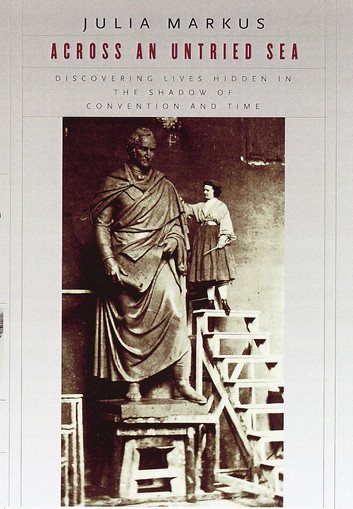
Description
Across an Untried Sea: A Revealing 19th Century Biography of Victorian Women’s History and Hidden Lives
Julia Markus’s “Across an Untried Sea” illuminates Victorian women’s history through two extraordinary figures. This 19th century biography reveals hidden lives obscured by convention. Moreover, it explores how Charlotte Cushman and Jane Welsh Carlyle defied societal expectations while navigating restrictive Victorian norms.
Uncovering Hidden Lives in Victorian Society
The book examines how talented women concealed their true selves during the 1800s. Victorian society demanded conformity, particularly from women. Consequently, many brilliant individuals lived double lives, hiding their passions and relationships. Markus meticulously reconstructs these hidden lives through letters, diaries, and historical records.
Furthermore, the author reveals how Victorian conventions forced women into silence. They expressed creativity and desire only in private spaces. Therefore, their stories remained buried for generations. This 19th century biography brings their experiences into the light.
The narrative spans continents, following these women across America and Europe. Meanwhile, it captures the tension between public personas and private truths. Additionally, Markus shows how these women supported each other across distances.
The Remarkable Charlotte Cushman
Charlotte Cushman dominated American theater during the mid-nineteenth century. She became the first internationally acclaimed American actress. However, her greatest performances occurred offstage, where she lived authentically. Cushman openly maintained romantic relationships with women throughout her life.
Moreover, she created a community of female artists and intellectuals. This network provided safety and support in restrictive times. Consequently, Cushman’s Rome apartment became a haven for unconventional women. She defied Victorian women’s history expectations by living boldly.
The actress achieved financial independence through her talent and business acumen. She purchased property and supported other women artists. Furthermore, she refused marriage proposals to maintain her freedom. Therefore, Cushman represents a radical departure from traditional feminine roles.
Markus portrays Cushman’s complexity with nuance and depth. The biography explores her passionate nature and fierce loyalty. Additionally, it examines how she navigated fame while protecting her private life. Cushman’s story reveals the possibilities available to determined women.
Jane Welsh Carlyle’s Suppressed Genius
Jane Welsh Carlyle possessed extraordinary intellectual gifts from childhood. She mastered languages, wrote brilliantly, and engaged with leading thinkers. However, her marriage to Thomas Carlyle stifled her potential. Victorian convention demanded she sacrifice her ambitions for his career.
Thomas Carlyle’s fame overshadowed his wife’s considerable talents. Meanwhile, Jane managed their household and supported his work. She wrote remarkable letters that showcase her wit and insight. Nevertheless, she never published under her own name during her lifetime.
The marriage proved deeply unhappy, marked by emotional neglect and misunderstanding. Furthermore, Thomas’s relationship with Lady Ashburton caused Jane profound pain. Consequently, she experienced depression and chronic illness. Her hidden life contained immense suffering alongside brilliant observations.
Markus reveals Jane’s suppressed creativity through her correspondence. These letters demonstrate her literary genius and sharp social commentary. Moreover, they expose the cost of Victorian women’s history conventions. Jane’s story illustrates how society wasted female talent.
Why This 19th Century Biography Matters Today
This book resonates powerfully with contemporary readers seeking authentic representation. It demonstrates how women have always resisted oppressive systems. Furthermore, it validates experiences of those living outside societal norms. The hidden lives Markus uncovers feel remarkably relevant.
Modern readers recognize the pressure to conform to expectations. Similarly, many people still hide aspects of their identity. Therefore, these Victorian stories offer both historical insight and personal connection. The biography bridges past and present struggles.
Additionally, the book celebrates female friendship and community building. These relationships sustained women through isolation and hardship. Likewise, they provided spaces for authentic self-expression. Markus shows how women created alternative families.
The narrative challenges traditional historical narratives that erase women’s experiences. It insists on the importance of recovering hidden lives. Consequently, readers gain a fuller understanding of Victorian women’s history. The book contributes to ongoing feminist scholarship.
Key Themes Explored in This Victorian Women’s History
Markus weaves multiple compelling themes throughout this 19th century biography:
- Female creativity and artistic expression: How women pursued their talents despite obstacles
- Same-sex relationships and romantic friendships: The hidden lives of women who loved women
- Marriage and its constraints: How Victorian convention trapped intelligent women in limiting roles
- Transatlantic connections: The networks that linked American and European women intellectuals
- Class and privilege: How wealth provided some women greater freedom to defy norms
- The cost of conformity: Physical and psychological toll of suppressing authentic identity
- Historical erasure: How conventional narratives have hidden women’s true stories
- Resistance and resilience: The strategies women used to claim agency
Furthermore, the book examines how these women documented their experiences. Their letters and diaries preserved hidden lives for future generations. Moreover, Markus analyzes the coded language they used to discuss forbidden topics. This linguistic analysis reveals sophisticated communication systems.
The biography also explores the role of illness in Victorian women’s history. Many women experienced psychosomatic symptoms from suppressed emotions. Consequently, they spent years as invalids while their minds remained sharp. Markus connects these physical manifestations to emotional repression.
Additionally, the author investigates how fame affected these women differently. Charlotte used celebrity to create protective space for unconventional living. Meanwhile, Jane’s association with a famous man erased her individual identity. Therefore, the book examines both the possibilities and limitations of public recognition.
Perfect For
This meticulously researched 19th century biography appeals to diverse readers. History enthusiasts will appreciate the detailed Victorian women’s history scholarship. Moreover, the narrative style makes complex historical material accessible and engaging. Markus balances academic rigor with compelling storytelling.
Feminist readers will find validation and inspiration in these hidden lives. The book demonstrates women’s long struggle for autonomy and recognition. Furthermore, it celebrates female relationships and community solidarity. Therefore, it contributes meaningfully to women’s studies and gender history.
LGBTQ+ readers will recognize themselves in these historical figures. The biography honestly portrays same-sex relationships in Victorian society. Additionally, it explores how queer women navigated hostile environments. Consequently, it provides important representation and historical context.
Literary enthusiasts will enjoy the focus on writers and artists. The book examines creativity under constraint and artistic communities. Moreover, it includes extensive quotations from letters and personal writings. These primary sources bring the subjects’ voices directly to readers.
Anyone interested in biography and life writing will appreciate Markus’s approach. She reconstructs hidden lives from fragmentary evidence with scholarly care. Furthermore, she acknowledges gaps and uncertainties in the historical record. Therefore, the book models ethical biographical practice.
Conclusion
“Across an Untried Sea” recovers crucial Victorian women’s history from obscurity. Julia Markus illuminates hidden lives with compassion and scholarly precision. This 19th century biography challenges readers to reconsider conventional historical narratives. Moreover, it demonstrates the enduring relevance of these women’s struggles.
Charlotte Cushman and Jane Welsh Carlyle emerge as complex, fully realized individuals. Their stories inspire while acknowledging the real costs of defying convention. Furthermore, the book celebrates the relationships that sustained them through difficulty. Consequently, readers gain insight into both historical and contemporary experiences.
The biography succeeds as both rigorous scholarship and engaging narrative. Markus’s research uncovers details that bring Victorian women’s history vividly alive. Additionally, her writing style makes the material accessible to general readers. Therefore, the book bridges academic and popular audiences effectively.
Ultimately, this work insists that hidden lives deserve recognition and study. It argues for expanding our understanding of Victorian women’s history beyond conventional narratives. Moreover, it demonstrates how recovering these stories enriches our collective knowledge. The book stands as an important contribution to feminist historical scholarship and biographical literature.

Reviews
There are no reviews yet.