Description
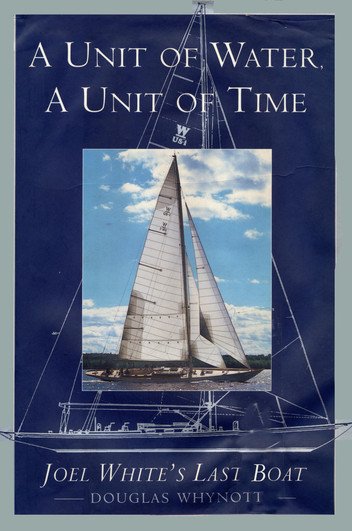
A Unit of Water, a Unit of Time: The Story of Joel White’s Final Masterpiece
Douglas Whynott’s A Unit of Water, a Unit of Time chronicles the remarkable final chapter of legendary boatbuilder Joel White’s life. This compelling narrative follows White as he designs his ultimate racing yacht while confronting terminal cancer. Moreover, the book captures the essence of Maine’s maritime heritage and one man’s unwavering dedication to his craft.
The Legacy of Joel White in A Unit of Water, a Unit of Time
Joel White stood as one of America’s most respected yacht designers and boatbuilders. He spent decades perfecting his craft in Brooklin, Maine. His designs combined traditional wooden boat construction with modern racing performance. Furthermore, White earned recognition for creating vessels that were both beautiful and fast.
White’s reputation extended far beyond Maine’s coastal communities. Sailors worldwide sought his expertise and designs. He understood boats in ways few others could match. Additionally, his work honored centuries-old boatbuilding traditions while embracing innovation.
The son of celebrated author E.B. White brought his own artistry to the water. He inherited his father’s attention to detail and love of language. However, Joel expressed himself through wood, lines, and curves rather than words.
Designing the W-76: A Race Against Time
In 1996, Joel White received devastating news about his health. Doctors diagnosed him with cancer. Nevertheless, he committed to one final ambitious project: designing the W-76 racing yacht. This vessel would represent the culmination of his life’s work.
The W-76 presented unique challenges and opportunities. White needed to create a boat that could compete at the highest levels. Moreover, he wanted to incorporate everything he had learned across his career. The design required balancing speed, stability, and seaworthiness.
White worked tirelessly despite his declining health. He spent countless hours at his drafting table. Each line and measurement received careful consideration. Furthermore, he collaborated closely with the builders who would bring his vision to life.
The yacht’s specifications demanded precision and innovation. White drew upon decades of experience with wooden boats. He understood how water moved around hulls. Additionally, he knew how different woods behaved under stress and strain.
The Intersection of Craftsmanship and Mortality in A Unit of Water, a Unit of Time
Douglas Whynott’s narrative explores profound themes beyond boatbuilding. The book examines how artists confront their mortality. White’s determination to complete the W-76 design revealed his character. Moreover, it demonstrated the power of creative purpose during life’s darkest moments.
White refused to let cancer define his final months. Instead, he focused on perfecting every aspect of the yacht. His workshop became a sanctuary where illness couldn’t intrude. Therefore, the W-76 represented more than a boat—it symbolized defiance and hope.
The boatbuilder’s colleagues and friends rallied around him. They understood the project’s significance. Many contributed their skills to ensure White’s vision would sail. Furthermore, the maritime community demonstrated the bonds that connect craftspeople.
Whynott captures the emotional weight of White’s situation with sensitivity. He portrays a man determined to leave something lasting. The W-76 would carry White’s legacy across waters he might never see. Consequently, every design decision carried extra meaning and urgency.
Maine’s Maritime Heritage and Wooden Boat Culture
A Unit of Water, a Unit of Time immerses readers in Maine’s rich boatbuilding tradition. The state’s coastal communities have produced vessels for centuries. Wooden boat construction remains an art form there. Moreover, craftspeople pass down techniques through generations.
Brooklin, Maine, serves as the book’s primary setting. This small town hosts a vibrant maritime culture. Boatyards dot the coastline. Additionally, the community supports numerous skilled builders, designers, and sailors.
The wooden boat tradition faces modern challenges. Fiberglass and other materials have replaced wood in many applications. However, dedicated craftspeople like Joel White kept traditional methods alive. They understood that wooden boats possess unique qualities and character.
White’s work bridged past and present. He respected historical techniques while incorporating contemporary knowledge. His designs proved that wooden boats could still compete. Furthermore, they demonstrated that tradition and innovation could coexist harmoniously.
Key Elements of Joel White’s Design Philosophy
Joel White’s approach to yacht design reflected deep understanding and experience. His philosophy encompassed several core principles:
- Respect for materials: White understood wood’s properties and limitations intimately
- Balance and proportion: Every design element served both function and aesthetics
- Seaworthiness first: Beauty meant nothing if a boat couldn’t handle rough conditions
- Attention to detail: Small refinements often made the biggest performance differences
- Traditional wisdom: Centuries of boatbuilding knowledge informed every decision
- Modern innovation: New technologies and materials enhanced rather than replaced tradition
These principles guided White throughout his career. They became especially important during the W-76 project. Moreover, they ensured his final design would honor his life’s work.
The Father-Son Connection: E.B. White’s Influence
Joel White grew up as the son of E.B. White, author of beloved classics. His father wrote Charlotte’s Web, Stuart Little, and The Elements of Style. The family lived in Maine, surrounded by maritime culture. Furthermore, E.B. White himself loved boats and sailing.
The elder White’s influence shaped Joel’s worldview. Both men valued craftsmanship and precision. They shared a commitment to excellence in their respective fields. Additionally, they both found inspiration in Maine’s natural beauty.
E.B. White wrote eloquently about boats and the sea. His essays captured the magic of sailing. Joel expressed similar sentiments through his designs. However, where his father used words, Joel used wood and canvas.
The relationship between father and son enriched both their lives. They understood each other’s dedication to craft. Moreover, they recognized that different mediums could express similar truths. Both sought to create things of lasting beauty and utility.
The W-76 Takes Shape: From Concept to Reality
White’s design process for the W-76 involved meticulous planning. He created detailed drawings and specifications. Every measurement needed to be perfect. Furthermore, he consulted with builders throughout the design phase.
The yacht’s dimensions reflected careful calculations. White considered how the boat would move through water. He analyzed weight distribution and sail plans. Additionally, he thought about how crews would handle the vessel during races.
Traditional wooden boat construction requires specialized skills. Builders must select appropriate woods for different components. They need to understand how pieces fit together. Moreover, they must anticipate how wood will behave over time.
The W-76 project brought together Maine’s finest craftspeople. Each contributed expertise to realize White’s vision. Carpenters, riggers, and sailmakers collaborated closely. Therefore, the yacht represented collective mastery of maritime arts.
Racing Yacht Design: Technical Challenges and Solutions
Designing a competitive racing yacht presents unique obstacles. The boat must be fast yet stable. It needs to handle various wind and water conditions. Moreover, it must comply with racing class regulations.
White approached these challenges systematically. He studied successful racing designs from history. He analyzed what made certain boats faster than others. Additionally, he conducted calculations to optimize performance characteristics.
The W-76’s hull shape received particular attention. White refined the curves repeatedly. Small changes could significantly impact speed and handling. Furthermore, the hull needed to minimize drag while maintaining stability.
Sail plans required equally careful consideration. White determined optimal mast height and placement. He calculated sail areas for different wind conditions. Consequently, the W-76 could perform well across various racing scenarios.
The Human Story Within A Unit of Water, a Unit of Time
Whynott’s book transcends technical boatbuilding details. It tells a deeply human story about courage and determination. White faced his mortality while creating something beautiful. Moreover, he maintained grace and focus despite tremendous challenges.
The narrative explores White’s relationships with family and colleagues. His wife and children supported him throughout his illness. Friends and fellow craftspeople offered encouragement and assistance. Additionally, the maritime community rallied around one of their own.
White’s battle with cancer provides the book’s emotional core. He endured treatments while continuing to work. Some days brought more pain than others. Nevertheless, he persisted in refining the W-76 design.
The boatbuilder’s determination inspired everyone around him. His commitment to excellence never wavered. He refused to compromise on quality or vision. Therefore, the W-76 became a testament to human resilience.
Wooden Boats as Art and Engineering
Joel White viewed boatbuilding as both art and science. Beautiful boats must also function perfectly. Form and function intertwine inseparably in yacht design. Moreover, the best vessels achieve harmony between aesthetics and performance.
Wooden boats possess qualities that modern materials cannot replicate. Wood has warmth and character. It responds to tools in ways that feel alive. Additionally, wooden boats age gracefully when properly maintained.
White mastered the technical aspects of naval architecture. He understood hydrodynamics and structural engineering. His calculations ensured boats would perform as intended. Furthermore, he could visualize how designs would look and behave.
The artistic dimension of White’s work set him apart. His boats exhibited elegant lines and proportions. They looked right to experienced sailors’ eyes. Consequently, White’s designs earned admiration for beauty and capability alike.
The Maritime Community’s Response
News of White’s illness and final project spread throughout sailing circles. Fellow designers and builders followed the W-76’s progress closely. Many offered support and encouragement. Moreover, the project became a rallying point for the wooden boat community.
White’s colleagues understood the significance of his work. They recognized a master craftsman creating his final masterpiece. The W-76 represented decades of accumulated knowledge and skill. Additionally, it symbolized the enduring value of traditional boatbuilding.
The maritime community demonstrated remarkable solidarity. People contributed time, materials, and expertise. They wanted to ensure White’s vision would be realized. Therefore, the W-76 became a collaborative tribute to their friend.
Sailors and boatbuilders worldwide watched the project unfold. White’s reputation extended across oceans. His designs had influenced countless other builders. Furthermore, his commitment to excellence had set standards for the entire industry.
Themes of Time and Water in Whynott’s Narrative
The book’s title, A Unit of Water, a Unit of Time, carries deep meaning. Water and time flow inexorably forward. Both shape everything they touch. Moreover, both connect to fundamental aspects of human existence.
Boats exist at the intersection of water and time. They move through one while enduring the other. White understood these relationships intuitively. Additionally, he designed vessels that worked with rather than against natural forces.
White’s illness made time precious and finite. Each day brought him closer to completion or defeat. The W-76 design progressed against this ticking clock. Consequently, every hour spent working carried heightened significance.
Water represents both challenge and opportunity for sailors. It can be calm or violent, welcoming or deadly. White respected water’s power throughout his career. Furthermore, he designed boats that could handle whatever conditions they encountered.
The Completion of White’s Vision
Despite his declining health, White finished the W-76 design. He delivered complete specifications to the builders. Every detail had been considered and refined. Moreover, he provided guidance for construction challenges.
The completed design represented White’s life’s work distilled into one vessel. It incorporated everything he had learned about boats. The W-76 embodied his philosophy of design and craftsmanship. Additionally, it demonstrated that traditional methods could produce world-class racing yachts.
White’s satisfaction with the finished design brought him peace. He knew the boat would sail well. He trusted the builders to execute his vision faithfully. Therefore, he could face his remaining time with a sense of accomplishment.
The W-76 would carry White’s legacy forward. Future sailors would experience his genius firsthand. The boat would race in waters he had loved. Consequently, something of White would endure beyond his lifetime.
Building the W-76: Bringing White’s Design to Life
After White completed the design, construction began in earnest. Skilled craftspeople gathered to build the yacht. They worked with reverence for White’s vision. Moreover, they understood they were creating something historically significant.
The builders selected premium materials for every component. They chose woods carefully for strength and beauty. Each piece received expert shaping and fitting. Additionally, traditional joinery techniques ensured structural integrity.
Construction progressed methodically through established stages. The keel came first, providing the boat’s foundation. Frames followed, defining the hull’s shape. Furthermore, planking gradually enclosed the structure.
The builders faced challenges that required problem-solving and skill. Some aspects of White’s design pushed technical boundaries. However, the craftspeople rose to meet these demands. They honored White’s trust in their abilities.
The Launch and Legacy
The W-76 eventually took to the water. The launch represented a bittersweet moment. White’s vision had become reality. However, his illness prevented him from witnessing it personally.
The yacht performed beautifully from its first sail. It handled exactly as White had predicted. The boat proved fast and responsive. Moreover, it demonstrated that wooden racing yachts could still compete successfully.
Sailors who helmed the W-76 praised its qualities. The boat felt alive beneath them. It responded intuitively to wind and wave. Additionally, it exhibited the grace that characterized all White’s designs.
White’s legacy extended far beyond the W-76. He had designed dozens of successful boats. He had mentored younger builders and designers. Furthermore, he had helped preserve traditional boatbuilding for future generations.
Whynott’s Narrative Craft in A Unit of Water, a Unit of Time
Douglas Whynott brings journalistic skill to this intimate story. He conducted extensive interviews with White and others. He observed the design and construction processes firsthand. Moreover, he captured technical details without losing emotional resonance.
The author balances multiple narrative threads skillfully. He weaves together White’s personal story with boatbuilding history. Technical explanations enhance rather than interrupt the flow. Additionally, Whynott provides context about Maine’s maritime culture.
Whynott’s prose style suits his subject matter perfectly. His writing flows like water around a well-designed hull. He uses precise language to describe complex concepts. Furthermore, he conveys deep respect for his subjects.
The book appeals to both sailors and general readers. Boating enthusiasts appreciate the technical accuracy. Others connect with the human drama. Consequently, A Unit of Water, a Unit of Time reaches diverse audiences.
Lessons from Joel White’s Final Project
White’s story offers profound lessons about life and work. He demonstrated that purpose can sustain us through hardship. Creative work provides meaning during difficult times. Moreover, excellence remains achievable even under extreme constraints.
The boatbuilder showed remarkable courage facing terminal illness. He chose to focus on creation rather than despair. His workshop became a place of hope. Additionally, his commitment inspired everyone around him.
White’s dedication to quality never wavered. He refused to compromise despite time pressure. Every aspect of the W-76 received full attention. Therefore, his final design matched the standards of his entire career.
The project illustrated the power of community support. Friends and colleagues rallied to help White succeed. They contributed skills, time, and encouragement. Consequently, the W-76 became a collective achievement.
The Broader Context of Traditional Craftsmanship
White’s work represents something larger than individual achievement. He embodied traditional craftsmanship in a modern world. His dedication preserved knowledge that might otherwise be lost. Moreover, he proved that old methods retain relevance and value.
Traditional crafts face constant pressure from industrial alternatives. Mass production offers efficiency and lower costs. However, it cannot replicate the quality of handmade work. Additionally, traditional methods maintain connections to cultural heritage.
White and others like him serve as bridges between past and future. They master techniques developed over centuries. They adapt these methods to contemporary needs. Furthermore, they teach younger generations to value craftsmanship.
The wooden boat community demonstrates how traditions survive. Dedicated individuals keep skills alive through practice and teaching. They create demand for quality handmade work. Consequently, traditional boatbuilding continues despite modern challenges.
Critical Reception and Impact
A Unit of Water, a Unit of Time received widespread acclaim upon publication. Critics praised Whynott’s sensitive portrayal of White’s final project. The book resonated with readers across different backgrounds. Moreover, it brought attention to traditional boatbuilding and maritime culture.
Sailing publications featured extensive reviews and excerpts. The book became required reading for serious boating enthusiasts. It offered insights into yacht design and construction. Additionally, it told a compelling human story.
General interest readers appreciated the book’s accessibility. Whynott explained technical concepts clearly. The narrative maintained momentum throughout. Furthermore, White’s courage and determination provided universal inspiration.
The book contributed to Joel White’s enduring reputation. It ensured his story would reach beyond maritime circles. New audiences discovered his contributions to boatbuilding. Consequently, White’s influence extended further than during his lifetime.
Reflections on Mortality and Meaning
White’s final project raises questions about how we face death. He chose to create rather than retreat. Work provided purpose and distraction from suffering. Moreover, the W-76 gave him something to complete before time ran out.
Many people find meaning through creative work during illness. The act of making something offers control and agency. It provides goals and structure. Additionally, it creates legacy that outlasts physical existence.
White’s approach wasn’t denial of his condition. He acknowledged his mortality while refusing to surrender to it. He balanced medical treatments with continued work. Therefore, he maintained dignity and autonomy throughout his illness.
The W-76 represents White’s answer to existential questions. He chose to leave something beautiful and functional. The boat would sail long after he was gone. Consequently, part of him would continue touching lives.
The Technical Achievement of the W-76
The W-76 stands as a remarkable technical accomplishment. White created a competitive racing yacht using traditional materials. The design incorporated modern understanding of hydrodynamics. Moreover, it proved wooden boats could match fiberglass competitors.
The yacht’s performance validated White’s design choices. It handled well in various conditions. Sailors praised its speed and responsiveness. Additionally, the boat demonstrated excellent stability and seaworthiness.
White’s calculations and specifications proved accurate. The built vessel matched his predictions closely. This precision reflected decades of experience and knowledge. Furthermore, it showed the value of traditional design methods.
The W-76 influenced subsequent yacht designs. Other designers studied White’s solutions to racing challenges. His work demonstrated possibilities for wooden racing boats. Consequently, the W-76 impacted the broader sailing community.
Conclusion
Douglas Whynott’s A Unit of Water, a Unit of Time preserves Joel White’s remarkable final chapter. The book documents a master craftsman’s determination to complete one last masterpiece. White’s courage while designing the W-76 inspires readers across all backgrounds. Moreover, the narrative celebrates traditional craftsmanship and Maine’s maritime heritage.
The story transcends boatbuilding to explore universal themes. It examines how we find meaning during life’s darkest moments. White demonstrated that creative purpose can sustain us through suffering. His legacy lives on through the boats he designed and the people he influenced.
Whynott crafted a tribute worthy of his subject. He captured technical excellence and human drama equally well. The book ensures Joel White’s contributions won’t be forgotten. Therefore, A Unit of Water, a Unit of Time stands as both biography and testament to the enduring power of craftsmanship.






Reviews
There are no reviews yet.