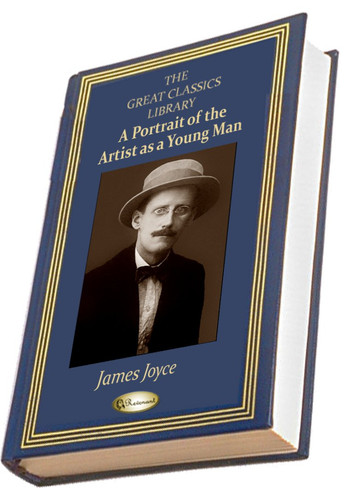
Description
A Portrait of the Artist as a Young Man: Complete Synopsis and Literary Analysis
A Portrait of the Artist as a Young Man stands as James Joyce’s groundbreaking semi-autobiographical novel. Published in 1916, this modernist masterpiece traces the intellectual and spiritual development of Stephen Dedalus. Moreover, it revolutionized twentieth-century literature through its innovative stream-of-consciousness technique. The novel explores themes of identity, religion, nationality, and artistic awakening in early twentieth-century Ireland.
Overview of A Portrait of the Artist as a Young Man
James Joyce crafted this bildungsroman to capture the consciousness of a developing artist. The narrative follows Stephen from infancy through university years. Furthermore, it employs a unique stylistic approach that mirrors Stephen’s evolving awareness. Each chapter reflects the protagonist’s maturation through increasingly sophisticated language and thought patterns.
The novel serves as Joyce’s exploration of Irish identity and artistic freedom. Stephen struggles against the constraints of family, church, and nation. Consequently, his journey becomes a universal story of self-discovery and rebellion. The work remains essential reading for understanding modernist literature.
Stephen Dedalus’s Early Childhood and Family Life
The Dedalus Family Background
Stephen grows up in a declining middle-class Catholic family in Dublin. His father, Simon Dedalus, is a failed businessman with nationalist sympathies. Additionally, his mother represents traditional Irish Catholic values and maternal devotion. The family’s financial situation deteriorates throughout Stephen’s childhood, creating instability and tension.
The household atmosphere combines political passion with religious devotion. Simon frequently reminisces about past glories and political struggles. Meanwhile, Stephen absorbs these conflicting influences that shape his developing consciousness.
First Memories and Sensory Experiences
Joyce opens with Stephen’s earliest fragmented memories. The famous first lines present childish language: “moocow” and baby talk. Therefore, readers experience consciousness as a young child perceives it. Sensory impressions dominate—sounds, smells, textures, and visual fragments.
Stephen remembers his father telling stories and his mother playing piano. He recalls the feel of bed-wetting and associated shame. Moreover, these early passages establish Joyce’s innovative narrative technique. The prose style literally embodies the protagonist’s developmental stage.
Clongowes Wood College: Stephen’s First School Experience
Arrival at Boarding School
Stephen enters Clongowes Wood College, a prestigious Jesuit boarding school. However, he feels small, weak, and alienated among older, stronger boys. The school environment proves harsh and intimidating for the sensitive child. He struggles with homesickness and physical inadequacy.
The young boy observes social hierarchies and schoolyard politics. Furthermore, he begins questioning authority and social conventions. His intellectual curiosity sets him apart from his peers. Stephen’s outsider status becomes a defining characteristic.
The Pandying Incident
A pivotal episode occurs when Father Dolan unjustly punishes Stephen. The prefect of studies strikes Stephen’s hands with a pandybat for broken glasses. However, Stephen had broken them accidentally and couldn’t complete his work. The punishment seems cruel and arbitrary to the sensitive boy.
Consequently, Stephen courageously complains to the rector, Father Conmee. The rector listens sympathetically and promises to address the injustice. Therefore, Stephen experiences a moment of triumph and validation. His classmates celebrate him as a hero for standing against authority.
Early Religious and Political Awareness
At Clongowes, Stephen encounters Irish political divisions firsthand. Boys argue about Charles Stewart Parnell, the fallen Irish political leader. Additionally, Stephen witnesses how religion and politics intertwine in Irish society. The Christmas dinner scene at home erupts into violent argument.
His family divides over Parnell’s legacy and the Catholic Church’s condemnation. Dante Riordan defends the Church’s position vehemently. Meanwhile, Simon Dedalus and Mr. Casey attack clerical interference in politics. Stephen observes silently, absorbing these passionate conflicts that define Irish identity.
Adolescence and Sexual Awakening in A Portrait of the Artist
The Move to Dublin and Belvedere College
Financial decline forces the Dedalus family to move to Dublin. Stephen transfers to Belvedere College, another Jesuit school. Moreover, the family’s poverty becomes increasingly apparent and shameful. Stephen feels the social stigma of their reduced circumstances acutely.
At Belvedere, Stephen excels academically and wins prizes. However, he remains emotionally isolated from his peers. Furthermore, his intellectual gifts create distance rather than connection. He begins writing poetry and exploring aesthetic theories.
First Sexual Experiences
Adolescent Stephen experiences intense sexual desire and confusion. He wanders Dublin’s streets, drawn to the city’s seedier districts. Consequently, he encounters a prostitute who initiates him into sexual experience. The encounter occurs in a dreamlike, almost surreal atmosphere.
Joyce describes the experience through Stephen’s heightened consciousness. The young man feels both excitement and subsequent guilt. Therefore, his Catholic upbringing creates profound internal conflict. Sexual desire becomes entangled with religious shame and fear.
The Retreat and Father Arnall’s Sermons
Stephen participates in a religious retreat at Belvedere. Father Arnall delivers terrifying sermons about sin, death, judgment, and hell. Moreover, these sermons describe eternal damnation in graphic, visceral detail. The priest’s words target adolescent guilt and sexual shame specifically.
The sermons profoundly affect Stephen’s guilty conscience. He imagines himself damned for his sexual sins. Furthermore, Father Arnall’s descriptions of hell’s physical torments seem unbearably real. Stephen experiences overwhelming terror and spiritual crisis.
Key themes in the hell sermons include:
- The eternity of damnation and endless suffering
- Physical torments affecting all five senses simultaneously
- The pain of loss—eternal separation from God
- The company of demons and other damned souls
- The irreversibility of judgment after death
Stephen’s Confession and Religious Conversion
Overwhelmed by guilt and fear, Stephen seeks confession. However, he cannot confess at his own church from shame. Therefore, he walks to a distant chapel where nobody knows him. The confession becomes a moment of profound emotional release.
Stephen confesses his sins to an understanding elderly priest. The priest offers gentle counsel and absolution. Consequently, Stephen experiences intense relief and spiritual renewal. He commits himself completely to religious devotion and purity.
Period of Extreme Religious Devotion
Ascetic Practices and Spiritual Discipline
Following his conversion, Stephen embraces extreme religious practices. He mortifies his senses systematically and deliberately. Moreover, he prays constantly and attends Mass daily. His devotion becomes obsessive and self-punishing.
Stephen denies himself small pleasures and comforts. He avoids looking at attractive things or people. Furthermore, he subjects himself to unpleasant smells and sensations intentionally. His spirituality takes on a masochistic quality.
Consideration of Priesthood
The director of Belvedere suggests Stephen consider becoming a priest. The Jesuit order might offer him a vocation. Therefore, Stephen seriously contemplates this path. He imagines himself in priestly robes, performing sacred duties.
However, Stephen ultimately recognizes this isn’t his true calling. The priesthood would mean accepting authority and surrendering intellectual freedom. Consequently, he realizes his destiny lies elsewhere. His soul seeks beauty and artistic expression, not religious service.
Awakening to Art and Beauty
The Vision of the Bird-Girl
A pivotal moment occurs when Stephen encounters a girl wading in the sea. She stands in the water like a beautiful, strange seabird. Moreover, her presence seems almost supernatural and transformative. Stephen experiences an aesthetic and spiritual epiphany.
The girl represents beauty, freedom, and artistic possibility. She doesn’t speak but simply exists as pure image. Therefore, Stephen understands his true vocation as an artist. This moment crystallizes his rejection of priesthood for art.
Joyce describes the scene with lyrical, elevated prose. The bird-girl becomes a symbol of artistic inspiration. Furthermore, she represents Ireland itself—beautiful, mysterious, and calling to him. Stephen commits himself to capturing such beauty through art.
University Years and Intellectual Development in the Portrait
University College Dublin
Stephen attends University College Dublin, a Catholic institution. He studies languages, literature, and philosophy. Moreover, he engages in intense intellectual debates with fellow students. His aesthetic theories begin taking definite shape.
At university, Stephen encounters various character types. Each represents different aspects of Irish identity and possibility. Furthermore, these relationships help Stephen define himself through contrast. He remains somewhat aloof and superior in attitude.
Key Relationships and Conversations
Lynch serves as Stephen’s cynical, earthy companion. Stephen explains his aesthetic theories to Lynch during long walks. However, Lynch responds with crude jokes and materialistic skepticism. Their conversations reveal Stephen’s developing philosophy of art.
Cranly becomes Stephen’s closest friend and confessor. He listens sympathetically to Stephen’s spiritual struggles. Moreover, Cranly represents conventional morality and social connection. He urges Stephen to compromise with family and church.
Davin embodies simple Irish nationalism and athletic masculinity. He tells Stephen stories of rural Ireland and revolutionary activity. Furthermore, Davin cannot understand Stephen’s intellectual complexity. He represents the Ireland Stephen must leave behind.
Emma Clery is Stephen’s distant love interest. He desires her but cannot connect emotionally. Therefore, she remains an idealized figure rather than real person. Stephen writes poems inspired by her but never truly knows her.
Stephen’s Aesthetic Theory
Stephen develops a complex theory of art based on Aquinas and Aristotle. He distinguishes between proper and improper art. Moreover, he defines beauty through three qualities: integritas, consonantia, and claritas.
Integritas means wholeness—perceiving the object as one complete thing. Consonantia refers to harmony—understanding the relationship between parts. Claritas represents radiance—the moment when the object’s essence reveals itself. Therefore, true art produces aesthetic arrest rather than desire or loathing.
Stephen explains the difference between static and kinetic emotions. Proper art creates static contemplation of beauty. However, improper art provokes desire (pornography) or loathing (didacticism). The artist must remain detached, impersonal, and godlike.
Conflicts with Family, Church, and Nation
Religious Rebellion
Stephen explicitly rejects Catholic faith and practice. He refuses to attend Easter Mass despite his mother’s pleading. Moreover, he declares he no longer believes in the Church’s authority. This rejection causes deep family pain and conflict.
His mother begs him to fulfill his religious duties. However, Stephen remains firm in his refusal. Therefore, he accepts the role of family heretic and rebel. His artistic vocation requires complete intellectual freedom.
National Identity and Irish Revival
Stephen resists the Irish nationalist movement and language revival. His friends encourage him to learn Irish and support independence. However, Stephen sees Irish nationalism as another trap limiting artistic freedom. He refuses to serve political causes through his art.
Davin challenges Stephen’s lack of patriotic feeling. Stephen responds that Ireland has been unkind to artists. Moreover, he argues that nationality, language, and religion are nets constraining the soul. The artist must fly past these limitations.
Family Obligations and Guilt
Stephen’s family continues declining into poverty. His siblings suffer from lack of resources and opportunity. Furthermore, his mother’s health deteriorates under stress and hardship. Stephen feels guilt but refuses to sacrifice his artistic calling.
He recognizes his selfishness but considers it necessary. The artist cannot be bound by conventional obligations. Therefore, Stephen chooses his vocation over family duty. This choice involves real moral cost and suffering.
Major Themes in A Portrait of the Artist as a Young Man
The Artist’s Development and Vocation
The novel traces the birth of artistic consciousness. Stephen moves from childhood confusion to clear artistic purpose. Moreover, Joyce shows how the artist must separate from society. The development requires rejecting conventional paths and expectations.
Stephen’s journey illustrates the artist’s necessary isolation. He cannot serve family, church, or nation. Furthermore, he must forge his own conscience and vision. The artist’s loyalty belongs to truth and beauty alone.
Religion and Spiritual Crisis
Catholicism profoundly shapes Stephen’s consciousness and guilt. The Church provides both structure and oppression. Therefore, Stephen’s rebellion against religion becomes central to his development. He must overcome religious fear to achieve freedom.
Joyce explores how Catholic doctrine affects Irish psychology. Sin, guilt, and damnation haunt Stephen’s imagination. Moreover, the Church’s authority conflicts with intellectual and artistic freedom. Stephen’s rejection of faith represents liberation and loss simultaneously.
Irish National Identity
The novel examines what it means to be Irish. Stephen struggles with competing definitions of Irish identity. Furthermore, he questions whether Ireland supports or destroys its artists. The country’s history of colonization and resistance shapes every character.
Joyce presents Ireland as beautiful but suffocating. The nation demands loyalty and conformity. However, Stephen believes Irish nationalism limits rather than liberates. He must leave Ireland to write about it truthfully.
Sexuality and the Body
Sexual awakening creates profound conflict for Stephen. Catholic teaching condemns sexual desire as sinful. Therefore, Stephen experiences intense guilt about natural urges. His relationship with his body remains troubled throughout.
Joyce honestly depicts adolescent sexuality and confusion. Stephen’s experiences with prostitutes contrast with idealized love. Moreover, the novel shows how religious shame distorts healthy sexuality. Stephen never achieves comfortable integration of body and spirit.
Language and Expression
The novel itself demonstrates language’s power and evolution. Joyce’s prose style changes as Stephen matures. Furthermore, each chapter employs language appropriate to Stephen’s developmental stage. The form embodies the content perfectly.
Stephen becomes increasingly articulate and theoretical about language. He recognizes words as tools for creating reality. Moreover, he understands that mastering language means mastering consciousness. The artist must forge language into new forms.
Joyce’s Modernist Literary Techniques
Stream of Consciousness
Joyce pioneered stream-of-consciousness narrative in English literature. The technique presents thoughts as they occur naturally. Moreover, it captures the flow and fragmentation of consciousness. Readers experience Stephen’s mind directly without authorial mediation.
The opening pages demonstrate this technique brilliantly. Baby Stephen’s consciousness appears in appropriate baby language. Furthermore, sensory impressions dominate over logical narrative. Joyce revolutionized how novels could represent human thought.
Epiphany
Joyce developed the concept of literary epiphany. These are moments of sudden spiritual or aesthetic revelation. Moreover, they illuminate truth through ordinary experiences. Stephen experiences several crucial epiphanies throughout the novel.
The bird-girl scene represents the novel’s central epiphany. Stephen suddenly understands his artistic vocation completely. Therefore, the moment transforms his entire future direction. Joyce shows how beauty can reveal life’s meaning.
Free Indirect Discourse
Joyce blends third-person narration with Stephen’s consciousness. The narrative voice adopts Stephen’s perspective and vocabulary. However, it maintains some distance and irony. Therefore, readers both identify with and judge Stephen simultaneously.
This technique allows Joyce to show Stephen’s limitations. The young man’s pretensions and self-importance become visible. Moreover, readers recognize truths that Stephen himself misses. The narrative achieves complex psychological realism.
Symbolism and Imagery
The novel employs rich symbolic patterns throughout. Birds represent freedom, flight, and artistic aspiration. Moreover, water symbolizes birth, baptism, and transformation. Colors carry emotional and spiritual significance.
Stephen’s name itself carries symbolic weight. “Dedalus” references the Greek mythological craftsman and inventor. Furthermore, Daedalus created wings to escape imprisonment. Stephen must similarly forge wings to escape Ireland’s nets.
The Novel’s Ending and Stephen’s Departure
Final Conversations with Cranly
Stephen’s last extended conversations occur with his friend Cranly. He explains his complete rejection of faith and family. Moreover, he articulates his artistic mission and necessary exile. Cranly listens sympathetically but cannot fully understand.
Cranly warns Stephen about loneliness and isolation. He suggests compromise might bring happiness. However, Stephen refuses to betray his artistic vision. Therefore, their friendship reaches its natural limit.
The Decision to Leave Ireland
Stephen decides to leave Ireland for Paris. He will pursue his artistic development in exile. Moreover, he recognizes that Ireland cannot nurture his talent. The country’s religious and political constraints make creation impossible.
His departure involves real sacrifice and uncertainty. He leaves family, friends, and familiar surroundings. Furthermore, he ventures into poverty and obscurity abroad. However, Stephen believes exile is necessary for artistic integrity.
The Diary Entries
The novel’s final section consists of Stephen’s diary entries. This format change signals his achieved artistic voice. Moreover, the entries show his immediate thoughts and observations. Joyce presents Stephen’s consciousness in its most direct form.
The diary records Stephen’s final days in Dublin. He notes conversations, observations, and reflections. Furthermore, the entries reveal his excitement and anxiety about departure. The fragmented form suggests life’s ongoing, unfinished quality.
The Famous Final Declaration
The novel ends with Stephen’s powerful artistic manifesto. He declares his intention to forge Irish consciousness through art. Moreover, he invokes his mythological namesake as inspiration and guide. The ending combines confidence with vulnerability.
Stephen writes: “I go to encounter for the millionth time the reality of experience and to forge in the smithy of my soul the uncreated conscience of my race.” This statement captures his artistic ambition perfectly. Furthermore, he adds: “Old father, old artificer, stand me now and ever in good stead.” Therefore, he seeks guidance from Daedalus, the master craftsman.
Historical and Literary Context
Irish Literary Revival
Joyce wrote during the Irish Literary Revival movement. Writers like Yeats and Synge celebrated Irish folklore and mythology. However, Joyce took a different approach to Irish identity. He focused on urban, Catholic, middle-class experience.
The Revival emphasized rural Ireland and ancient Celtic traditions. Joyce instead depicted Dublin’s streets and modern consciousness. Moreover, he refused to romanticize Irish life or history. His realism challenged nationalist mythmaking.
Modernist Movement
The novel exemplifies literary modernism’s key characteristics. Modernists rejected Victorian conventions and certainties. Furthermore, they experimented with form, language, and narrative structure. Joyce became one of modernism’s most influential pioneers.
Modernist literature explores consciousness, fragmentation, and alienation. Traditional plot gives way to psychological depth. Moreover, modernists questioned religion, morality, and social conventions. Joyce’s novel embodies these revolutionary changes.
Autobiographical Elements
The novel draws heavily on Joyce’s own life. Stephen Dedalus represents Joyce’s younger self. Moreover, many characters and incidents come from actual experience. The Dedalus family mirrors Joyce’s own family situation.
Joyce attended Clongowes Wood College and Belvedere College. He studied at University College Dublin. Furthermore, he left Ireland for continental Europe in 1904. However, Joyce transforms autobiography into universal artistic statement.
Critical Reception and Legacy
Initial Publication and Response
The novel appeared serially in The Egoist magazine from 1914-1915. Book publication followed in 1916 in New York. Moreover, British publishers initially rejected it as potentially obscene. The novel’s frank treatment of sexuality caused controversy.
Early critics recognized Joyce’s innovative technique and power. However, some found the novel difficult and obscure. Furthermore, its treatment of Catholicism offended some Irish readers. The book gradually gained recognition as a masterpiece.
Influence on Later Literature
Joyce’s novel profoundly influenced twentieth-century fiction. His stream-of-consciousness technique inspired countless writers. Moreover, his treatment of artistic development became a model. The bildungsroman genre was permanently transformed.
Writers worldwide studied Joyce’s innovative methods. His influence extends across languages and cultures. Furthermore, the novel demonstrated new possibilities for representing consciousness. Modern fiction remains indebted to Joyce’s experiments.
Academic and Cultural Significance
The novel has become a cornerstone of literary study. Universities worldwide teach it in literature courses. Moreover, scholars continue producing new interpretations and analyses. The text rewards repeated reading and deep analysis.
A Portrait of the Artist as a Young Man illuminates Irish history and culture. It captures a specific time and place brilliantly. Furthermore, it addresses universal themes of identity and vocation. The novel remains perpetually relevant and powerful.
Conclusion
James Joyce’s A Portrait of the Artist as a Young Man stands as a landmark of modernist literature. The novel traces Stephen Dedalus’s journey from childhood through young adulthood with unprecedented psychological depth. Moreover, Joyce’s innovative narrative techniques revolutionized how fiction represents consciousness and development. The work explores timeless themes of identity, religion, nationality, and artistic vocation.
Stephen’s struggle to forge his own path resonates across generations. His rejection of conventional expectations speaks to anyone seeking authentic self-expression. Furthermore, the novel honestly depicts the costs of choosing art over security. Joyce shows that artistic integrity requires courage, sacrifice, and exile.
The novel’s influence on literature cannot be overstated. Joyce demonstrated new possibilities for narrative form and language. Moreover, he proved that fiction could capture the complexity of human consciousness. His techniques became fundamental tools for modern writers worldwide.
A Portrait of the Artist as a Young Man remains essential reading for understanding modern literature. It combines technical innovation with emotional power and intellectual depth. Therefore, the novel continues attracting new readers and inspiring fresh interpretations. Joyce’s masterpiece endures as a testament to art’s transformative power and the artist’s necessary freedom.



Reviews
There are no reviews yet.