

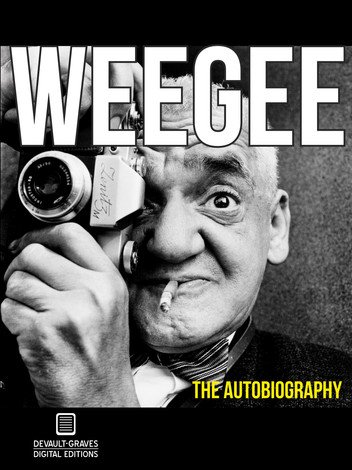
Description
Weegee: The Autobiography (Annotated) – A Legendary Photographer’s Raw Story
Weegee: The Autobiography offers readers an unfiltered journey into the gritty underbelly of 1930s and 1940s New York City. This annotated edition brings Arthur Fellig’s remarkable life story to contemporary audiences with enhanced context. Moreover, it provides invaluable insights into the golden age of photojournalism and tabloid culture.
The Man Behind the Camera: Weegee’s Origins
Arthur Fellig arrived in America as a young immigrant from Austria. He transformed himself into Weegee, the most famous crime photographer of his era. His journey from poverty to photographic legend is truly inspiring. Furthermore, his story embodies the classic American dream narrative.
Weegee earned his nickname from his seemingly psychic ability to arrive at crime scenes. He often beat the police to murders, fires, and accidents across Manhattan. His secret was simple: he listened to police radio frequencies constantly. Additionally, he slept in his clothes, ready to rush out at any moment.
Weegee: The Autobiography – Innovation Through Flash Photography
Weegee: The Autobiography reveals how he revolutionized nighttime photography with innovative flash techniques. His stark, dramatic images captured New York’s darkest moments with unprecedented clarity. Therefore, his work set new standards for documentary photography worldwide.
His camera became an extension of his personality. He worked primarily with a Speed Graphic camera and flashbulbs. Consequently, his images possessed a distinctive, unforgettable quality that defined an era. His technical mastery combined with his instinctive understanding of human drama.
Inside Murder Inc. and NYC’s Criminal Underworld
The autobiography provides firsthand accounts of notorious crime scenes and gangland executions. Weegee documented Murder Inc.’s reign of terror through his lens. However, he never sensationalized violence for its own sake. Instead, he captured the human cost of crime with brutal honesty.
His photographs showed:
- Street executions and their aftermath
- Tenement fires with families watching their homes burn
- Accident victims and grieving relatives
- Police investigations and detective work
- Nightclub scenes and high society contrasts
- Everyday New Yorkers caught in extraordinary circumstances
The Annotated Edition: Enhanced Context and Scholarship
This annotated version of Weegee: The Autobiography includes extensive scholarly notes throughout. Editors provide historical context for events Weegee describes in his distinctive voice. Moreover, the annotations clarify references that modern readers might miss.
The edition features a comprehensive afterword examining Weegee’s lasting influence on photography. Additionally, it includes a detailed bibliography for readers seeking deeper knowledge. These enhancements make the autobiography accessible to contemporary audiences while preserving its original character.
Weegee: The Autobiography and Tabloid Journalism’s Golden Age
Weegee: The Autobiography chronicles his relationships with New York’s tabloid newspapers. He sold his photographs to publications like PM Daily and the New York Post. Furthermore, his work appeared in Life magazine and other national publications.
His business model was revolutionary for its time. He maintained independence rather than working as a staff photographer. Therefore, he retained control over his images and their distribution. His entrepreneurial spirit matched his artistic vision perfectly.
Life on New York’s Streets: Candid Storytelling
Weegee’s narrative voice is remarkably candid and unpretentious throughout the autobiography. He writes about tenement life with the authority of someone who lived it. Meanwhile, he describes high society with an outsider’s sharp, observant eye.
His stories capture the texture of urban life during the Depression and World War II. He witnessed poverty, violence, joy, and resilience in equal measure. Consequently, his autobiography serves as an invaluable historical document beyond its photographic significance.
Influence on Modern Photojournalism and Documentary Photography
The techniques Weegee pioneered continue influencing photographers today. His direct, uncompromising approach to documentary work set lasting standards. Moreover, his ability to find humanity in tragedy remains a model for photojournalists.
Contemporary photographers still study his composition and timing. His work demonstrated that street photography could be both art and journalism. Thus, he helped elevate photojournalism to a respected artistic medium.
Why This Book Matters Today
Weegee: The Autobiography remains essential reading for multiple audiences. Photography students gain insights into foundational documentary techniques and ethical considerations. Historians find primary source material about mid-century New York City life.
True crime enthusiasts discover authentic accounts of notorious cases and criminal investigations. Additionally, anyone interested in New York City culture encounters an irreplaceable firsthand narrative. The book bridges multiple disciplines and interests seamlessly.
The annotated edition makes Weegee’s world accessible to readers unfamiliar with 1940s New York. Scholarly additions provide context without diminishing the autobiography’s raw, immediate quality. Therefore, new generations can appreciate Weegee’s contributions to visual culture and urban history.
The Legacy of a Photographic Pioneer
Weegee’s influence extends far beyond his lifetime. His images appear in museums and galleries worldwide. Furthermore, his autobiography inspired countless photographers to pursue documentary work with similar dedication.
His unflinching documentation of urban life created an invaluable visual archive. Modern researchers rely on his photographs to understand Depression-era and wartime New York. Meanwhile, artists continue drawing inspiration from his distinctive aesthetic and approach.
Conclusion: An Essential Addition to Photography and History Collections
Weegee: The Autobiography stands as a landmark work in photographic literature and American autobiography. This annotated edition enhances an already remarkable book with scholarly rigor and contemporary context. It belongs on the shelves of photography enthusiasts, historians, and anyone fascinated by New York City’s complex history.
Arthur Fellig’s transformation into Weegee represents more than personal success. His story illuminates the immigrant experience, artistic innovation, and urban journalism’s evolution. Moreover, his candid prose style makes the autobiography genuinely entertaining while remaining historically significant.
The book offers lessons about perseverance, innovation, and artistic integrity that transcend its specific historical moment. Weegee’s ability to find compelling stories on city streets demonstrates the power of observation. His technical innovations show how creativity can overcome resource limitations.
For photography students, the autobiography provides masterclass-level insights into documentary work and photojournalism ethics. Historians gain primary source material about crime, urban life, and media culture during pivotal decades. General readers discover a gripping narrative told by an unforgettable character.
The annotated edition’s additional materials make this version particularly valuable for academic and serious readers. The extensive notes, afterword, and bibliography transform the autobiography into a comprehensive resource. Therefore, it serves both casual readers and scholars equally well.
Weegee’s legacy continues growing as new generations discover his work and story. His photographs remain powerful, immediate, and relevant decades after their creation. This autobiography ensures his voice accompanies his images, providing context and personality to his visual legacy.




Reviews
There are no reviews yet.