

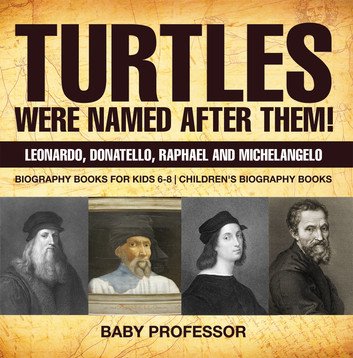
Description
Leonardo, Donatello, Raphael, and Michelangelo: The Renaissance Masters Behind the Ninja Turtles – Biography for Kids 6-8
Introduction: The Amazing Artists Who Inspired the Ninja Turtles
Did you know the Teenage Mutant Ninja Turtles were named after real people? Leonardo, Donatello, Raphael, and Michelangelo were actual artists who lived long ago. These four Renaissance masters created some of the world’s most beautiful art. Moreover, they changed history with their incredible talents and amazing creations.
Baby Professor’s e-book reveals the true stories behind these famous names. Children will discover why these artists became so legendary and important. Furthermore, they’ll understand the connection between cartoon heroes and real-life geniuses. This book makes history fun, exciting, and easy to understand.
The four Renaissance artists lived in Italy over 500 years ago. They painted, sculpted, and built magnificent things that still exist today. Additionally, their work inspired people for generations after they died. Therefore, learning about them helps kids appreciate art and history together.
Why the Ninja Turtles Got Their Names
The creators of the Teenage Mutant Ninja Turtles loved Renaissance art. They wanted their turtle heroes to have special, memorable names. Consequently, they chose Leonardo, Donatello, Raphael, and Michelangelo as perfect choices. These names honored the greatest artists in history.
Each turtle’s personality matches their namesake artist in interesting ways. Leonardo leads the group, just like Leonardo da Vinci led innovation. Donatello invents gadgets, similar to how Donatello created new sculpture techniques. Moreover, Raphael shows passion, while Michelangelo displays artistic flair and humor.
This connection makes learning about the real artists more exciting for kids. Children already know and love the turtle characters from cartoons. Therefore, they become curious about the actual historical figures behind the names. The book uses this connection to spark interest in art history.
Fun Facts About the Turtle Names:
- Leonardo was named after Leonardo da Vinci, the ultimate Renaissance genius
- Donatello honors Donatello, the master sculptor who revolutionized his craft
- Raphael celebrates Raphael Sanzio, known for beautiful paintings and kindness
- Michelangelo represents Michelangelo Buonarroti, the artist who did everything amazingly
Leonardo da Vinci: The Ultimate Genius and Inventor
Leonardo da Vinci was born in 1452 in a small Italian town. He became famous for being good at almost everything he tried. Furthermore, he painted, invented machines, studied science, and designed buildings. People call him a “Renaissance man” because he mastered so many skills.
His most famous painting is the Mona Lisa, which hangs in Paris today. The woman in the painting has a mysterious smile that fascinates people. Additionally, Leonardo painted The Last Supper, showing Jesus with his disciples. These artworks are among the most recognized images in the world.
Leonardo also loved inventing things that were ahead of his time. He drew plans for flying machines, tanks, and submarines centuries before they existed. However, most of his inventions were never built during his lifetime. His notebooks contain thousands of drawings and ideas that amaze scientists today.
Children will learn that Leonardo was endlessly curious about everything around him. He studied birds to understand how flight worked in nature. Moreover, he dissected bodies to learn about human anatomy and muscles. His curiosity drove him to explore and discover constantly throughout his life.
Donatello: The Sculptor Who Brought Statues to Life
Donatello was born around 1386 in Florence, Italy, before the other three artists. He revolutionized sculpture by making figures look incredibly realistic and lifelike. Furthermore, he developed new techniques that other sculptors copied for centuries afterward. His work influenced all the artists who came after him.
His most famous sculpture is a bronze statue of the biblical hero David. This was the first freestanding nude statue created since ancient Roman times. Additionally, Donatello made the figure look young, confident, and completely natural. The statue shows David after defeating the giant Goliath with courage.
Donatello worked with many different materials throughout his long career successfully. He carved marble, cast bronze, and shaped wood into beautiful forms. Moreover, he created both religious and non-religious subjects with equal skill. His versatility made him one of the most sought-after artists in Italy.
The book explains how Donatello changed the way people thought about sculpture. Before him, statues often looked stiff, flat, and unrealistic in appearance. However, Donatello’s figures seemed to breathe, move, and express real emotions. Therefore, he brought a new level of realism to Renaissance art.
Donatello’s Greatest Achievements:
- Created the first freestanding bronze nude statue since ancient times
- Developed relief sculpture techniques that created depth and perspective
- Made statues that showed real human emotions and personalities
- Influenced every sculptor who came after him for hundreds of years
Raphael: The Artist of Beauty and Harmony
Raphael Sanzio was born in 1483 in the Italian city of Urbino. He became known for creating paintings of perfect beauty and peaceful harmony. Moreover, people loved his gentle personality and kind nature as much as his art. He was friendly, generous, and well-liked by everyone who knew him.
His paintings of the Madonna and Child are especially famous and beloved. These artworks show Mary holding baby Jesus with tenderness and grace. Additionally, Raphael painted them with soft colors and balanced compositions that feel calm. His Madonnas became the standard that other artists tried to match.
Raphael also created enormous frescoes for the Vatican Palace in Rome. The School of Athens is his most celebrated wall painting there today. Furthermore, it shows ancient Greek philosophers gathered together in a grand building. The painting demonstrates his mastery of perspective, composition, and human figures.
Sadly, Raphael died young at only 37 years old from a fever. However, he accomplished more in his short life than most artists do. His influence on art remained strong for centuries after his death. Therefore, he’s remembered as one of the three greatest High Renaissance masters.
Children will discover that Raphael learned from both Leonardo and Michelangelo carefully. He studied their techniques and combined their strengths in his own work. Moreover, he added his own sense of grace and harmony to everything. This made his style unique, beautiful, and instantly recognizable to art lovers.
Michelangelo: The Master of Everything
Michelangelo Buonarroti was born in 1475 near Florence, Italy, into a noble family. He considered himself primarily a sculptor, though he excelled at everything he attempted. Furthermore, he created masterpieces in sculpture, painting, architecture, and poetry throughout his long life. His talent and dedication were absolutely extraordinary and unmatched.
His sculpture of David is one of the most famous artworks ever created. This massive marble statue stands over 17 feet tall in Florence today. Additionally, Michelangelo carved it from a single block of marble that others abandoned. The statue shows the biblical hero as a perfect, powerful young man.
Michelangelo also painted the ceiling of the Sistine Chapel in Rome spectacularly. Pope Julius II forced him to take this painting job reluctantly. However, Michelangelo created one of art history’s greatest masterpieces despite his protests. The ceiling shows scenes from the Bible with over 300 human figures.
The book explains how Michelangelo worked with incredible intensity and passion always. He often forgot to eat or sleep when creating his art pieces. Moreover, he had a difficult personality and argued with popes and princes. But his genius was so great that everyone forgave his temperamental nature.
Why Michelangelo Was So Special:
- Mastered sculpture, painting, and architecture at the highest levels
- Created the David statue and Sistine Chapel ceiling masterpieces
- Worked into his late 80s, never stopping his creative output
- Influenced art and architecture for over 500 years after his death
The Renaissance: When These Four Artists Changed the World
Leonardo, Donatello, Raphael, and Michelangelo lived during a special time called the Renaissance. This period lasted from about 1300 to 1600 in Europe, especially Italy. Furthermore, “Renaissance” means “rebirth” because people rediscovered ancient Greek and Roman knowledge. Art, science, and learning flourished like never before in human history.
These four masters helped define what the Renaissance meant for art and culture. They pushed boundaries and tried new techniques that nobody had attempted before. Additionally, they studied nature, anatomy, and mathematics to improve their artistic skills. Their dedication to excellence inspired everyone around them to do better work.
Italy during the Renaissance was divided into many small city-states and kingdoms. Wealthy families like the Medici supported artists by paying for their work. Moreover, the Catholic Church commissioned enormous projects for cathedrals and palaces. This patronage system allowed artists to create without worrying about money constantly.
Children will understand that these artists didn’t just make pretty pictures randomly. They studied hard, practiced constantly, and learned from ancient Roman art carefully. Therefore, their success came from dedication, curiosity, and endless hours of work. The book shows kids that greatness requires effort, not just natural talent.
What Made These Four Artists Different From Each Other
Although Leonardo, Donatello, Raphael, and Michelangelo were all brilliant, they had different strengths. Leonardo was the ultimate inventor and scientist who also painted beautifully. Donatello focused on sculpture and revolutionized how statues could look realistic. Moreover, Raphael created harmonious paintings that felt peaceful and perfectly balanced always.
Michelangelo excelled at everything but loved sculpture most of all passionately. He brought dramatic emotion and power to all his artistic creations. Additionally, his figures showed muscular strength and intense feelings that jumped off walls. His style was bolder and more dramatic than Raphael’s gentle approach.
Their personalities also differed greatly, which affected their art and lives significantly. Leonardo was curious and easily distracted by new ideas and projects constantly. Donatello was hardworking and focused on perfecting his sculptural craft throughout life. Furthermore, Raphael was charming, diplomatic, and beloved by patrons and fellow artists.
Michelangelo was moody, temperamental, and preferred working alone without interference or help. He argued with popes and refused commissions that didn’t interest him personally. However, his genius was so obvious that powerful people tolerated his behavior. These personality differences make their stories interesting and relatable for young readers.
Why Kids Should Learn About These Renaissance Masters
Understanding Leonardo, Donatello, Raphael, and Michelangelo helps children appreciate art and history together. These artists created works that people still admire over 500 years later. Moreover, their dedication shows kids that practice and hard work lead to greatness. Learning their stories provides inspiration and valuable life lessons for young minds.
The book makes these historical figures feel real, interesting, and accessible to children. It uses simple language and exciting stories that capture young imaginations effectively. Additionally, connecting them to the Ninja Turtles makes the learning process fun. Kids already love those characters, so they become curious about the namesakes.
These four Renaissance artists also demonstrate that creativity takes many different forms successfully. Leonardo invented machines, Donatello sculpted statues, Raphael painted beautiful scenes, and Michelangelo did everything. Therefore, children learn that there’s no single way to be creative or artistic. Everyone can find their own special talents and develop them over time.
Important Lessons Kids Learn From This Book:
- Hard work and practice lead to amazing achievements and success
- Curiosity and asking questions help you learn and grow constantly
- Everyone has different talents and strengths worth developing and celebrating
- Art and creativity make the world more beautiful and meaningful for everyone
- Historical figures were real people with interesting stories and personalities
Perfect for Young Readers Ages 6-8
Baby Professor designed this e-book specifically for children in early elementary school. The vocabulary is simple, clear, and appropriate for beginning readers to understand. Furthermore, the sentences are short and easy to follow without complex structures. Parents can read it aloud or kids can explore it independently.
The book includes colorful pictures and reproductions of famous artworks throughout its pages. Visual learning helps children remember information better and stay engaged with content. Moreover, seeing the actual paintings and sculptures makes the artists’ achievements more real. Kids can observe the details that made these masters so special.
Each section builds knowledge gradually without overwhelming young minds with too much information. The book balances fun facts with educational content in an engaging way. Additionally, it encourages children to think about art and ask questions about creativity. This approach develops critical thinking skills alongside historical knowledge and appreciation.
Teachers and homeschooling parents will find this resource incredibly valuable for lesson planning. The content aligns with elementary art and history curriculum standards perfectly well. Furthermore, it provides discussion points for classroom conversations or family reading time. The Ninja Turtle connection makes it especially appealing to reluctant readers too.
How This Book Inspires Future Artists and Thinkers
Reading about Leonardo, Donatello, Raphael, and Michelangelo plants seeds of creativity in children. They see that ordinary people can achieve extraordinary things through dedication and passion. Moreover, they learn that it’s okay to have different interests and talents. The four masters each followed their own unique paths to greatness successfully.
The book shows children that making mistakes is part of learning and growing. Even these famous artists had failures and challenges throughout their long careers. However, they kept working, practicing, and improving their skills over many years. Therefore, kids learn that persistence matters more than immediate perfection or success.
Young readers also discover that art connects us across time and cultures beautifully. People today still love paintings and sculptures created 500 years ago in Italy. Additionally, these artworks inspire new generations of artists, musicians, and creative thinkers. The legacy of the four Renaissance masters continues growing and influencing people.
The connection to the Ninja Turtles makes this historical learning feel relevant today. Children understand that these old artists still matter in modern popular culture. Furthermore, they might look at the cartoon characters differently after learning the stories. This bridge between past and present makes history feel alive and exciting.
Conclusion: From Renaissance Masters to Ninja Turtle Heroes
Leonardo, Donatello, Raphael, and Michelangelo changed the world with their incredible artistic talents. These four Renaissance artists created masterpieces that still amaze people five centuries later. Moreover, their influence extends beyond museums into cartoons, movies, and popular culture today. The Ninja Turtles connection proves that great artists never truly disappear from memory.
Baby Professor’s e-book brings these historical figures to life for young readers effectively. It combines education with entertainment in a way that captures children’s attention. Furthermore, it respects kids’ intelligence while keeping content accessible and fun throughout. Parents and teachers will appreciate how it makes art history exciting and relevant.
By learning about these four masters, children gain more than historical knowledge alone. They discover inspiration, learn about dedication, and develop appreciation for human creativity and achievement. Therefore, this book offers valuable lessons that extend far beyond art history. It encourages kids to explore their own talents and pursue their dreams.
The next time children watch the Teenage Mutant Ninja Turtles, they’ll know the truth. Those heroes were named after real people who were heroes in their own way. Moreover, they’ll understand that creativity, hard work, and passion can make anyone legendary. This book plants seeds that may grow into lifelong love of art and learning.




Reviews
There are no reviews yet.