

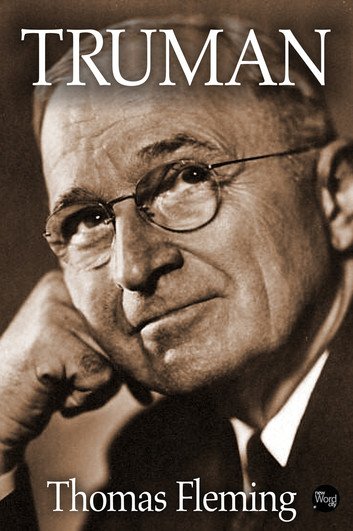
Description
Truman Biography: The Extraordinary Life of America’s 33rd President
This Truman biography by Thomas Fleming offers readers a compelling portrait of Harry S. Truman. Fleming explores how an ordinary man from Missouri became one of America’s most consequential presidents. Moreover, the book reveals the character and courage that defined Truman’s leadership during critical moments. This comprehensive work examines both his personal journey and his profound impact on history.
Harry Truman rose from humble beginnings to lead the nation through transformative times. He made decisions that shaped the modern world and defined America’s role globally. Furthermore, his plain-spoken honesty and decisive leadership style set him apart from other presidents. Fleming’s biography captures the essence of a man who never sought greatness but achieved it.
The book provides insight into Truman’s values, his decision-making process, and his unwavering principles. Readers discover how his Midwestern upbringing influenced his approach to the presidency and governance. Additionally, Fleming examines the challenges Truman faced and how he overcame seemingly impossible obstacles. This Truman biography stands as an essential read for anyone interested in American history.
From Missouri Farmer to Vice President
Harry S. Truman was born on May 8, 1884, in Lamar, Missouri. He grew up in a farming family that valued hard work, honesty, and straightforward dealing. His childhood was typical of rural America at the turn of the twentieth century. However, young Harry showed an early love of reading and history that set him apart.
Truman’s early adult years were marked by various business ventures and military service. He worked as a bank clerk, a farmer, and eventually served in World War I. During the war, he commanded an artillery battery and earned respect for his leadership. Therefore, his military experience shaped his understanding of duty, sacrifice, and command responsibility.
After the war, Truman returned to Missouri and entered the world of business and politics. He opened a haberdashery shop with a partner, but the business failed during the recession. Nevertheless, he refused to declare bankruptcy and spent years paying off his debts. This experience demonstrated the integrity and determination that would define his later political career.
Truman entered politics in the 1920s with the support of the Kansas City political machine. He served as a county judge and gained a reputation for honest administration. Moreover, he completed public works projects efficiently and without corruption, which was unusual for the era. His success at the local level eventually led to bigger opportunities in state politics.
In 1934, Truman won election to the United States Senate, where he served for ten years. He gained national attention during World War II by chairing a committee investigating defense spending. The Truman Committee saved taxpayers billions of dollars by exposing waste and fraud in military contracts. Furthermore, his work earned him respect from both Democrats and Republicans across the country.
By 1944, President Franklin D. Roosevelt needed a new running mate for his fourth term. Party leaders chose Truman as a compromise candidate who could unite different Democratic factions. Additionally, they saw him as honest, capable, and acceptable to various party constituencies. Truman accepted the nomination reluctantly, not fully understanding what lay ahead.
Becoming President in Crisis
Franklin Roosevelt died suddenly on April 12, 1945, making Truman president during World War II. He had served as vice president for only 82 days before assuming the presidency. Moreover, Roosevelt had communicated with him only briefly about major wartime decisions and secret projects. Truman later said he felt like “the moon, the stars, and all the planets” had fallen on him.
Fleming’s Truman biography emphasizes how unprepared Truman was for the enormous responsibilities he inherited. He knew nothing about the Manhattan Project developing the atomic bomb until after taking office. Additionally, he had limited knowledge of Roosevelt’s agreements with Churchill and Stalin about postwar Europe. Nevertheless, Truman quickly mastered the complex issues and began making critical decisions with confidence.
Within weeks of becoming president, Truman faced the decision to use atomic weapons against Japan. He consulted with military advisors, scientists, and cabinet members about the devastating new technology. The decision weighed heavily on him, but he believed it would save American lives. Therefore, he authorized the atomic bombings of Hiroshima and Nagasaki in August 1945.
The atomic bomb decision remains one of the most controversial choices in presidential history. Truman never publicly expressed regret about the decision, believing it ended the war quickly. However, the moral implications of nuclear weapons would haunt international relations for decades afterward. Fleming examines this decision thoroughly, presenting the context and pressures Truman faced at the time.
Japan surrendered on August 15, 1945, ending World War II and beginning a new era. Truman now faced the challenge of transitioning America from wartime to peacetime. Furthermore, he had to navigate the emerging tensions with the Soviet Union and communism. The postwar world presented challenges as daunting as the war itself.
Major Presidential Decisions and Policies
Truman’s presidency was defined by bold decisions that shaped the second half of the twentieth century. He made choices that required courage, conviction, and willingness to accept political consequences. Moreover, many of his decisions were unpopular at the time but proved wise in hindsight. Fleming’s biography explores these pivotal moments and their lasting impact on American history.
Here are the most significant decisions and policies of Truman’s presidency:
- The Truman Doctrine (1947): Committed America to containing Soviet expansion and supporting free peoples
- The Marshall Plan (1948): Provided billions in aid to rebuild war-torn Europe
- Recognition of Israel (1948): Made America the first nation to recognize the new Jewish state
- Desegregation of the Military (1948): Ordered racial integration of armed forces by executive order
- NATO Formation (1949): Created the North Atlantic Treaty Organization for collective defense
- Korean War Intervention (1950): Committed American forces to defend South Korea from communist invasion
- Firing General MacArthur (1951): Removed a popular general for insubordination, asserting civilian control.
- Fair Deal Domestic Program: Proposed national health insurance, civil rights legislation, and social reforms
The Truman Doctrine and Marshall Plan represented a fundamental shift in American foreign policy. Previously, America had avoided long-term commitments to European affairs and international alliances. However, Truman recognized that Soviet expansionism threatened democratic nations and American security interests. Therefore, he committed America to long-term active engagement in world affairs.
The Marshall Plan rebuilt Western Europe’s economy and prevented communist parties from gaining power there. It cost billions of dollars but created stable democracies and trading partners for America. Additionally, it demonstrated American generosity and commitment to international cooperation and mutual prosperity. The program succeeded beyond expectations and became a model for foreign aid programs.
Truman’s decision to desegregate the military was politically risky but morally necessary in his view. He faced fierce opposition from Southern Democrats and many military leaders who resisted change. Nevertheless, he believed racial discrimination contradicted American values and weakened the nation’s moral authority. Furthermore, his executive order began the broader process of racial integration in American society.
The Korean War tested Truman’s leadership and America’s commitment to containing communist expansion globally. When North Korea invaded South Korea in June 1950, Truman quickly committed American forces. He worked through the United Nations to create an international coalition supporting South Korea. However, the war became unpopular as it dragged on without a clear victory or resolution.
Truman’s firing of General Douglas MacArthur in 1951 was one of his most controversial decisions. MacArthur publicly disagreed with Truman’s limited-war strategy and called for expanding the fighting. Moreover, MacArthur challenged civilian authority over military decisions, which Truman could not tolerate. Therefore, Truman removed the popular general, accepting the political backlash to preserve constitutional principles.
Domestic Challenges and the Fair Deal
Truman faced significant domestic challenges throughout his presidency, including labor strikes and economic transitions. The shift from wartime to peacetime economy created inflation, shortages, and worker dissatisfaction. Additionally, Republicans gained control of Congress in 1946, making it more difficult for him to advance his legislative agenda. Nevertheless, Truman fought for progressive policies he believed would benefit ordinary Americans.
His Fair Deal program proposed expanding Social Security, raising the minimum wage, and building housing. He also advocated for national health insurance, federal aid to education, and civil rights. However, Congress blocked most of his domestic agenda, particularly the more ambitious proposals. Furthermore, Southern Democrats joined with Republicans to prevent civil rights legislation from advancing.
Despite congressional opposition, Truman achieved some important domestic policy victories during his presidency. He successfully expanded Social Security coverage to millions more Americans and raised benefits. Additionally, he raised the minimum wage and supported the construction of public housing for low-income families. These achievements, though modest compared to his proposals, improved lives for many Americans.
Truman’s support for civil rights was ahead of his time and politically costly. He established a civil rights commission that documented discrimination and recommended federal action. Moreover, he was the first president to address the NAACP and speak forcefully about equality. His actions alienated Southern Democrats but demonstrated moral courage and commitment to justice.
The 1948 election was supposed to end Truman’s presidency, with polls and experts predicting defeat. The Democratic Party split three ways, with Southern segregationists and progressive leftists forming separate parties. However, Truman campaigned tirelessly across the country, speaking directly to ordinary Americans about issues. Therefore, he won a stunning upset victory that shocked political observers and the media.
Character, Leadership Style, and Personal Qualities
Fleming’s biography emphasizes Truman’s character as the foundation of his presidential leadership and success. He was direct, honest, and unpretentious in ways that contrasted sharply with those of other politicians. Moreover, he made decisions based on principles rather than political calculations or personal advantage. His integrity earned respect even from those who disagreed with his policies and choices.
Truman’s leadership style was decisive and action-oriented, with little patience for endless deliberation. He gathered information, consulted advisors, and then made firm decisions without second-guessing himself. Additionally, he accepted full responsibility for his choices, famously keeping a sign reading “The Buck Stops Here.” This accountability was refreshing in an era when politicians often blamed others for failures.
His plain-spoken manner and Midwestern values made him relatable to average Americans nationwide. Truman spoke in simple, direct language without the eloquence that Roosevelt had possessed. However, his straightforward communication style conveyed sincerity and authenticity, resonating with ordinary citizens. Furthermore, he never forgot his humble origins or lost touch with the concerns of common people.
Truman was a voracious reader with deep knowledge of history, particularly American and military history. He often drew lessons from historical examples when facing contemporary challenges and difficult decisions. Moreover, his historical perspective helped him understand the long-term implications of his choices. This intellectual foundation strengthened his judgment and gave him confidence in uncertain times.
Despite his strengths, Truman had a temper and could be stubborn when challenged or criticized. He sometimes made intemperate remarks or wrote angry letters that aides had to intercept. Additionally, his loyalty to friends occasionally led him to defend people who didn’t deserve support. Nevertheless, these flaws made him human and relatable rather than diminishing his overall character.
Truman’s relationship with his wife, Bess, was central to his life and emotional stability. They had known each other since childhood and maintained a devoted partnership throughout his career. Moreover, Bess provided honest advice and kept him grounded during the pressures of the presidency. Their correspondence reveals a loving relationship built on mutual respect, trust, and genuine affection.
Legacy and Historical Assessment
When Truman left office in 1953, his approval ratings were low, and his presidency seemed unsuccessful. Many Americans were frustrated by the Korean War stalemate and domestic political controversies. However, historical perspective has dramatically improved assessments of his presidency and leadership over time. Furthermore, scholars now consistently rank him among America’s greatest presidents for his consequential decisions.
Truman’s foreign policy achievements created the framework for America’s Cold War strategy and eventual victory. The Truman Doctrine, the Marshall Plan, and NATO contained Soviet expansion and protected democratic nations. Additionally, these policies demonstrated American leadership and commitment to international stability and collective security. The institutions and alliances he created endured for decades and remain relevant today.
His decision to desegregate the military was a crucial step toward racial equality in America. It demonstrated that integration could work and paved the way for the civil rights movement. Moreover, it showed presidential leadership could advance justice even against fierce political opposition. Therefore, Truman deserves recognition as an early champion of civil rights before it was popular.
The atomic bomb decision remains debated, but most historians acknowledge the difficult circumstances Truman faced. He had limited time, incomplete information, and enormous pressure to end the war quickly. Additionally, he genuinely believed using the bomb would save lives by avoiding a costly invasion. Whether right or wrong, the decision required courage and willingness to accept historical judgment.
Truman’s firing of MacArthur affirmed the principle of civilian control over the military establishment. This constitutional principle is fundamental to American democracy, but was tested by MacArthur’s popularity. However, Truman understood that allowing military commanders to dictate policy would undermine democratic governance. Therefore, he made the difficult choice to remove MacArthur despite the political cost.
Fleming’s Truman biography ultimately portrays a man who rose to meet extraordinary challenges with courage. He made difficult decisions based on principles rather than political expediency or personal ambition. Moreover, he demonstrated that ordinary people can achieve greatness when circumstances demand it. His life story remains inspiring and relevant for contemporary readers seeking examples of authentic leadership.
Conclusion
Thomas Fleming’s biography presents Harry Truman as a president who embodied American values and democratic principles. From his Missouri roots to the White House, Truman remained true to himself and his beliefs. His presidency transformed America’s role in the world and set the course for decades to come. Moreover, his character and integrity provide a leadership model that transcends partisan politics.
Truman’s legacy includes the institutions, alliances, and policies that shaped the modern world order. He made choices that required courage, vision, and willingness to accept criticism and political consequences. Furthermore, he demonstrated that moral clarity and decisive action can overcome seemingly impossible challenges. His example reminds us that leadership requires both strength and humility in equal measure.
This comprehensive biography helps readers understand not just what Truman did but who he was. Fleming captures the essence of a man who never sought greatness but achieved it nonetheless. Therefore, anyone interested in American history, presidential leadership, or personal character should read this book. Truman’s story continues to inspire and instruct us about the possibilities of democratic leadership today.



Reviews
There are no reviews yet.