

Description
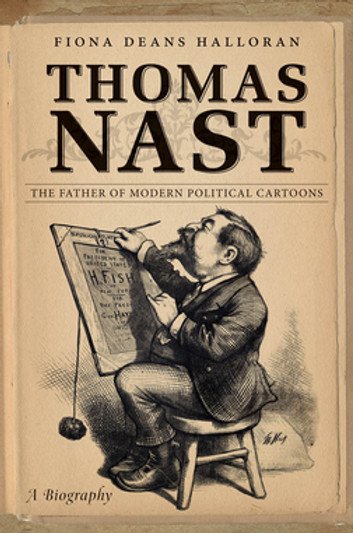
Thomas Nast: The Father of Modern Political Cartoons by Fiona Deans Halloran
Introduction
Thomas Nast revolutionized American political discourse through his powerful illustrations. This German-born artist transformed political cartoons into weapons of social change. Moreover, his work shaped how Americans understood politics during the turbulent 19th century. Fiona Deans Halloran’s biography explores this remarkable figure’s life and enduring influence. Furthermore, it reveals how one artist’s pen became mightier than countless political speeches.
Thomas Nast’s Revolutionary Impact on American Politics
Thomas Nast wielded his artistic talent like a sword against corruption and injustice. His cartoons appeared regularly in Harper’s Weekly from 1862 to 1886. Consequently, millions of Americans formed their political opinions through his visual commentary. He made complex political issues accessible to ordinary citizens, including immigrants and the illiterate. Therefore, his influence extended far beyond educated elites.
Nast’s illustrations captured the essence of political scandals with devastating clarity. His visual satire exposed hypocrisy in ways that words alone could not achieve. Additionally, he pioneered techniques that modern political cartoonists still employ today. His bold lines and symbolic imagery created instant recognition and emotional impact. Thus, he established the template for effective political commentary.
The Artist Behind Iconic American Symbols
The Republican elephant and Democratic donkey both emerged from Thomas Nast’s imagination. These symbols now define American political identity across the globe. However, Nast created them as satirical devices to comment on party behavior. The elephant first appeared in an 1874 Harper’s Weekly cartoon titled “Third Term Panic.” Meanwhile, the donkey had appeared earlier in his work criticizing Democratic policies.
Beyond political symbols, Nast shaped America’s vision of Santa Claus forever. His illustrations transformed Saint Nicholas into the jolly, rotund figure we recognize today. Furthermore, he established Santa’s North Pole workshop and gift-giving mythology. These images appeared in Harper’s Weekly during the Civil War years. Consequently, they brought comfort and joy to a nation torn by conflict.
Nast also popularized Uncle Sam as America’s national personification. His drawings gave this symbol its distinctive appearance and character. Moreover, he created the image of Columbia representing American liberty and values. These visual representations became embedded in the national consciousness. Therefore, Nast’s artistic legacy extends far beyond political commentary alone.
Taking Down Tammany Hall and Boss Tweed
Nast’s most famous crusade targeted William “Boss” Tweed and Tammany Hall’s corruption. This powerful political machine controlled New York City through bribery and voter fraud. However, Nast’s relentless cartoon attacks exposed their criminal activities to public scrutiny. His illustrations depicted Tweed as a vulgar, greedy tyrant stealing from ordinary citizens. Consequently, public outrage grew with each published cartoon.
Tweed himself recognized the devastating power of Nast’s visual commentary. He allegedly said, “Stop them damned pictures. I don’t care what they write.” Indeed, many Tammany Hall supporters could not read English newspapers. Nevertheless, they understood Nast’s clear, powerful imagery immediately. Therefore, the cartoons reached audiences that written exposés could never touch.
The campaign against Tweed demonstrated journalism’s power to combat political corruption. Nast’s cartoons appeared weekly, maintaining constant pressure on the Tweed Ring. Additionally, they inspired investigations that eventually led to criminal prosecutions. Tweed was arrested, convicted, and died in prison in 1878. Thus, Nast proved that art could topple even the mightiest political machines.
Halloran’s biography examines this crusade in fascinating detail. She reveals Nast’s personal motivations and the risks he faced. Furthermore, she explores how Harper’s Weekly supported his controversial work despite threats. The publisher stood firm against intimidation and bribery attempts. Consequently, this partnership became a model for courageous investigative journalism.
Thomas Nast’s Lasting Legacy in Political Commentary
Modern political cartoonists owe an enormous debt to Thomas Nast’s pioneering work. He established visual metaphors and symbolic language that remain standard today. Moreover, he proved that cartoons could influence public opinion and drive political change. His techniques for distilling complex issues into single, powerful images endure. Therefore, every political cartoon published today reflects his innovative spirit.
Nast’s work also highlighted the crucial role of a free press. He demonstrated how independent journalism protects democracy from corruption and tyranny. Additionally, his career showed that artists could be powerful agents of social reform. His commitment to truth and justice inspired generations of journalists and illustrators. Thus, his influence extends throughout American media history.
Halloran’s biography places Nast within the broader context of 19th-century American politics. She examines the Civil War, Reconstruction, and the Gilded Age through his eyes. Furthermore, she analyzes how his immigrant background shaped his fierce patriotism. Nast saw America as a beacon of freedom and opportunity. Consequently, he fought tirelessly against those who threatened democratic ideals.
The book also explores Nast’s personal struggles and eventual decline. His uncompromising principles sometimes alienated allies and limited his career options. Moreover, changing tastes and new artistic styles eventually diminished his influence. However, his core contributions to American visual culture remained undeniable. Therefore, his legacy survived long after his death in 1902.
Key Contributions Explored in This Biography
Halloran’s comprehensive biography examines numerous aspects of Nast’s remarkable career:
- Creation of enduring political symbols: The Republican elephant, Democratic donkey, and Tammany tiger
- Transformation of Santa Claus imagery: Establishing the modern visual representation of Christmas traditions
- Crusade against Tammany Hall: Exposing Boss Tweed’s corruption through devastating visual satire
- Civil War commentary: Supporting the Union cause and promoting emancipation through powerful illustrations
- Reconstruction advocacy: Championing civil rights and opposing racial violence in the South
- Immigration perspectives: Defending immigrant rights while criticizing certain ethnic stereotypes
- Artistic innovation: Pioneering techniques in visual storytelling and symbolic representation
- Journalism ethics: Demonstrating the power and responsibility of a free press
Each contribution receives thorough analysis within the book’s narrative framework. Halloran provides historical context that helps readers understand Nast’s choices and impact. Additionally, she includes numerous reproductions of his most significant cartoons. These images allow readers to experience his artistic power firsthand. Therefore, the biography serves both as historical scholarship and visual archive.
Conclusion
Fiona Deans Halloran’s biography offers an essential examination of Thomas Nast’s extraordinary life. She reveals how one artist’s vision transformed American political culture forever. Moreover, she demonstrates the enduring relevance of his work to contemporary democratic discourse. This thoroughly researched book illuminates a pivotal figure in journalism and art history. Furthermore, it reminds us that visual communication can drive meaningful social change.
Nast’s story resonates powerfully in today’s media-saturated environment. His commitment to truth and accountability remains a model for modern journalists. Additionally, his artistic innovations continue influencing how we visualize political concepts.
Halloran’s biography ensures that his contributions will not be forgotten. Therefore, this book belongs on the shelf of anyone interested in American history, political communication, or visual arts. It celebrates a true pioneer who proved that pictures could indeed change the world.



Reviews
There are no reviews yet.