

Description
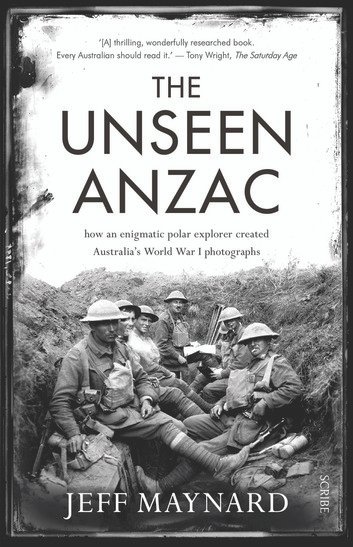
The Unseen Anzac by Jeff Maynard: How George Hubert Wilkins Created Australia’s Most Important World War I Photographs
Introduction: Discovering The Unseen Anzac and Australia’s Hidden Photographic History
The Unseen Anzac by Jeff Maynard reveals the extraordinary true story behind Australia’s World War I photographs. This groundbreaking book uncovers how George Hubert Wilkins, an enigmatic polar explorer, created the most comprehensive photographic record of the Anzacs at the Western Front.
Moreover, The Unseen Anzac exposes how Wilkins’ remarkable achievement was forgotten for decades while others claimed credit for his work. Therefore, Maynard’s research restores a crucial chapter in Australian military and photographic history.
The Unseen Anzac documents Wilkins’ incredible journey from Antarctic explorer to official war photographer during World War I. Cameras were strictly banned at the Western Front when Australian troops arrived in 1916. Furthermore, military authorities feared photographic documentation would compromise security and reveal battlefield realities to the public. Consequently, Wilkins worked under dangerous conditions to capture images that would define Australia’s war memory forever.
Jeff Maynard spent years following trails of myth and misinformation to locate Wilkins’ lost records and photographs. His investigation uncovered how Wilkins’ contributions were systematically erased from official histories after the war. Additionally, Maynard discovered that many iconic Australian war photographs attributed to others were actually Wilkins’ work. Thus, The Unseen Anzac corrects historical injustices while celebrating an unsung hero’s extraordinary achievements.
The photographs Wilkins created now form the cornerstone of the Australian War Memorial’s World War I collection. His images provide the most detailed and accurate visual documentation of Australian soldiers’ experiences at the Western Front. Moreover, these photographs shaped how Australians understood and remembered the war for generations. Therefore, understanding Wilkins’ story proves essential for comprehending Australia’s national identity and collective memory.
George Hubert Wilkins: The Explorer Who Became The Unseen Anzac
George Hubert Wilkins was born in South Australia in 1888 and developed a fascination with exploration at an early age. He trained as an engineer and photographer before joining polar expeditions that would establish his international reputation. Furthermore, Wilkins possessed a unique combination of technical skills, physical courage, and artistic vision. Consequently, he was ideally suited to document extreme environments and dangerous situations.
Before World War I, Wilkins participated in several Arctic expeditions that tested his endurance and photographic abilities. He learned to operate cameras in freezing temperatures and capture images under challenging conditions. Additionally, these expeditions taught him survival skills and mental toughness that would prove invaluable during wartime. Thus, Wilkins’ polar experience prepared him perfectly for photographing the Western Front’s harsh realities.
Wilkins’ background as an explorer distinguished him from conventional photographers and journalists covering the war. He understood how to work independently in hostile environments without extensive support or resources. Moreover, his scientific training enabled him to document subjects with precision and attention to detail. Therefore, Wilkins brought a unique perspective to war photography, enhancing its historical value.
The Unseen Anzac reveals how Wilkins’ personality combined adventurous spirit with quiet determination and professional integrity. He avoided publicity and self-promotion, preferring to let his work speak for itself. Furthermore, this modesty contributed to his later obscurity as more self-promoting figures claimed credit for his work. Consequently, Wilkins remained unknown despite creating Australia’s most important war photographs.
The Photography Ban: Why The Unseen Anzac’s Work Was Revolutionary
Military authorities banned cameras at the Western Front in 1916 when Australian forces arrived in France. Generals feared that photographs would reveal strategic information to enemy intelligence services. Additionally, they worried that graphic images of battlefield casualties would undermine public support for the war. Thus, photography became strictly controlled and heavily censored throughout the conflict.
Official war photographers worked under severe restrictions that limited what they could document and publish. They required permission to photograph specific subjects and locations approved by military censors. Moreover, their images underwent extensive review before release to ensure they met propaganda requirements. Consequently, official photographs often presented sanitized versions of battlefield realities.
Wilkins operated differently from official photographers, using his explorer’s skills to access restricted areas independently. He photographed actual combat conditions, casualties, and battlefield devastation that authorities wanted hidden from public view. Furthermore, Wilkins documented Australian soldiers’ daily experiences with unprecedented honesty and detail. Therefore, his photographs provide a historical record far more accurate than official propaganda images.
The Unseen Anzac explains how Wilkins risked court-martial and imprisonment to create his comprehensive photographic documentation. He understood that future generations would need truthful visual records of the war’s realities. Additionally, Wilkins believed that soldiers’ sacrifices deserved honest documentation rather than propaganda manipulation. Thus, his commitment to historical truth motivated him to defy military restrictions.
The technical challenges of battlefield photography during World War I were immense and required exceptional skill. Cameras were bulky, fragile, and difficult to operate under combat conditions and harsh weather. Moreover, photographic plates required careful handling and processing in makeshift darkrooms near the front lines. Consequently, Wilkins’ technical expertise and polar expedition experience proved absolutely essential for success.
The Anzac Story: Why The Unseen Anzac Matters to Australian Identity
The Anzac legend forms the cornerstone of Australian national identity and the collective memory of World War I. Australian and New Zealand Army Corps troops fought with distinction at Gallipoli and the Western Front. Furthermore, their courage, mateship, and sacrifice became defining elements of Australian character and values. Therefore, visual documentation of Anzac experiences holds profound cultural and historical significance.
The Unseen Anzac demonstrates how Wilkins’ photographs shaped Australian understanding of the war for multiple generations. His images appeared in newspapers, books, and memorial publications throughout the twentieth century. Additionally, these photographs influenced how Australians imagined their soldiers’ experiences and sacrifices. Thus, Wilkins’ work fundamentally shaped national memory despite his personal obscurity.
The photographs document Australian soldiers’ daily lives, battles, and camaraderie with unprecedented intimacy and detail. Wilkins captured moments of humor, exhaustion, fear, and determination that revealed soldiers’ full humanity. Moreover, his images showed the Western Front’s devastating impact on landscapes and human bodies. Consequently, these photographs provide invaluable historical evidence about Australian soldiers’ actual experiences.
Maynard’s book reveals how Wilkins’ documentation preserved memories that would otherwise have been lost forever. Many of the soldiers photographed by Wilkins died in subsequent battles, leaving his images as their only visual legacy. Furthermore, the photographs document military units, battles, and locations with precision that written records often lack. Therefore, The Unseen Anzac highlights photography’s crucial role in preserving historical memory.
Lost and Found: How Jeff Maynard Uncovered The Unseen Anzac’s True Story
Jeff Maynard began researching Australian war photography and discovered inconsistencies in official attributions and historical accounts. He noticed that many photographs credited to various photographers shared distinctive stylistic and technical characteristics. Moreover, Maynard found references to Wilkins in obscure documents that contradicted accepted historical narratives. Consequently, he embarked on an extensive investigation to uncover the truth about Australia’s war photographs.
The Unseen Anzac documents Maynard’s detective work tracking down Wilkins’ lost records across multiple countries and archives. He examined military files, personal correspondence, and photographic collections in Australia, Britain, and the United States. Additionally, Maynard interviewed descendants and researchers who possessed fragments of information about Wilkins’ wartime activities. Thus, he gradually assembled a comprehensive picture of Wilkins’ extraordinary achievements.
Maynard discovered that Wilkins’ contributions were systematically erased from official histories after the war ended. Military authorities and rival photographers claimed credit for his work while Wilkins pursued polar exploration. Furthermore, Wilkins’ modest personality and lack of self-promotion made him easy to write out of history. Therefore, decades passed before anyone questioned the false attributions and missing documentation.
The research revealed how institutional politics and personal rivalries contributed to Wilkins’ historical erasure. Some officials resented Wilkins’ independence and refusal to follow standard protocols during his photographic work. Moreover, his honest documentation of battlefield realities conflicted with official propaganda narratives. Consequently, authorities had motivations to minimize Wilkins’ contributions and promote more compliant photographers.
Maynard’s investigation uncovered Wilkins’ original photographic plates, negatives, and documentation in the Australian War Memorial’s collection. These materials proved definitively that Wilkins created thousands of photographs previously attributed to others. Additionally, technical analysis confirmed that images shared Wilkins’ distinctive compositional style and technical approach. Thus, The Unseen Anzac provides irrefutable evidence restoring Wilkins to his rightful place in history.
Photographic Innovation: The Unseen Anzac’s Technical Mastery and Artistic Vision
Wilkins employed advanced photographic techniques that distinguished his work from conventional war photography of the era. He understood composition, lighting, and perspective, creating powerful, memorable images. Furthermore, Wilkins combined documentary accuracy with artistic sensibility, elevating his photographs beyond mere records. Therefore, his work achieved both historical and aesthetic significance simultaneously.
The Unseen Anzac explains how Wilkins adapted polar photography techniques to battlefield conditions with remarkable success. He learned to work quickly under dangerous circumstances while maintaining technical precision and compositional quality. Additionally, Wilkins developed innovative methods for protecting equipment and processing photographs near the front lines. Thus, his technical innovations enabled documentation that other photographers could not achieve.
Wilkins’ photographs demonstrate a sophisticated understanding of visual storytelling and emotional impact through careful framing. He captured soldiers’ faces, body language, and interactions in ways that conveyed their experiences powerfully. Moreover, Wilkins photographed landscapes, trenches, and battlefields to show the war’s physical and psychological environments. Consequently, his images provide a comprehensive visual narrative of the Western Front experience.
The technical quality of Wilkins’ photographs exceeded contemporary standards and remains impressive by modern criteria. His images show sharp focus, proper exposure, and careful attention to detail despite challenging conditions. Furthermore, Wilkins’ compositional choices demonstrate artistic sophistication unusual for documentary photography of that period. Therefore, his work deserves recognition as both historical documentation and photographic art.
The Western Front Through The Unseen Anzac’s Lens: What the Photographs Reveal
Wilkins’ photographs document the Western Front’s physical environment with unprecedented detail and accuracy for historians. His images show trench systems, fortifications, and battlefield landscapes that written descriptions cannot fully convey. Moreover, the photographs reveal how soldiers lived, fought, and died in conditions of unimaginable hardship. Thus, The Unseen Anzac provides visual evidence essential for understanding World War I’s realities.
The collection includes images of major battles, military operations, and strategic locations throughout the Australian campaign. Wilkins photographed Pozières, Bullecourt, Passchendaele, and other battles that defined the Anzac experience in France. Additionally, his images document the aftermath of combat with unflinching honesty about casualties and destruction. Therefore, these photographs serve as crucial historical evidence for military historians and researchers.
Wilkins captured Australian soldiers’ daily routines, rest periods, and moments of camaraderie between battles with sensitivity. His photographs show men writing letters, sharing meals, and supporting each other through trauma and exhaustion. Furthermore, these images reveal the human relationships and emotional bonds that sustained soldiers through horror. Consequently, Wilkins’ work documents the psychological and social dimensions of warfare alongside military operations.
The photographs also document the war’s impact on French and Belgian civilians and landscapes with compassion. Wilkins photographed destroyed villages, displaced populations, and environmental devastation caused by industrial warfare. Moreover, his images show how local communities endured occupation, bombardment, and military operations. Thus, The Unseen Anzac provides comprehensive documentation of the war’s total impact.
Myth Versus Truth: How The Unseen Anzac Corrects Historical Record
The Unseen Anzac systematically dismantles myths and false attributions that dominated Australian war photography history for decades. Maynard identifies specific photographs wrongly credited to other photographers and provides evidence of Wilkins’ authorship. Furthermore, the book explains how these misattributions occurred and why they persisted for so long. Therefore, readers gain an understanding of how historical narratives become distorted over time.
Many iconic Australian war images that appeared in textbooks and documentaries were actually Wilkins’ uncredited work. These photographs shaped public understanding of the Anzac experience while their true creator remained unknown. Additionally, some photographers built reputations and careers on work they did not create themselves. Thus, correcting these attributions restores both historical accuracy and justice to Wilkins’ memory.
The book reveals how institutional interests and personal ambitions contributed to the systematic erasure of Wilkins’ contributions. Military authorities preferred photographers who followed official guidelines and produced propaganda-friendly images over independent operators. Moreover, rival photographers actively promoted themselves while Wilkins pursued polar exploration after the war. Consequently, false narratives became accepted history through repetition and lack of critical examination.
Maynard’s research demonstrates the importance of questioning accepted historical narratives and carefully examining primary source evidence. He shows how assumptions and incomplete documentation can lead to significant historical errors. Furthermore, The Unseen Anzac illustrates how individual stories get lost in official histories that prioritize institutions. Therefore, the book serves as a model for historical research and biographical recovery.
The Australian War Memorial Collection: Preserving The Unseen Anzac’s Legacy
The Australian War Memorial holds the world’s most comprehensive collection of World War I photographs today. Wilkins’ images form the foundation of this collection, providing detailed documentation of Australian military operations. Moreover, these photographs serve researchers, educators, and the public seeking to understand Australia’s war experience. Thus, Wilkins’ work continues serving educational and commemorative purposes a century after its creation.
The Unseen Anzac explains how the memorial acquired Wilkins’ photographs and why they remained improperly attributed for decades. The collection’s size and complexity made comprehensive attribution research difficult until modern digital technology enabled analysis. Additionally, institutional assumptions about authorship went unchallenged until Maynard’s investigation revealed the truth. Therefore, the book demonstrates how even major institutions can perpetuate historical errors.
Preserving the photographs ensures that future generations can access visual documentation of Australia’s World War I experience. Digital technology now allows worldwide access to images that were previously available only to researchers visiting Canberra. Furthermore, high-resolution scanning reveals details invisible in original prints and enables new research discoveries. Consequently, Wilkins’ work gains new relevance and accessibility in the digital age.
Maynard’s research has prompted the Australian War Memorial to review and correct attributions throughout its photographic collection. This process restores proper credit to Wilkins while improving the collection’s historical accuracy and research value. Moreover, the memorial now highlights Wilkins’ contributions in exhibitions and educational programs. Thus, The Unseen Anzac has directly impacted how Australia’s premier military museum presents its history.
Key Elements That Make The Unseen Anzac Essential Reading
The Unseen Anzac combines multiple compelling elements that make it essential reading for diverse audiences:
- Historical detective story – Maynard’s investigation reads like a thriller as he uncovers the hidden truth
- Biographical recovery – Restores forgotten hero to rightful place in Australian history
- Photographic analysis – Examines the technical and artistic qualities of Wilkins’ work.
- Military history – Documents Australian soldiers’ Western Front experiences comprehensively
- Institutional critique – Reveals how official histories can erase individual contributions.
- Cultural significance – Explores how photographs shape national memory and identity.
- Research methodology – Demonstrates rigorous historical investigation and evidence evaluation
- Human interest – Tells a compelling story of a remarkable individual’s courage and integrity.
- Visual documentation – Includes numerous photographs that bring history to life.
- Contemporary relevance – Addresses ongoing questions about truth, memory, and recognition
Cultural Impact: Why The Unseen Anzac Resonates with Modern Readers
The Unseen Anzac addresses contemporary concerns about historical accuracy, proper attribution, and the recognition of overlooked contributions. Modern readers understand how marginalized voices and forgotten stories deserve recovery and recognition. Furthermore, the book demonstrates how institutional narratives can obscure individual achievements and perpetuate injustices. Therefore, Wilkins’ story resonates with current movements to correct historical records.
The book raises important questions about how societies remember wars and honor those who documented them. Wilkins risked his life to create a truthful historical record rather than propaganda that served official interests. Moreover, his commitment to honesty over personal advancement offers a powerful example of professional integrity. Thus, The Unseen Anzac provides inspiration for journalists, photographers, and historians today.
Maynard’s research demonstrates the value of questioning accepted narratives and conducting thorough primary source investigations. His work shows how digital technology and persistent research can recover lost histories and correct errors. Additionally, the book illustrates how individual researchers can challenge institutional assumptions and change historical understanding. Therefore, The Unseen Anzac encourages critical thinking about how we know what we know.
The story’s themes of recognition, justice, and historical truth appeal to readers across generations and backgrounds. Everyone understands the frustration of seeing others claim credit for work they did not do. Furthermore, Wilkins’ quiet heroism and lack of self-promotion make him a sympathetic figure deserving of belated recognition. Consequently, the book satisfies both intellectual interest and emotional engagement simultaneously.
Jeff Maynard’s Research Achievement: How The Unseen Anzac Was Written
Jeff Maynard brought unique qualifications to researching and writing The Unseen Anzac through his background in documentary filmmaking. His experience investigating historical subjects taught him to evaluate evidence critically and pursue leads persistently. Moreover, Maynard understood how to construct compelling narratives from archival research and fragmentary documentation. Therefore, he possessed the ideal skills to uncover and tell Wilkins’ forgotten story.
The research required examining materials in multiple countries and piecing together information from diverse sources. Maynard consulted military archives, personal papers, photographic collections, and published accounts across Australia, Britain, and America. Additionally, he interviewed experts, descendants, and researchers who possessed knowledge about Wilkins and war photography. Thus, the book synthesizes information from hundreds of sources into a coherent narrative.
Maynard’s writing style makes complex historical research accessible to general readers without sacrificing scholarly rigor. He explains technical photographic details, military operations, and archival evidence in clear, engaging language. Furthermore, the narrative maintains suspense and human interest while documenting serious historical investigation. Therefore, The Unseen Anzac succeeds as both popular history and scholarly contribution.
The book includes extensive notes, a bibliography, and documentation that allow readers to verify claims and pursue further research. Maynard provides a transparent account of his methodology, sources, and reasoning throughout the investigation. Moreover, he acknowledges uncertainties and gaps in evidence rather than making unsupported claims. Thus, the Unseen Anzac models responsible historical writing and research ethics.
Legacy and Continuing Relevance: The Unseen Anzac’s Enduring Importance
The Unseen Anzac has permanently changed how Australians understand their World War I photographic heritage and history. The book restored George Hubert Wilkins to his rightful place as Australia’s greatest war photographer. Furthermore, Maynard’s research corrected decades of misattribution and historical error in official records and publications. Therefore, the work has achieved a lasting impact on Australian military and cultural history.
The book demonstrates photography’s crucial role in shaping historical memory and national identity across generations. Wilkins’ images influenced how millions of Australians understood their country’s war experience and sacrifice. Moreover, The Unseen Anzac shows how visual documentation can be more powerful than written accounts. Thus, the book highlights photography’s unique historical and cultural significance.
Wilkins’ story offers inspiration for anyone whose contributions have been overlooked, forgotten, or claimed by others. His eventual recognition demonstrates that truth can emerge even after decades of obscurity and misattribution. Additionally, the story shows that integrity and quality work ultimately matter more than self-promotion. Therefore, The Unseen Anzac offers hope that justice and recognition will eventually prevail.
The book’s success has inspired further research into overlooked figures and forgotten stories in Australian history. Maynard’s methodology demonstrates how persistent investigation can recover lost narratives and correct historical records. Moreover, The Unseen Anzac encourages historians to question accepted attributions and examine primary sources critically. Thus, the work’s influence extends beyond Wilkins’ individual story.
Conclusion: Why The Unseen Anzac Deserves Your Attention
The Unseen Anzac by Jeff Maynard stands as a remarkable achievement in historical biography and photographic scholarship. The book recounts George Hubert Wilkins’ extraordinary story from decades of obscurity and misattribution. Moreover, Maynard’s research corrects fundamental errors in Australian World War I history and photographic documentation. Therefore, this work proves essential reading for anyone interested in Australian history, photography, or military heritage.
The photographs Wilkins created provide irreplaceable visual documentation of the Anzac experience at the Western Front. His images capture Australian soldiers’ courage, suffering, and camaraderie with unprecedented honesty and artistic skill. Furthermore, these photographs shaped Australian national memory and identity for multiple generations. Thus, understanding their true creator proves crucial for comprehending Australia’s cultural history.
Wilkins’ personal story combines adventure, courage, integrity, and tragic obscurity in ways that resonate powerfully today. His commitment to truthful documentation over propaganda and personal advancement offers an inspiring example of professional ethics. Additionally, his eventual recognition demonstrates that quality work and historical truth ultimately prevail. Therefore, The Unseen Anzac provides both historical education and contemporary inspiration.
Read The Unseen Anzac to discover the forgotten hero who created Australia’s most important war photographs. Experience Jeff Maynard’s detective work, uncovering the truth behind decades of myth and misattribution. Moreover, encounter the remarkable images that documented the Anzac experience and shaped Australian national memory. This essential book restores justice to George Hubert Wilkins while illuminating a crucial chapter in Australian history.



Reviews
There are no reviews yet.