

Description
Hergé Comics Analysis: When the Lines Are Not So Clear
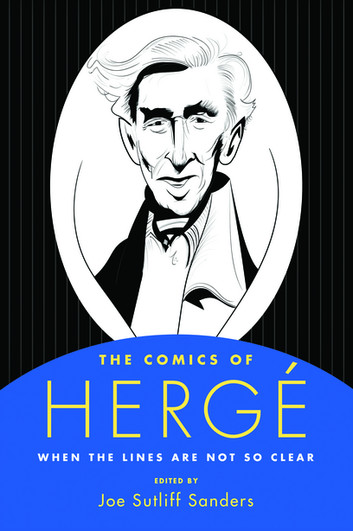
“The Comics of Hergé: When the Lines Are Not So Clear” offers groundbreaking scholarship on Hergé comics. Edited by Joe Sutliff Sanders, this critical volume examines the Belgian cartoonist’s complex legacy. Moreover, it challenges simple interpretations of his famous “clear line” technique. Published by University Press of Mississippi in 2016, the book spans 192 pages. Furthermore, it appears in the prestigious Tom Inge Series on Comics Artists.
Understanding Hergé Comics and the Clear Line Technique
Hergé popularized what became known as the “clear line” in cartooning. This technique features clean, uniform strokes without heavy shading or cross-hatching. However, Sanders’ edited volume reveals how this apparent simplicity masks deeper complexity. The artist’s life and work proved far more complicated than his method suggested.
The clear line technique revolutionized comic art in the twentieth century. It emphasized clarity, precision, and visual elegance in every panel. Yet this aesthetic choice carried cultural and political implications beyond mere style. Therefore, understanding Hergé requires looking past surface appearances.
Multiple Scholarly Perspectives on Hergé’s Work
This edited volume brings together diverse academic voices and critical approaches. Each contributor examines different aspects of Hergé’s artistic legacy and cultural impact. Moreover, they explore how his work blurs traditional boundaries in art. The collection offers both broad career overviews and narrowly focused readings.
The book opens with detailed analysis of Hergé’s aesthetic techniques. Contributors examine his visual storytelling methods and compositional choices. Additionally, they investigate how these techniques evolved throughout his career. This foundation helps readers understand his artistic development.
Key Themes Explored in the Collection
The volume addresses several interconnected themes that define Hergé’s legacy:
- The tension between high art and low art in comics
- Biography versus cultural history in understanding artists
- Psychoanalytic approaches to visual storytelling
- Gender representation in mid-century European comics
- The relationship between artistic method and political context
These themes weave throughout the various essays and critical analyses. Furthermore, they demonstrate how Hergé comics reflect broader cultural conversations. The contributors avoid simplistic judgments while maintaining scholarly rigor.
Hergé’s Career and Changing Cultural Ideas
Broad essays in the collection explain how Hergé navigated evolving cultural landscapes. His work responded to changing ideas about air travel and technology. Moreover, his comics reflected shifting attitudes toward colonialism and adventure. These changes appear subtly within his seemingly straightforward visual style.
The artist’s career spanned decades of dramatic European transformation. He witnessed two world wars and profound social upheaval. Consequently, his work absorbed and reflected these historical pressures. Understanding this context enriches interpretation of his comics.
The Nazi Occupation and Controversial Periods
Some contributors provide narrow readings of Hergé’s life during Nazi occupation. This period remains controversial and requires careful scholarly examination. However, the volume approaches these questions with nuance and historical awareness. It neither excuses nor oversimplifies his wartime choices.
Hergé continued publishing during Belgium’s occupation by Nazi Germany. This decision has sparked debate among scholars and fans alike. Therefore, any comprehensive study must address this difficult historical moment. The essays examine both his actions and their broader context.
Blurring Boundaries Between Art Forms
Scholarship on Hergé explores how his work transcends simple categorization. His comics blur lines between high art and popular culture. Furthermore, they combine biography with cultural history in complex ways. This boundary-crossing makes his work particularly rich for academic study.
The clear line technique itself represents a kind of boundary dissolution. It removes traditional distinctions between sketch and finished work. Moreover, it challenges hierarchies that privilege certain artistic approaches. Hergé’s method democratized visual storytelling in significant ways.
Psychoanalysis and Gender in Hergé Comics
Contributors apply psychoanalytic frameworks to understand Hergé’s creative process and themes. These readings reveal unconscious patterns and symbolic structures in his work. Additionally, scholars examine gender representation throughout his extensive comics catalog. Female characters appear rarely but significantly in his stories.
The psychoanalytic approach illuminates recurring motifs and narrative patterns. Hergé’s work features consistent themes of adventure, discovery, and male friendship. However, it largely excludes female perspectives and experiences. This absence itself becomes meaningful in critical analysis.
The Tom Inge Series on Comics Artists
This volume appears in the respected Tom Inge Series on Comics Artists. The series publishes scholarly work on significant figures in comics history. Moreover, it maintains high academic standards while remaining accessible to general readers. Each volume contributes to growing recognition of comics as serious art.
The series has featured numerous important cartoonists and graphic novelists. It provides a platform for rigorous critical engagement with visual storytelling. Furthermore, it helps legitimize comics studies within academic institutions. Sanders’ Hergé volume exemplifies the series’ scholarly mission.
Why This Collection Matters
“The Comics of Hergé: When the Lines Are Not So Clear” fills crucial gaps in comics scholarship. It provides sophisticated analysis of an artist often dismissed as merely popular. Moreover, it demonstrates how seemingly simple work can reward deep critical attention. The volume serves both specialists and interested general readers.
Hergé created Tintin, one of the world’s most recognizable comic characters. His work has sold hundreds of millions of copies worldwide. Yet serious academic study of his achievement remained relatively sparse. Therefore, this collection represents an important scholarly intervention.
Accessibility and Academic Rigor
Sanders has assembled contributors who write clearly without sacrificing analytical depth. The essays avoid unnecessary jargon while maintaining intellectual sophistication. Furthermore, they assume no prior expertise in comics theory or criticism. This accessibility makes the volume valuable for classroom use.
The book balances multiple audiences and purposes effectively. Scholars will find new insights and rigorous argumentation throughout. However, passionate fans can also engage with the material productively. This dual accessibility strengthens the volume’s contribution to comics studies.
Conclusion: Complexity Beyond the Clear Line
“The Comics of Hergé: When the Lines Are Not So Clear” succeeds brilliantly. It reveals how Hergé’s apparently simple technique masked profound artistic complexity. Moreover, it demonstrates why his work deserves serious critical attention. The volume honors both his achievements and his contradictions.
Joe Sutliff Sanders has edited a collection that will shape Hergé studies for years. The contributors bring diverse perspectives and methodological approaches to their subject. Furthermore, they avoid hagiography while respecting Hergé’s genuine artistic accomplishments. This balanced approach strengthens the volume’s scholarly credibility.
For anyone interested in comics history, this book is essential reading. It illuminates not just one artist but an entire medium’s development. Additionally, it raises important questions about art, politics, and cultural memory. These questions extend far beyond Hergé’s specific case.
The 192-page volume from University Press of Mississippi represents comics scholarship at its best. It combines accessibility with rigor, breadth with depth, and appreciation with critique. Moreover, it proves that Hergé comics reward the same serious attention as any significant art form. This collection ensures his work receives the critical engagement it deserves.






Reviews
There are no reviews yet.