

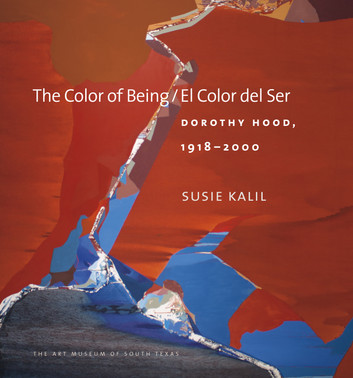
Description
The Color of Being: Dorothy Hood’s Revolutionary Artistic Vision (1918-2000)
The Color of Being Defined Dorothy Hood’s Artistic Philosophy
The Color of Being represents Dorothy Hood’s groundbreaking approach to visual art. Moreover, it captures her belief that color expresses human existence itself. Additionally, this philosophy guided her entire artistic career spanning eight decades. Susie Kalil’s comprehensive biography explores how Hood transformed contemporary painting through color.
Dorothy Hood created art that transcended traditional boundaries and definitions. Furthermore, her work merged abstract expressionism with deeply personal spiritual themes. Because she believed color carried emotional and existential weight, her paintings pulse with life. Therefore, understanding The Color of Being unlocks the essence of her artistic legacy.
This bilingual book celebrates Hood’s contributions to twentieth-century American art. However, it also reveals an artist whose work deserves far greater recognition. Additionally, Kalil provides crucial context for Hood’s development as a painter and thinker.
Dorothy Hood: A Life Dedicated to Artistic Expression
Dorothy Hood was born in 1918 in Bryan, Texas. First, she showed artistic talent from an early age. Next, she pursued formal art training in New York during the 1930s. Finally, she spent transformative years in Mexico alongside major artistic figures.
Her life journey took her across continents and through multiple art movements. Moreover, she absorbed influences from surrealism, abstract expressionism, and Mexican muralism. Additionally, she developed friendships with artists like Diego Rivera and Frida Kahlo. Because of these experiences, Hood created a unique artistic voice.
Hood returned to Houston, Texas, in the 1960s. However, she never stopped evolving her artistic vision and techniques. Furthermore, she continued painting prolifically until her death in 2000. Therefore, her career spans nearly the entire twentieth century.
Her personal life intertwined deeply with her artistic practice. Moreover, her marriage to Bolivian composer Velasco Maidana influenced her work. Additionally, her travels through Latin America enriched her visual vocabulary and color palette.
Understanding The Color of Being in Dorothy Hood’s Work
The Color of Being philosophy emerged from Hood’s deep contemplation of existence. First, she believed color possessed inherent spiritual and emotional properties. Second, she saw color as a language that communicated beyond words. Finally, she used color to explore consciousness, memory, and human experience.
Hood’s paintings feature luminous colors that seem to glow from within. Moreover, she layered transparent washes to create atmospheric depth and mystery. Additionally, her color choices evoked cosmic landscapes and inner psychological states. Because color was her primary tool, she mastered its every nuance.
Her approach differed significantly from other abstract expressionists of her era. However, she shared their commitment to emotional authenticity and gestural freedom. Furthermore, she added her own mystical and philosophical dimensions. Therefore, The Color of Being became her signature contribution to contemporary art.
Kalil explains how Hood’s color theory developed over decades of experimentation. Moreover, the book includes stunning reproductions that showcase Hood’s chromatic brilliance. Additionally, readers can trace the evolution of her color palette throughout her career.
Dorothy Hood’s Major Artistic Achievements and Recognition
Hood created an impressive body of work spanning paintings, drawings, and prints. First, her large-scale canvases command attention with their cosmic imagery. Second, her smaller works reveal intimate explorations of color and form. Finally, her prints demonstrate technical mastery across multiple media.
Her major achievements include numerous solo exhibitions throughout her lifetime. Moreover, museums and private collectors acquired her work extensively. Additionally, she received critical acclaim from art critics and fellow artists. Because her work was so distinctive, it attracted devoted admirers.
Key accomplishments in Hood’s career include:
- Solo exhibitions at major galleries in Houston, New York, and Mexico
- Inclusion in important group shows featuring contemporary American painters
- Recognition from the Texas art community as a pioneering modernist
- Development of a unique visual language combining abstraction and cosmic imagery
- Creation of over 1,000 paintings during her six-decade career
- Influence on younger generations of Texas and American artists
However, Hood never achieved the widespread fame of some contemporaries. Therefore, Kalil’s book serves as important advocacy for Hood’s rightful place in art history. Furthermore, it documents achievements that deserve broader recognition and study.
The Color of Being and Hood’s Artistic Style
Hood’s artistic style evolved continuously while maintaining core philosophical commitments. First, her early work showed surrealist influences with biomorphic forms. Next, she developed her signature cosmic landscapes with floating shapes. Finally, she created increasingly abstract compositions focused purely on color relationships.
Her paintings often suggest vast spaces—cosmic voids, underwater depths, or atmospheric phenomena. Moreover, she used veils of translucent color to create mysterious spatial ambiguities. Additionally, her compositions balance spontaneity with careful structural planning. Because she worked intuitively, her paintings feel alive and organic.
The Color of Being manifests visually through Hood’s distinctive color harmonies. However, she never repeated formulas or relied on predictable combinations. Furthermore, each painting explores new chromatic territories and emotional registers. Therefore, her work rewards extended viewing and contemplation.
Hood’s technique involved building up layers of thin paint washes. Moreover, she allowed colors to interact and create optical mixing effects. Additionally, she sometimes incorporated collage elements or mixed media. Because she remained experimental, her work never became stagnant or repetitive.
Dorothy Hood’s Connection to Major Art Movements
Hood’s career intersected with several important twentieth-century art movements. First, she encountered surrealism during her formative years in New York. Second, she experienced Mexican muralism firsthand during her Mexico City years. Finally, she engaged with abstract expressionism upon returning to the United States.
However, Hood never fully belonged to any single movement or school. Instead, she synthesized influences into her own distinctive vision. Moreover, she maintained independence from prevailing trends and fashions. Additionally, she followed her own artistic intuition rather than market demands.
Her work shares qualities with abstract expressionism’s emotional intensity and gestural freedom. Furthermore, it connects to color field painting’s emphasis on chromatic experience. However, Hood’s mystical and cosmic themes set her apart from both movements. Therefore, she occupies a unique position in postwar American art.
Kalil situates Hood within broader art historical contexts while respecting her individuality. Moreover, the book explores Hood’s relationships with other artists and movements. Additionally, it examines how Hood influenced the development of Texas modernism specifically.
Why Dorothy Hood’s Work Remains Relevant Today
Contemporary audiences continue discovering Dorothy Hood’s powerful artistic vision. First, her exploration of consciousness resonates with current spiritual interests. Second, her mastery of color speaks to viewers across cultural boundaries. Finally, her status as an underrecognized woman artist makes her story timely.
Hood’s paintings address timeless themes of existence, mystery, and transcendence. Moreover, they offer visual experiences that cannot be reduced to simple explanations. Additionally, they demonstrate that abstract art can carry profound philosophical content. Because they engage both intellect and emotion, they remain compelling.
The Color of Being philosophy feels especially relevant in our fragmented contemporary world. However, Hood’s work offers wholeness and integration rather than division. Furthermore, her paintings create spaces for meditation and contemplation. Therefore, they provide respite from our overstimulated visual culture.
Hood’s career also offers important lessons about artistic persistence and integrity. Moreover, she continued developing her vision despite limited commercial success. Additionally, she never compromised her artistic principles for market acceptance. Because she remained true to herself, her work possesses authentic power.
Susie Kalil’s Perspective as Author and Curator
Susie Kalil brings unique qualifications to this biographical and critical study. First, she worked as a prominent Houston art critic for decades. Second, she curated numerous exhibitions of contemporary art. Finally, she knew Dorothy Hood personally during the artist’s later years.
Kalil’s writing combines scholarly rigor with accessible prose and genuine enthusiasm. Moreover, she provides detailed analysis without overwhelming general readers. Additionally, she includes personal anecdotes that bring Hood to life as a person. Because Kalil deeply admires Hood’s work, her passion shines through every page.
The book draws on extensive research including interviews, letters, and archival materials. Furthermore, Kalil consulted with Hood’s family, friends, and fellow artists. However, she maintains critical distance and objective assessment when appropriate. Therefore, the biography balances admiration with honest evaluation.
Kalil’s bilingual presentation (English and Spanish) honors Hood’s deep connections to Latin America. Moreover, it makes the book accessible to broader audiences. Additionally, it reflects Hood’s own multicultural identity and artistic influences. Because language matters, this choice demonstrates thoughtful cultural sensitivity.
The Lasting Impact of The Color of Being
The Color of Being represents more than just Dorothy Hood’s artistic philosophy. Moreover, it symbolizes an approach to art-making that prioritizes authenticity and spiritual depth. Additionally, it demonstrates how color can serve as a vehicle for profound expression. Because Hood committed fully to this vision, she created enduring masterworks.
Hood’s influence extends beyond her immediate circle to contemporary artists exploring similar themes. Furthermore, her work anticipates current interests in consciousness, spirituality, and transcendence. However, she achieved these effects through purely visual means without didacticism. Therefore, her paintings work as art first and philosophy second.
Kalil’s book ensures that Hood’s contributions will not be forgotten or overlooked. Moreover, it provides essential documentation for future scholarship and appreciation. Additionally, it makes a compelling case for Hood’s importance in American art history. Because comprehensive monographs like this are rare, it serves invaluable purposes.
Conclusion: Celebrating Dorothy Hood’s Artistic Legacy
Dorothy Hood created a remarkable body of work guided by The Color of Being philosophy. Her paintings demonstrate that color can express the deepest aspects of human existence. Moreover, they prove that abstract art can carry spiritual and philosophical weight. Additionally, they showcase technical mastery combined with visionary imagination.
Susie Kalil’s comprehensive study brings Hood’s achievements to wider attention and appreciation. Therefore, readers gain access to an artist who deserves recognition alongside better-known contemporaries. Furthermore, they discover paintings that offer genuine aesthetic and contemplative rewards. Because Hood’s work transcends trends, it will continue inspiring future generations.
This bilingual book serves multiple audiences from art historians to general enthusiasts. However, anyone interested in color, abstraction, or women artists will find value here. Moreover, it demonstrates how regional artists can achieve universal significance. Additionally, it shows that artistic integrity ultimately matters more than commercial success.
The Color of Being remains Dorothy Hood’s greatest gift to contemporary art and culture. Because she explored existence through color so deeply, her paintings touch something essential. Therefore, engaging with Hood’s work becomes a journey into consciousness itself. Finally, this book ensures that journey remains accessible to all who seek it.




Reviews
There are no reviews yet.