

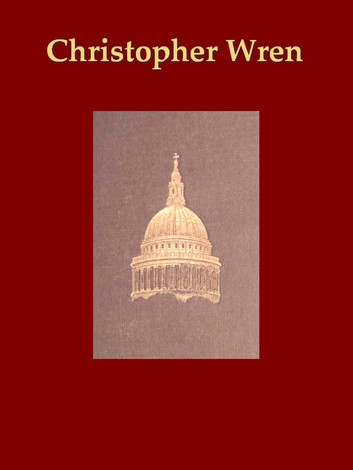
Description
Synopsis: Sir Christopher Wren: His Family and His Times by Lucy Phillimore
A Comprehensive Biography of Sir Christopher Wren
Lucy Phillimore’s “Sir Christopher Wren: His Family and His Times” offers readers an intimate portrait of England’s greatest architect. This comprehensive biography explores the life of Sir Christopher Wren from 1632 to 1723.
Furthermore, it examines his extraordinary contributions to architecture, science, and mathematics. The book provides unprecedented access to original letters and unpublished writings. Consequently, readers gain fresh insights into Wren’s genius and his remarkable era.
The Life and Times of a Renaissance Man
Sir Christopher Wren lived during one of England’s most turbulent periods. He witnessed the English Civil War, the Restoration, and the Glorious Revolution. Moreover, he survived the Great Plague and the Great Fire of London.
These events shaped his worldview and influenced his architectural vision. Additionally, Phillimore explores how Wren’s family background prepared him for greatness. His father served as Dean of Windsor and Registrar of the Order of the Garter. Therefore, young Christopher grew up surrounded by learning and privilege.
Architect, Scientist, and Mathematician
Wren’s talents extended far beyond architecture. He was a founding member of the Royal Society. Furthermore, he made significant contributions to astronomy, physics, and mathematics. His scientific work included studies on:
- Planetary motion and celestial mechanics
- The laws of collision and momentum
- Anatomical research and blood transfusion experiments
- Mathematical theories on cycloids and hyperboloids
- Meteorological observations and weather prediction
However, his architectural legacy ultimately defined his career. His unique combination of scientific precision and artistic vision revolutionized English architecture.
The Great Fire and London’s Rebirth
The Great Fire of 1666 destroyed much of medieval London. Consequently, it created an unprecedented opportunity for urban renewal. Wren seized this moment to reimagine the city’s landscape.
He designed more than fifty London churches following the catastrophe. Moreover, each church demonstrated his innovative approach to sacred architecture. His designs balanced classical proportions with practical considerations. Therefore, these buildings served both spiritual and community needs effectively.
St. Paul’s Cathedral: Wren’s Masterpiece
St. Paul’s Cathedral stands as Wren’s crowning achievement. Construction began in 1675 and continued for thirty-five years. Furthermore, the cathedral showcases his mastery of baroque and classical styles.
The iconic dome remains one of the world’s largest and most beautiful. Additionally, Wren overcame numerous technical and political challenges during construction. He fought with commissioners, managed limited budgets, and solved complex engineering problems. Nevertheless, he created a building that has inspired generations.
Other Architectural Triumphs
Beyond St. Paul’s, Wren designed numerous significant buildings. The Royal Observatory at Greenwich established Britain’s role in navigation and astronomy. Hampton Court Palace extensions demonstrated his skill with royal commissions.
Moreover, The Monument commemorates the Great Fire with elegant simplicity. These projects reveal Wren’s versatility across different architectural styles. Consequently, his influence shaped London’s character for centuries to come.
Original Letters and Unpublished Writings
Phillimore’s biography includes valuable primary source materials. The book features original letters written by Wren himself. Furthermore, it contains previously unpublished discourse on architectural theory. These documents provide direct access to Wren’s thoughts and methods.
Additionally, they reveal his relationships with contemporaries and patrons. Therefore, readers encounter Wren as a living, breathing individual. His correspondence shows wit, determination, and occasional frustration. Moreover, his architectural writings demonstrate sophisticated theoretical understanding.
Family Background and Personal Life
The biography explores Wren’s family connections in detail. His father’s ecclesiastical position provided important early advantages. However, the Civil War disrupted the family’s fortunes temporarily. Wren married twice and fathered several children. Furthermore, Phillimore examines how family responsibilities influenced his career.
His son Christopher followed him into architecture and public service. Additionally, the book traces the Wren family’s broader genealogy. These personal details humanize the great architect beyond his monuments.
The Historical Context of Wren’s Era
Phillimore situates Wren within his tumultuous historical period. The seventeenth century witnessed dramatic political and religious upheaval. Moreover, scientific revolution transformed how people understood the natural world.
The Restoration brought new cultural attitudes and artistic patronage. Consequently, Wren worked within a dynamic and changing society. His architecture reflected both traditional values and innovative thinking. Therefore, understanding his times illuminates his achievements more fully.
Contributions to Rebuilding London
Wren’s impact on London cannot be overstated. He served as Surveyor of the King’s Works for nearly fifty years. Furthermore, he supervised the reconstruction of the entire city. His comprehensive vision extended beyond individual buildings to urban planning. Additionally, he advocated for wider streets and improved fire safety.
However, political and economic constraints limited his grandest schemes. Nevertheless, his realized projects transformed London into a modern capital. Moreover, his influence established standards for English architecture for generations.
Scientific and Mathematical Legacy
While architecture brought Wren fame, his scientific work deserves recognition. He contributed to optics, mechanics, and astronomical observation. Furthermore, his mathematical innovations advanced geometric understanding.
His work on the rectification of the cycloid impressed contemporaries. Additionally, he designed instruments for scientific measurement and observation. Therefore, Wren embodied the Renaissance ideal of universal knowledge. His scientific training informed his architectural practice throughout his career.
The Book’s Unique Value
“Sir Christopher Wren: His Family and His Times” offers several distinctive features. Phillimore’s access to family papers provides unique insights. Moreover, her detailed research corrects previous biographical errors.
The book balances architectural analysis with personal narrative effectively. Furthermore, it places Wren within broader cultural and political contexts. Consequently, readers gain comprehensive understanding of both man and monument. The inclusion of original documents adds authenticity and immediacy. Additionally, Phillimore’s engaging prose makes complex subjects accessible.
Why Read This Biography Today
Wren’s story remains relevant for contemporary readers. His ability to overcome obstacles inspires modern professionals. Moreover, his interdisciplinary approach models creative problem-solving. The book demonstrates how individual vision can transform communities. Furthermore, it shows architecture’s power to express cultural values. Consequently, students of architecture, history, and biography find value here. Additionally, anyone interested in London’s development will appreciate this work. Therefore, Phillimore’s biography serves both scholarly and general audiences effectively.
Conclusion
Lucy Phillimore’s “Sir Christopher Wren: His Family and His Times” stands as a definitive biography. It captures the complexity of England’s greatest architect comprehensively. Moreover, it reveals the man behind the monuments with sensitivity. The book’s combination of original sources and historical analysis proves invaluable.
Furthermore, it demonstrates how one individual’s genius shaped an entire city. Consequently, this biography deserves a place on every architecture enthusiast’s bookshelf. It illuminates not only Wren’s achievements but also his remarkable era. Therefore, readers emerge with deeper appreciation for both the architect and his times.




Reviews
There are no reviews yet.