

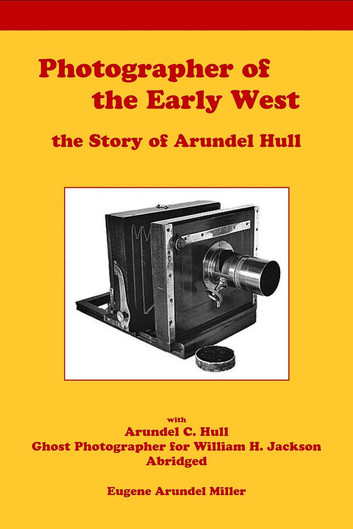
Description
Arundel Hull: Pioneer Photographer of America’s Western Frontier
The Early Life of Arundel Hull
Arundel Hull emerged as one of the most significant photographers documenting America’s westward expansion. Born in the mid-19th century, he discovered his passion for photography at a remarkably young age. As a young boy, Hull became fascinated with the revolutionary wet-plate photography process. This early interest would shape his entire career and legacy.
His journey into professional photography began in St. Paul, Minnesota. There, he apprenticed in a local photography gallery at just seventeen years old. The experience provided him with essential technical skills. Moreover, it prepared him for the adventures that lay ahead.
Arundel Hull and the Union Pacific Railroad
The completion of the transcontinental railroad transformed American society forever. Consequently, it created unprecedented opportunities for adventurous photographers like Hull. He recognized the historical importance of this moment. Therefore, he positioned himself to document the emerging Western frontier.
Hull became one of the earliest photographers working along the Union Pacific Railroad route. During the late 1860s, he traveled extensively throughout the developing West. His camera captured scenes that would otherwise be lost to history. Furthermore, his work provided invaluable documentation of this transformative era.
Documenting Emerging Western Towns
The railroad brought rapid development to previously unsettled territories. New towns sprouted along the tracks almost overnight. Hull dedicated himself to photographing these emerging communities. His images preserved the raw, pioneering spirit of these settlements.
He traveled to numerous locations along the railroad line. Each town presented unique challenges and photographic opportunities. Additionally, Hull’s work captured the diverse characters populating these frontier communities. His photographs showed merchants, railroad workers, and settlers building new lives.
The Journey to Green River, Wyoming
Hull’s photographic expeditions took him deep into the American West. He traveled as far as Green River, Wyoming, pushing the boundaries of frontier photography. The journey required tremendous dedication and physical endurance. Moreover, transporting fragile photographic equipment across rough terrain presented constant challenges.
Green River represented one of the most remote locations Hull documented. The town served as an important railroad hub in Wyoming Territory. His photographs from this region are particularly valuable historical documents. They capture a moment when civilization first touched these wild landscapes.
The Wet-Plate Photography Process
Understanding Hull’s technical methods enhances appreciation for his achievements. The wet-plate collodion process dominated photography during his era. This technique required photographers to prepare glass plates immediately before exposure. Furthermore, they had to develop the plates while still wet.
The process involved several complex steps:
- Coating a glass plate with collodion solution
- Sensitizing the plate in a silver nitrate bath
- Exposing the plate in the camera while still wet
- Developing the image immediately after exposure
- Fixing and washing the final negative
This demanding process made field photography extraordinarily difficult. Hull had to carry a portable darkroom on his travels. Additionally, he needed various chemicals and fragile glass plates. Despite these obstacles, he produced remarkable images throughout the frontier.
Challenges of Frontier Photography
Working as a photographer in the 1860s American West required exceptional determination. Hull faced numerous obstacles that modern photographers cannot imagine. The harsh climate threatened both equipment and photographic materials. Dust, extreme temperatures, and unpredictable weather created constant problems.
Transportation presented another significant challenge for Hull and his contemporaries. Moving heavy equipment across undeveloped terrain was physically exhausting. Moreover, the fragile nature of glass plates meant careful handling was essential. A single mishap could destroy weeks of work.
Security concerns also affected frontier photographers like Hull. The West remained largely lawless during this period. Photographers traveling alone faced potential dangers from various sources. Nevertheless, Hull persevered in documenting this crucial historical period.
Eugene Arundel Miller: Preserving Family Legacy
Eugene Arundel Miller, Hull’s youngest grandson, authored this important biography. His family connection provided unique insights into Hull’s life and work. Miller had access to family stories, letters, and photographic collections. Therefore, he could present a comprehensive portrait of his grandfather.
Writing this biography represented a labor of love for Miller. He spent years researching Hull’s life and photographic career. Additionally, he worked to contextualize Hull’s contributions within broader American history. His dedication ensures that Hull’s legacy reaches contemporary audiences.
Miller’s book combines personal family history with broader historical analysis. He explores both Hull’s technical innovations and his artistic vision. Furthermore, the biography examines the social and economic forces shaping the American West.
The Historical Significance of Arundel Hull’s Work
Hull’s photographs provide irreplaceable documentation of American expansion. His images capture a pivotal moment in national history. The towns he photographed were literally being built before his camera. Consequently, his work offers unique insights into frontier life.
Modern historians rely heavily on photographs from this era. Hull’s images help researchers understand how Western communities developed. They show architectural styles, social structures, and daily activities. Moreover, they preserve the faces of ordinary people building extraordinary communities.
The artistic quality of Hull’s work also deserves recognition. Despite technical limitations, he composed compelling and beautiful images. His photographs demonstrate both documentary precision and aesthetic sensibility. Thus, they succeed as both historical records and artistic achievements.
Technical Innovations and Adaptations
Hull adapted photographic techniques to meet frontier conditions. The standard wet-plate process required modifications for fieldwork. He developed portable systems for preparing and processing plates. Additionally, he learned to work quickly under challenging circumstances.
His innovations helped advance frontier photography as a whole. Other photographers learned from his techniques and experiences. Furthermore, Hull’s success demonstrated the viability of Western photographic documentation. This encouraged others to follow in his footsteps.
The equipment Hull used seems primitive by modern standards. However, it represented cutting-edge technology for its time. His mastery of these tools enabled him to create lasting historical documents.
Life Along the Railroad
The Union Pacific Railroad transformed American geography and society. Hull’s photographs captured this transformation in real time. He documented not just the railroad itself but its broader impacts. His images show how the railroad reshaped landscapes and communities.
Railroad workers appear frequently in Hull’s photographs. These men performed dangerous, exhausting labor building the transcontinental line. Moreover, Hull captured the diverse ethnic backgrounds of the workforce. Chinese, Irish, and American workers all contributed to this massive project.
The railroad brought rapid economic development to the West. Hull photographed the businesses and industries that followed the tracks. His work shows how commerce quickly established itself in new territories.
The Human Element in Hull’s Photography
Hull excelled at capturing the human dimension of Western expansion. His portraits reveal the determination and hope of frontier settlers. These individuals left established lives to pursue uncertain Western opportunities. Therefore, their faces reflect both optimism and hardship.
Women appear in many of Hull’s photographs, challenging stereotypical Western narratives. They ran businesses, raised families, and built communities alongside men. Additionally, Hull’s images document the presence of diverse ethnic groups. His work provides a more complete picture of frontier society.
Children also feature prominently in Hull’s photographic record. These young people grew up in rapidly changing environments. Their presence reminds viewers that the West was built by families. Moreover, it emphasizes the long-term vision of frontier settlers.
Architectural Documentation
Hull’s photographs preserve invaluable architectural information about frontier towns. Early Western buildings reflected both practical needs and cultural aspirations. Simple wooden structures dominated most new settlements. However, more substantial buildings appeared as communities became established.
His images show the evolution of Western architecture over time. Initial tent cities gave way to wooden frame buildings. Subsequently, brick and stone structures demonstrated growing permanence and prosperity. This architectural progression reflected broader social and economic development.
Commercial buildings received particular attention in Hull’s work. Saloons, general stores, and hotels were essential frontier institutions. Additionally, he photographed banks, churches, and government buildings. These structures represented civilization’s advance into previously wild territories.
The Legacy of Arundel Hull
Hull’s contributions to American photography and history remain significant today. His images provide irreplaceable documentation of a crucial historical period. Modern audiences can view the frontier through his lens. Consequently, his work helps contemporary society understand its origins.
Museums and archives preserve Hull’s photographic legacy. His images appear in exhibitions exploring American Western history. Furthermore, historians regularly reference his work in scholarly publications. This ongoing relevance demonstrates the enduring value of his contributions.
Eugene Miller’s biography ensures that Hull receives proper recognition. The book introduces new audiences to this pioneering photographer’s achievements. Moreover, it contextualizes his work within broader photographic and historical narratives.
Reading “Photographer of the Early West”
Miller’s biography offers readers comprehensive insights into Hull’s life and career. The book combines personal narrative with historical analysis. Readers learn about both the man and his times. Additionally, the biography includes numerous reproductions of Hull’s photographs.
The book appeals to multiple audiences with varied interests. Photography enthusiasts appreciate the technical discussions and image analysis. History buffs value the detailed documentation of Western expansion. Furthermore, general readers enjoy the compelling personal story.
Miller writes in an accessible style that engages non-specialist readers. He explains technical photographic concepts clearly and concisely. Moreover, he provides sufficient historical context for understanding Hull’s achievements. The biography succeeds as both scholarly work and popular history.
Conclusion: Remembering a Pioneer
Arundel Hull deserves recognition as a pioneering American photographer and documentarian. His work along the Union Pacific Railroad captured a transformative moment in national history. Despite facing tremendous technical and physical challenges, he produced remarkable images. These photographs continue providing valuable insights into America’s Western expansion.
Eugene Arundel Miller’s biography preserves his grandfather’s legacy for future generations. The book ensures that Hull’s contributions receive appropriate recognition and appreciation. Through Miller’s research and writing, modern audiences can discover this important historical figure.
Hull’s story reminds us that history is created by individuals with vision and determination. His photographs represent more than technical achievements; they embody one man’s commitment to documenting his era. Therefore, “Photographer of the Early West” stands as both biography and tribute. It celebrates a remarkable life dedicated to capturing America’s frontier spirit.





Reviews
There are no reviews yet.