

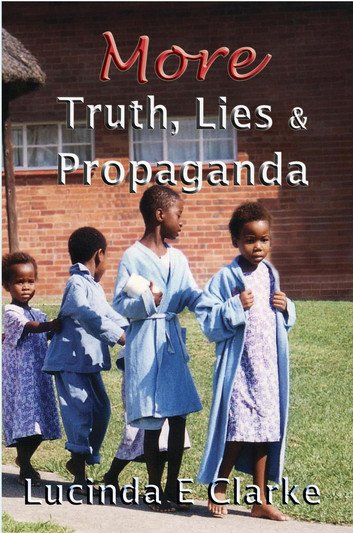
Description
More Truth, Lies and Propaganda: Book 2 Review
Introduction: Navigating Deception in Modern Times
Truth, lies, and propaganda dominate our information landscape today. Lucinda E. Clarke’s second book tackles these critical issues head-on. Moreover, she reveals how misinformation shapes our daily lives. This compelling sequel builds upon the foundation established in Book 1. However, new readers can easily jump into this volume independently.
Clarke exposes manipulation tactics used by governments and media outlets. Furthermore, she provides tools to identify deceptive messaging everywhere. The book serves as essential reading for our post-truth era. Therefore, readers gain valuable skills to navigate information overload effectively.
This installment explores deeper layers of propaganda than before. Additionally, it examines how digital platforms amplify false narratives. Clarke’s accessible writing style makes complex topics understandable for everyone. Consequently, readers from all backgrounds benefit from her insights.
What Makes Book 2 Essential Reading
More Truth, Lies and Propaganda expands on themes introduced previously. Nevertheless, it stands alone as a comprehensive guide to deception. Clarke incorporates recent examples from global politics and social media. Meanwhile, she connects historical propaganda techniques to modern digital manipulation.
The author draws from her extensive international experience and research. Therefore, her perspectives offer unique insights into information warfare today. She lived in multiple countries and witnessed propaganda firsthand. Thus, her observations carry authentic weight and credibility throughout.
Readers discover how truth, lies, and propaganda intersect in unexpected ways. Moreover, Clarke demonstrates how seemingly innocent content contains hidden agendas. She teaches critical thinking skills applicable to news consumption daily. Consequently, readers become more discerning information consumers after finishing.
Key Topics Covered in This Volume
Clarke addresses numerous critical subjects throughout the book:
- Social media manipulation and algorithmic bias
- Political spin and strategic messaging techniques
- Corporate propaganda disguised as news content
- Historical propaganda campaigns and their modern equivalents
- Psychological tactics used to influence public opinion
- Fact-checking methods and verification strategies
- Media literacy skills for the digital age
- Case studies from recent global events
Each topic receives thorough examination with real-world examples. Furthermore, Clarke provides actionable advice for identifying manipulation attempts. The practical approach makes abstract concepts immediately applicable to life.
Understanding Modern Information Warfare
Digital technology has transformed how propaganda spreads across populations. However, the fundamental principles remain consistent throughout history. Clarke connects ancient persuasion tactics to contemporary social media campaigns. Therefore, readers understand the timeless nature of information manipulation.
The book examines how algorithms create echo chambers online. Moreover, it reveals how these bubbles reinforce existing beliefs. People rarely encounter opposing viewpoints in their curated feeds. Consequently, polarization increases while critical thinking skills decline dramatically.
Clarke doesn’t simply identify problems without offering solutions though. Instead, she provides concrete strategies for breaking free from manipulation. Readers learn to question sources, verify claims, and think independently. Thus, the book empowers rather than merely informing its audience.
The Psychology Behind Belief and Deception
Understanding why people believe falsehoods requires examining human psychology. Therefore, Clarke explores cognitive biases that make us vulnerable. She explains confirmation bias, availability heuristic, and other mental shortcuts. Meanwhile, she shows how propagandists exploit these natural tendencies.
Emotional manipulation proves more effective than logical argumentation often. Furthermore, Clarke demonstrates how fear and anger spread faster online. Propagandists deliberately trigger strong emotions to bypass rational thinking. Consequently, messages go viral before fact-checkers can respond adequately.
The author also addresses why intelligent people fall for misinformation. Moreover, she explains that education alone doesn’t provide immunity. Even experts succumb to well-crafted propaganda in their domains. Therefore, constant vigilance and skepticism remain essential for everyone always.
Practical Applications for Daily Life
Clarke ensures readers can immediately apply her teachings to life. Furthermore, she provides checklists for evaluating information sources quickly. These tools help identify red flags in articles and posts. Meanwhile, readers develop habits that protect against manipulation attempts.
The book teaches how to verify claims using multiple sources. Additionally, it explains lateral reading techniques used by professional fact-checkers. These methods prove more effective than traditional vertical reading approaches. Consequently, readers become their own fact-checkers in real-time situations.
Clarke emphasizes the importance of media literacy education for children. Moreover, she argues that schools must teach critical thinking explicitly. Young people face unprecedented information challenges in their digital lives. Therefore, equipping them with analytical skills becomes absolutely crucial today.
Building Resistance to Propaganda Techniques
Recognizing truth, lies, and propaganda requires understanding common manipulation tactics. Thus, Clarke catalogs the most prevalent techniques used currently. She explains bandwagon effects, false dichotomies, and straw man arguments clearly. Meanwhile, she provides examples from recent political and commercial campaigns.
The author teaches readers to pause before sharing content online. Furthermore, she encourages questioning emotional reactions to inflammatory posts. Propagandists count on rapid, unthinking sharing to spread messages. However, a moment’s reflection often reveals manipulation attempts immediately.
Clarke also addresses the challenge of correcting misinformation after sharing. Moreover, she provides scripts for admitting mistakes and updating beliefs. This vulnerability strengthens credibility rather than weakening it over time. Therefore, readers learn that changing minds demonstrates strength, not weakness.
Why This Book Matters Now More Than Ever
Our current information environment demands critical thinking skills urgently. However, most people never learned to evaluate sources systematically. Clarke fills this educational gap with accessible, practical guidance. Therefore, her work serves as essential reading for modern citizens.
The consequences of widespread misinformation affect democracy and public health. Furthermore, propaganda undermines trust in legitimate institutions and expertise. Clarke demonstrates how these trends threaten social cohesion globally. Meanwhile, she offers hope through education and awareness building.
This second volume arrives at a critical moment in history. Moreover, it addresses emerging challenges that didn’t exist when Book 1 appeared. Technology evolves rapidly, creating new propaganda vectors constantly. Consequently, updated guidance becomes necessary for staying ahead of manipulators.
Comparing Book 1 and Book 2
Readers familiar with the first volume will notice evolution. Nevertheless, newcomers won’t feel lost jumping into this installment. Clarke briefly recaps essential concepts from Book 1 when necessary. Therefore, both audiences find value without redundancy or confusion.
Book 2 delves deeper into digital propaganda and social media. Additionally, it incorporates lessons learned from recent global events. The author’s analysis has matured and expanded since the debut. Thus, even fans of Book 1 discover fresh insights throughout.
The writing style remains consistent between both volumes fortunately. Furthermore, Clarke maintains her engaging, conversational tone throughout Book 2. She avoids academic jargon while maintaining intellectual rigor always. Consequently, the book remains accessible to general audiences everywhere.
Conclusion: Essential Reading for Information Age Survival
More Truth, Lies and Propaganda equips readers for modern challenges. Lucinda E. Clarke provides invaluable tools for navigating our complex world. Moreover, she does so with clarity, humor, and practical wisdom. This book deserves a place on every thinking person’s shelf.
The skills taught here transcend political affiliations and ideologies. Furthermore, they apply to all information sources across all topics. Clarke empowers readers to think independently and question everything appropriately. Therefore, the book’s impact extends far beyond its pages.
Whether you read Book 1 or start here, you’ll gain crucial insights. Additionally, you’ll develop habits that protect against manipulation for life. In an era where truth, lies, and propaganda blur constantly, this book provides clarity. Thus, it stands as essential reading for anyone seeking truth.




Reviews
There are no reviews yet.