

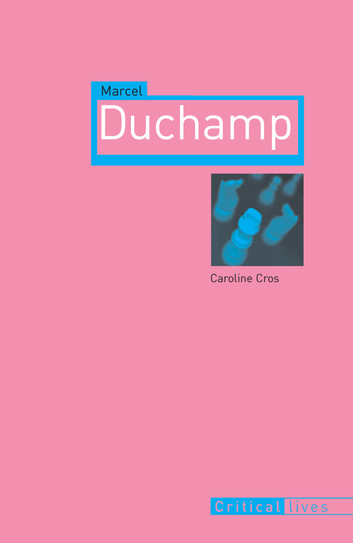
Description
Marcel Duchamp: A Revolutionary Figure in Modern Art
Marcel Duchamp transformed the landscape of twentieth-century art through radical innovation. Caroline Cros presents a compelling critical biography that examines his extraordinary life. This book belongs to Reaktion Books’ prestigious Critical Lives series. Furthermore, it provides readers with scholarly yet accessible insights into his groundbreaking work.
The biography traces Duchamp’s evolution from traditional painter to conceptual art pioneer. Moreover, it analyzes how his revolutionary ideas challenged artistic conventions. Cros explores his philosophical approach to creativity and artistic expression. Indeed, the book reveals why his influence remains powerful today.
This comprehensive study examines Duchamp’s major works and their cultural impact. Additionally, it contextualizes his contributions within broader modernist movements. The author illuminates his relationships with fellow avant-garde artists. Therefore, readers gain deep understanding of his artistic vision and legacy.
Early Life and Artistic Formation of Marcel Duchamp
Born in 1887 in Blainville-Crevon, France, Marcel Duchamp entered an exceptionally creative family. His grandfather was a successful engraver and painter. His brothers Jacques Villon and Raymond Duchamp-Villon both became accomplished artists. Consequently, artistic pursuits seemed natural for the young Duchamp.
He initially studied art at the Académie Julian in Paris. During these formative years, he experimented with various contemporary styles. Specifically, he explored Impressionism, Post-Impressionism, and Fauvism. These early works demonstrated technical skill and artistic promise.
However, Duchamp soon grew dissatisfied with traditional painting approaches. He began questioning the fundamental nature of artistic creation. Moreover, he developed interest in Cubism’s analytical fragmentation of form. Nevertheless, even Cubism would prove insufficient for his evolving vision.
The young artist worked briefly as a cartoonist and illustrator. These commercial experiences influenced his later conceptual approach. Furthermore, they demonstrated his willingness to blur boundaries between art and life. Thus, his early career laid groundwork for revolutionary innovations ahead.
Marcel Duchamp’s Breakthrough: Nude Descending a Staircase
In 1912, Duchamp created his landmark painting Nude Descending a Staircase, No. 2. This work synthesized Cubist fragmentation with Futurist depiction of motion. The painting showed a figure moving through sequential positions simultaneously. Furthermore, it challenged viewers’ expectations of how art should represent reality.
The piece caused immediate controversy when submitted to the Salon des Indépendants. Fellow Cubist artists found it too radical and theatrical. Therefore, Duchamp withdrew the painting rather than modify it. This rejection proved pivotal in his artistic development.
Subsequently, the work achieved fame at the 1913 Armory Show in New York. American audiences found it shocking yet fascinating. Critics called it “an explosion in a shingle factory.” Nevertheless, the painting established Duchamp’s reputation as a daring innovator.
The success of Nude Descending a Staircase marked a crucial turning point. It demonstrated his ability to provoke and challenge audiences. Moreover, it revealed his interest in depicting time and movement. Indeed, this work foreshadowed his later conceptual innovations.
The Revolutionary Concept of the Readymade
Marcel Duchamp pioneered the revolutionary concept of the readymade around 1913. These works consisted of ordinary manufactured objects designated as art. Essentially, he selected everyday items and presented them in artistic contexts. This radical approach fundamentally questioned what constitutes art.
His first readymade was Bicycle Wheel, created in 1913. It featured a wheel mounted upside-down on a wooden stool. Additionally, he created Bottle Rack in 1914 from a commercial drying rack. In Advance of the Broken Arm consisted of a simple snow shovel.
These objects required no traditional artistic skill to produce. Instead, the artist’s selection and presentation constituted the creative act. Furthermore, Duchamp argued that choosing an object was itself artistic creation. Thus, he separated art from manual craftsmanship and technical ability.
The readymade concept challenged centuries of artistic tradition and practice. It democratized art by suggesting anyone could create it. Moreover, it shifted emphasis from visual beauty to intellectual engagement. Consequently, Duchamp opened entirely new possibilities for artistic expression.
Fountain and the Ultimate Artistic Provocation
In 1917, Marcel Duchamp submitted his most infamous readymade to an exhibition. Fountain consisted of a standard porcelain urinal purchased from a plumbing supplier. He signed it “R. Mutt” and titled it Fountain. The work represented his most radical challenge to artistic conventions.
The Society of Independent Artists had promised to exhibit all submitted works. Nevertheless, the organizing committee rejected Fountain as inappropriate and vulgar. Duchamp, who served on the committee, resigned in protest. The scandal generated significant publicity and debate.
Fountain questioned fundamental assumptions about art, beauty, and artistic authority. It challenged the institutional power to define what qualifies as art. Furthermore, it demonstrated how context transforms ordinary objects into artistic statements. The work’s conceptual audacity shocked the art world.
Although the original Fountain was lost, its impact proved enormous. Subsequently, Duchamp authorized multiple replicas in the 1960s. The work influenced countless artists who followed. Indeed, many critics consider it the most influential artwork of the twentieth century.
Marcel Duchamp’s American Years and Artistic Philosophy
Duchamp relocated to New York in 1915, escaping World War I. He quickly became central to the city’s avant-garde artistic community. Meanwhile, he continued developing his conceptual approach to art. The artist also began work on his complex masterpiece, The Large Glass.
The Large Glass, or The Bride Stripped Bare by Her Bachelors, Even, occupied him for years. This enigmatic work combined painting, lead foil, and dust on glass panels. Moreover, it incorporated elaborate symbolic and mechanical imagery. The piece exemplified his interest in ideas over visual appeal.
Additionally, Duchamp pursued interests beyond traditional art-making throughout his life. He became an accomplished chess player and published chess theory. Similarly, he worked as an art dealer, curator, and advisor. These diverse activities reflected his belief that art was intellectual engagement.
Duchamp famously stated that he wanted to put art in the service of the mind. He rejected what he called “retinal art” focused solely on visual pleasure. Furthermore, he believed artists should be thinkers rather than mere craftspeople. Thus, his philosophy emphasized conceptual innovation over aesthetic beauty.
Influence on Dada, Surrealism, and Conceptual Art
Marcel Duchamp profoundly influenced the Dada movement that emerged during World War I. His irreverent approach aligned perfectly with Dada’s anti-establishment philosophy. Moreover, his readymades embodied the movement’s rejection of traditional aesthetic values. He collaborated with key Dada figures including Man Ray and Francis Picabia.
The Surrealists also claimed Duchamp as an important precursor. André Breton admired his challenge to rational artistic conventions. However, Duchamp maintained independence from formal Surrealist group activities. Nevertheless, his work influenced Surrealist exploration of unconscious creativity.
Subsequently, Duchamp’s ideas became foundational to conceptual art in the 1960s. Artists like Joseph Kosuth and Sol LeWitt embraced his emphasis on ideas. Indeed, conceptual artists argued that art exists primarily as intellectual proposition. They credited Duchamp with liberating art from material constraints.
His legacy also shaped Pop Art, Minimalism, Performance Art, and Installation Art. Artists across movements found inspiration in his radical innovations. Furthermore, his questioning of art’s nature remains relevant to contemporary practice. Thus, his influence extends across multiple generations and artistic approaches.
Caroline Cros and the Critical Lives Series
Caroline Cros brings exceptional credentials to this biographical study of Marcel Duchamp. She works as a Paris-based curator and art critic with extensive expertise. Furthermore, her deep knowledge of modern art enriches her analytical approach. Cros provides fresh insights into Duchamp’s life, work, and artistic philosophy.
The author examines primary sources and archival materials thoroughly. Additionally, she draws on recent scholarship and critical interpretations. Her writing balances scholarly rigor with engaging, accessible prose. Therefore, the biography serves both academic and general audiences effectively.
The Critical Lives series by Reaktion Books offers concise, authoritative biographies. These volumes examine influential cultural figures throughout history and across disciplines. Notably, the series combines comprehensive research with readable presentation. Each book provides essential knowledge in compact, well-designed format.
The series covers artists, writers, philosophers, musicians, and other cultural innovators. Moreover, it maintains consistently high standards of scholarship and writing. The books typically run around 200 pages with illustrations. Thus, they offer substantial content without overwhelming readers.
Target Audience and Educational Value
This biography serves multiple readerships with different needs and interests. Art students gain essential knowledge about modern art’s revolutionary development. Scholars find valuable critical analysis and fresh historical perspectives. Moreover, museum visitors discover context for understanding Duchamp’s exhibited works.
General readers with curiosity about modern art find an engaging introduction. The book requires no specialized knowledge or technical vocabulary. Additionally, Cros explains complex concepts in clear, understandable language. Therefore, anyone interested in creativity and innovation can appreciate it.
The biography includes valuable features that enhance understanding:
- Detailed analysis of major artworks and their cultural significance
- Examination of Duchamp’s philosophical approach to artistic creation
- Discussion of his influence on subsequent artistic generations
- Exploration of his personal relationships and collaborative projects
- Assessment of his lasting impact on contemporary art and culture
- Contextualization within broader modernist and avant-garde movements
Art educators find the book useful for teaching modern art history. Furthermore, it provides excellent foundation for understanding conceptual art’s development. The biography helps readers grasp why Duchamp remains centrally important today.
Marcel Duchamp’s Enduring Legacy in Contemporary Art
Duchamp died in 1968, yet his influence remains extraordinarily powerful. Contemporary artists continue engaging with his ideas and revolutionary methods. Furthermore, his questioning of art’s fundamental nature stays perpetually relevant. Museums worldwide feature his works in their permanent collections.
His conceptual approach transformed how artists think about their creative practice. Moreover, he liberated art from traditional constraints of medium and technique. Duchamp demonstrated that ideas themselves could constitute valid artistic expression. Thus, he opened infinite possibilities for creative exploration and experimentation.
The art market reflects his continuing importance and influence. His works command extraordinary prices at auction when they appear. Additionally, exhibitions of his art draw large, enthusiastic audiences. Critics and scholars continue producing new interpretations of his contributions.
Young artists still discover inspiration in his radical innovations. His example encourages them to question conventions and explore new territories. Furthermore, his playful, irreverent spirit appeals to contemporary sensibilities. Indeed, Duchamp’s legacy extends far beyond his individual artworks.
Conclusion: Understanding a Revolutionary Artist Through Biography
Caroline Cros’s biography offers an essential guide to understanding Marcel Duchamp’s revolutionary contributions. The book illuminates his transformation of modern artistic practice and theory. Furthermore, it explains his continuing relevance to contemporary art and culture. Readers gain comprehensive insight into his life, philosophy, and lasting influence.
This critical biography belongs in every art lover’s personal library. It successfully balances scholarly depth with engaging, readable accessibility. Moreover, it demonstrates why Duchamp remains central to art history and theory. The book reveals how one artist fundamentally changed creative expression forever.
Cros presents Duchamp as both historical figure and continuing presence. She shows how his ideas remain vital to current artistic debates. Additionally, she illuminates the personal qualities that drove his innovations. Therefore, readers understand both the man and his extraordinary achievements.
Understanding Marcel Duchamp means understanding the foundations of modern art itself. His revolutionary ideas continue shaping how we think about creativity and expression. Indeed, this biography provides the perfect introduction to his remarkable life and work.
Marcel Duchamp: A Revolutionary Figure in Modern Art
Marcel Duchamp stands as one of the most influential artists of the twentieth century. Caroline Cros examines his life and work in this critical biography. The book belongs to Reaktion Books’ acclaimed Critical Lives series. Furthermore, it offers readers an accessible yet scholarly exploration of Duchamp’s revolutionary contributions.
This comprehensive study traces the artist’s journey from France to America. Moreover, it analyzes his groundbreaking artistic innovations. The biography illuminates how Duchamp transformed contemporary art forever. Indeed, his radical ideas continue to shape artistic practice today.
Early Life and Artistic Formation of Marcel Duchamp
Born in 1887 in Blainville-Crevon, France, Duchamp grew up in an artistic family. His brothers also pursued careers in art. Consequently, he developed his creative talents from an early age. The young artist initially worked in various traditional styles.
However, Duchamp soon began questioning conventional artistic approaches. He studied at the Académie Julian in Paris. Additionally, he experimented with Impressionism, Fauvism, and Cubism. These early explorations laid the groundwork for his later innovations. Nevertheless, he would ultimately reject traditional painting altogether.
Marcel Duchamp’s Breakthrough: Nude Descending a Staircase
In 1912, Duchamp created his landmark painting Nude Descending a Staircase, No. 2. This work caused immediate controversy and acclaim. The painting depicted motion through fragmented, geometric forms. Furthermore, it challenged viewers’ expectations of representational art.
The piece scandalized the Paris Salon. Therefore, Duchamp withdrew it from exhibition. Subsequently, it achieved fame at the 1913 Armory Show in New York. The painting established his reputation as a radical innovator. Indeed, it marked a turning point in his artistic career.
The Invention of the Readymade
Duchamp pioneered the concept of the readymade in the mid-1910s. These works consisted of ordinary manufactured objects presented as art. Essentially, he selected everyday items and designated them as artistic creations. This revolutionary approach questioned the nature of art itself.
His readymades included a bicycle wheel, a bottle rack, and a snow shovel. Moreover, these objects challenged traditional notions of artistic skill and craftsmanship. Duchamp argued that the artist’s choice constituted the creative act. Thus, he fundamentally redefined what could be considered art.
Fountain and Marcel Duchamp’s Most Controversial Work
In 1917, Duchamp submitted his most infamous readymade to an exhibition. Fountain consisted of a porcelain urinal signed “R. Mutt.” The work sparked intense debate about art’s boundaries. Specifically, it questioned institutional authority and artistic value.
The exhibition committee rejected Fountain despite their open submission policy. Nevertheless, the work became legendary in art history. It exemplified Duchamp’s conceptual approach to artistic creation. Furthermore, it influenced generations of artists who followed. The piece remains one of modern art’s most discussed works.
Marcel Duchamp’s Move to America and Later Career
Duchamp relocated to New York in 1915. He became a central figure in the city’s avant-garde community. Meanwhile, he continued developing his conceptual artistic practice. The artist also worked on his magnum opus, The Large Glass.
Additionally, Duchamp pursued interests beyond traditional art-making. He became an accomplished chess player and theorist. Similarly, he worked as an art dealer and advisor. These diverse activities reflected his belief in art as intellectual engagement. Consequently, he maintained influence while producing relatively few works.
Influence on Dada and Conceptual Art Movements
Marcel Duchamp profoundly influenced the Dada movement that emerged during World War I. His irreverent approach aligned with Dada’s anti-establishment philosophy. Moreover, his readymades embodied the movement’s rejection of traditional aesthetics. He collaborated with key Dada figures in New York and Paris.
Subsequently, Duchamp’s ideas became foundational to conceptual art in the 1960s. Artists embraced his emphasis on ideas over visual appeal. Indeed, his legacy shaped Pop Art, Minimalism, and Performance Art. His conceptual approach continues influencing contemporary artistic practice today.
Caroline Cros and the Critical Lives Series
Caroline Cros brings exceptional credentials to this biographical study. She works as a Paris-based curator and art critic. Furthermore, her expertise in modern art enriches her analysis. Cros provides fresh insights into Duchamp’s life and artistic philosophy.
The Critical Lives series by Reaktion Books offers concise, authoritative biographies. These volumes examine influential cultural figures throughout history. Notably, the series combines scholarly rigor with accessible writing. Each book provides readers with comprehensive yet readable accounts. Therefore, the series appeals to both specialists and general audiences.
Target Audience and Educational Value
This biography serves multiple readerships effectively. Art students gain essential knowledge about modern art’s development. Scholars find valuable critical analysis and historical context. Moreover, general readers discover an engaging introduction to Duchamp’s revolutionary ideas.
The book’s clear prose makes complex concepts understandable. Additionally, Cros contextualizes Duchamp within broader cultural movements. The biography includes:
- Analysis of major artworks and their significance
- Examination of Duchamp’s philosophical approach to art
- Discussion of his influence on subsequent generations
- Exploration of his personal life and relationships
- Assessment of his lasting impact on contemporary culture
Marcel Duchamp’s Enduring Legacy in Contemporary Art
Duchamp died in 1968, yet his influence remains powerful. Contemporary artists continue engaging with his ideas and methods. Furthermore, his questioning of art’s nature stays relevant today. Museums worldwide feature his works in their permanent collections.
His conceptual approach transformed how artists think about their practice. Moreover, he liberated art from traditional constraints and expectations. Duchamp demonstrated that ideas could constitute artistic expression. Thus, he opened infinite possibilities for creative exploration. His legacy extends far beyond his individual works.
Conclusion: Understanding a Revolutionary Artist
Caroline Cros’s biography offers an essential guide to understanding Marcel Duchamp. The book illuminates his revolutionary contributions to modern art. Furthermore, it explains his continuing relevance to contemporary artistic practice. Readers gain comprehensive insight into his life, work, and philosophy.
This critical biography belongs in every art lover’s library. It successfully balances scholarly depth with readable accessibility. Moreover, it demonstrates why Duchamp remains central to art history. The book reveals how one artist fundamentally changed creative expression. Indeed, understanding Duchamp means understanding modern art itself.


Reviews
There are no reviews yet.