

Description
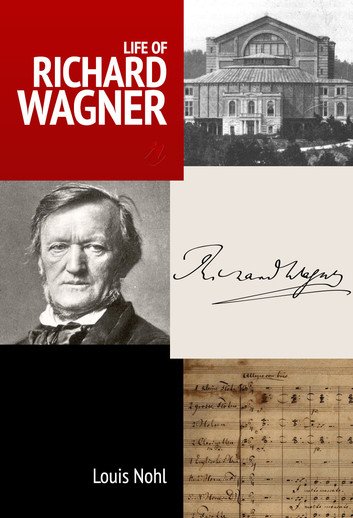
Life of Richard Wagner by Louis Nohl: A Comprehensive Biography of Music’s Revolutionary Genius
Louis Nohl’s “Life of Richard Wagner” stands as one of the most detailed biographical accounts of the legendary composer. This comprehensive work traces Richard Wagner’s journey from his humble beginnings to his position as one of history’s most influential musical figures.
Moreover, Nohl provides readers with intimate insights into the personal struggles and artistic triumphs that defined Wagner’s extraordinary career. The biography captures the essence of a man who revolutionized opera and transformed the landscape of classical music forever.
Richard Wagner’s Early Life and Formative Years
Birth and Family Background
Richard Wagner entered the world on May 22, 1813, in Leipzig, Germany. His family background was steeped in theatrical tradition and artistic pursuits. However, his biological father’s identity remained a subject of speculation throughout his life. His stepfather, Ludwig Geyer, was an actor and painter who influenced young Wagner’s early artistic sensibilities.
The young composer grew up surrounded by the vibrant cultural atmosphere of early 19th-century Germany. Furthermore, his exposure to theater and music began at an exceptionally young age. His family’s connections to the performing arts provided him with unique opportunities for artistic development.
Educational Journey and Musical Awakening
Wagner’s formal education was marked by both brilliance and rebellion against conventional teaching methods. Nevertheless, he demonstrated an early passion for literature, particularly the works of Shakespeare and ancient Greek drama. His musical education began somewhat haphazardly, with lessons in piano and composition that he often found frustrating.
At the University of Leipzig, Wagner studied music theory and composition more seriously. Additionally, he immersed himself in the works of Beethoven, whose symphonies profoundly influenced his artistic vision. This period marked the beginning of his lifelong quest to unite music and drama into a single art form.
Wagner’s Struggles and Early Career Challenges
Financial Hardships and Artistic Frustrations
The young composer faced severe financial difficulties throughout his early career years. Consequently, he took various conducting positions at small provincial theaters to support himself and his first wife, Minna. These positions, however, rarely provided adequate compensation or artistic satisfaction for his ambitious creative vision.
Wagner’s early operas received mixed receptions and failed to achieve commercial success. Moreover, his mounting debts forced him to flee creditors on multiple occasions throughout his twenties and thirties. These financial pressures created constant stress that affected both his personal relationships and his creative output.
Revolutionary Activities and Political Exile
Wagner became involved in the revolutionary movements that swept through Europe in 1848. Furthermore, his participation in the Dresden uprising led to a warrant for his arrest. He fled to Switzerland, where he would spend over a decade in political exile from his homeland.
This exile period, though difficult, proved remarkably productive for Wagner’s artistic development. Meanwhile, he wrote some of his most important theoretical works during this time. These writings articulated his vision for a “total work of art” that would synthesize music, poetry, drama, and visual spectacle.
Richard Wagner’s Revolutionary Contributions to Music
The Concept of Gesamtkunstwerk
Wagner developed the revolutionary concept of Gesamtkunstwerk, or “total work of art.” This theory proposed that opera should integrate all artistic elements into a unified whole. Moreover, he believed that music, drama, poetry, and stagecraft should work together seamlessly to create overwhelming emotional experiences.
His approach fundamentally challenged the conventions of Italian and French opera that dominated European stages. Additionally, Wagner rejected the traditional separation between recitative and aria that characterized earlier operatic forms. He instead created continuous musical dramas where the orchestra played an equal role to the singers.
Innovations in Harmonic Language
Wagner pushed the boundaries of traditional harmony to unprecedented extremes throughout his mature works. His use of chromaticism and unresolved dissonances created new expressive possibilities for Western music. Furthermore, his famous “Tristan chord” became a watershed moment in the history of musical harmony.
These harmonic innovations influenced generations of composers who followed him, from Mahler to Schoenberg. Consequently, Wagner’s musical language helped pave the way for the dissolution of traditional tonality in the 20th century. His work represented a bridge between Romantic expression and modernist experimentation.
Orchestration and Leitmotif Technique
Wagner revolutionized orchestration by expanding the size and capabilities of the opera orchestra significantly. He developed the leitmotif technique, using recurring musical themes to represent characters, objects, emotions, and ideas. Moreover, these motifs could be transformed and combined to create complex layers of musical and dramatic meaning.
The orchestra in Wagner’s operas functions as a psychological narrator, revealing characters’ inner thoughts and motivations. Additionally, his orchestral writing demands unprecedented technical skill and interpretive sensitivity from musicians. This approach elevated the orchestra from mere accompaniment to a central dramatic force.
Wagner’s Major Operatic Works and Masterpieces
Early Operas and Developmental Works
Wagner’s early operas include “Die Feen,” “Das Liebesverbot,” and “Rienzi,” which show his gradual artistic evolution. These works demonstrate his experimentation with different operatic styles and dramatic approaches. However, they still relied heavily on conventional operatic forms that he would later reject completely.
“Der fliegende Holländer” (The Flying Dutchman) marked his first mature work in the Romantic tradition. Furthermore, this opera introduced themes of redemption through love that would recur throughout his later works. The piece showcased his growing mastery of orchestral color and dramatic pacing.
The Middle Period: Tannhäuser and Lohengrin
“Tannhäuser” explores the conflict between sacred and profane love through medieval German legend and mythology. The opera’s famous overture and “Pilgrims’ Chorus” became concert hall staples almost immediately. Moreover, the work demonstrated Wagner’s increasing confidence in creating large-scale dramatic structures.
“Lohengrin” represents the culmination of Wagner’s Romantic period before his revolutionary mature style emerged fully. The opera’s famous “Bridal Chorus” remains one of the most recognized pieces of classical music worldwide. Additionally, the work’s shimmering orchestral textures and mystical atmosphere pointed toward his future innovations.
The Ring Cycle: Wagner’s Monumental Achievement
“Der Ring des Nibelungen” stands as one of the most ambitious artistic projects ever undertaken. This cycle of four operas took Wagner over 25 years to complete from conception to premiere. Furthermore, the work’s total performance time exceeds 15 hours, requiring multiple evenings for complete presentation.
The Ring cycle draws on Norse and Germanic mythology to create an epic tale of power, greed, and redemption. Moreover, Wagner wrote both the music and the libretto, maintaining complete artistic control over his vision. The cycle includes:
- Das Rheingold (The Rhine Gold): The prologue establishing the curse of the ring
- Die Walküre (The Valkyrie): The tragic love story of Siegmund and Sieglinde
- Siegfried: The hero’s youth and awakening of Brünnhilde
- Götterdämmerung (Twilight of the Gods): The final destruction and redemption
The Ring’s complex web of leitmotifs creates an intricate musical and dramatic architecture unparalleled in operatic history. Consequently, the cycle has inspired countless interpretations, productions, and scholarly analyses over the past 150 years.
Tristan und Isolde: The Pinnacle of Romantic Expression
“Tristan und Isolde” represents Wagner’s most radical exploration of chromatic harmony and psychological drama. The opera’s famous prelude begins with the “Tristan chord,” which defied conventional harmonic analysis. Moreover, the work’s intense focus on inner emotional states rather than external action revolutionized operatic dramaturgy.
The opera tells the story of forbidden love between the Cornish knight Tristan and Irish princess Isolde. Furthermore, Wagner’s music creates an almost unbearable tension between desire and its fulfillment throughout the work. The final “Liebestod” (Love-Death) provides one of the most transcendent moments in all of opera.
Die Meistersinger von Nürnberg: Wagner’s Comic Masterpiece
“Die Meistersinger” stands as Wagner’s only mature comedy and his most accessible work for general audiences. The opera celebrates German art and tradition through the story of the medieval guild of mastersingers. Additionally, the work contains some of Wagner’s most beautiful and melodious music, including the famous Prize Song.
Unlike his other mature works, “Die Meistersinger” uses traditional major-minor tonality and more conventional musical structures. Nevertheless, the opera still demonstrates Wagner’s mastery of orchestration and his ability to create vivid characters. The work’s nationalistic themes later became controversial due to their appropriation by Nazi ideology.
Parsifal: The Final Sacred Drama
“Parsifal,” Wagner’s final opera, explores themes of redemption, compassion, and spiritual transformation through Arthurian legend. The composer designated this work as a “Bühnenweihfestspiel” (stage consecration festival play), emphasizing its sacred character. Moreover, he intended for it to be performed only at his Bayreuth Festival Theater.
The opera’s slow, ritualistic pacing and mystical atmosphere create a unique theatrical experience unlike any other work. Furthermore, “Parsifal” contains some of Wagner’s most harmonically adventurous and spiritually profound music. The work’s themes of renunciation and enlightenment reflect the composer’s engagement with Buddhist and Christian philosophy.
Wagner’s Influence on Classical Music and Beyond
Impact on Late Romantic Composers
Wagner’s innovations profoundly influenced virtually every major composer who came after him in the late 19th century. Composers like Bruckner, Mahler, and Richard Strauss built directly upon his harmonic and orchestral innovations. Moreover, even composers who rejected his aesthetic, like Brahms, had to define themselves in relation to his overwhelming influence.
The “Wagnerian” style became synonymous with emotional intensity, chromatic harmony, and massive orchestral forces throughout Europe. Additionally, opera houses across the continent began programming his works regularly, creating a new standard for operatic production. His influence extended beyond Germany to France, Italy, Russia, and eventually the entire Western musical world.
Influence on Modern Music and Film
Wagner’s leitmotif technique directly influenced the development of film music in the 20th century. Consequently, composers like John Williams, Howard Shore, and Hans Zimmer employ similar thematic techniques in their scores. The use of recurring musical themes to represent characters and ideas has become standard practice in cinema.
His harmonic innovations helped pave the way for the breakdown of traditional tonality in modernist music. Furthermore, composers like Schoenberg acknowledged Wagner as a crucial precursor to their own revolutionary experiments. Even popular music has absorbed Wagnerian elements, from progressive rock to heavy metal’s epic scope.
Cultural and Philosophical Impact
Wagner’s writings on art, politics, and philosophy influenced thinkers far beyond the musical world. The philosopher Friedrich Nietzsche was initially a devoted Wagnerian before their famous falling out. Moreover, Wagner’s ideas about myth, nationalism, and the role of art in society sparked debates that continue today.
His concept of the Gesamtkunstwerk influenced modernist movements in theater, visual arts, and architecture throughout the 20th century. Additionally, his Bayreuth Festival established a new model for arts festivals focused on a single artist’s vision. The festival continues to operate today, maintaining Wagner’s tradition of innovative stagings and interpretations.
The Significance of Louis Nohl’s Biography
Nohl’s Approach and Methodology
Louis Nohl brought unique qualifications to his biographical study of Richard Wagner’s life and work. As a respected musicologist and critic, Nohl had access to primary sources and personal accounts from Wagner’s contemporaries. Furthermore, his scholarly rigor combined with readable prose made the biography accessible to both specialists and general readers.
Nohl’s work appeared during a period when Wagner’s reputation remained controversial and his legacy was still being debated. Moreover, the biographer attempted to present a balanced view of Wagner’s achievements alongside his personal flaws. This approach provided readers with a more complete picture than purely hagiographic accounts offered.
Historical Context and Contemporary Reception
The biography was written when Wagner’s influence on European music was reaching its zenith. Consequently, Nohl’s work helped shape how subsequent generations understood and interpreted the composer’s contributions. The book provided crucial documentation of Wagner’s creative process and the historical circumstances surrounding his major works.
Nohl’s biography became an important source for later scholars studying Wagner’s life and artistic development. Additionally, the work captured perspectives from people who knew Wagner personally before those voices were lost. This historical proximity gives Nohl’s account particular value for understanding Wagner’s contemporary impact and reputation.
Enduring Value for Modern Readers
Despite the passage of time, Nohl’s biography retains significant value for contemporary readers interested in Wagner. The work offers insights into 19th-century musical culture and the social context of Wagner’s revolutionary innovations. Moreover, Nohl’s detailed accounts of Wagner’s creative struggles provide inspiration for artists facing their own challenges.
The biography serves as an excellent introduction for readers new to Wagner’s life and works. Furthermore, it provides a foundation for understanding the composer’s complex personality and artistic vision. Nohl’s balanced approach helps readers appreciate Wagner’s genius while acknowledging his controversial aspects and personal failings.
The Comprehensive Scope: Birth to Death
Childhood and Youth in Leipzig
Nohl’s biography begins with Wagner’s birth in Leipzig and his early childhood experiences in theatrical environments. The account details how his stepfather’s profession exposed young Wagner to drama and performance from infancy. Moreover, Nohl explores how these early experiences shaped Wagner’s later conviction that music and drama must unite.
The biography examines Wagner’s education, including his often-troubled relationships with teachers and formal instruction. Additionally, Nohl documents Wagner’s early literary interests and his fascination with Greek tragedy and Shakespeare. These formative influences would later manifest in his mature operatic works and theoretical writings.
The Struggling Artist Years
Nohl provides detailed coverage of Wagner’s difficult years as a young conductor and composer seeking recognition. The biography chronicles his various conducting positions in provincial theaters and his mounting financial difficulties. Furthermore, Nohl examines how these struggles affected Wagner’s personal relationships and his first marriage to Minna Planer.
The account includes Wagner’s early compositional efforts and the mixed reception his first operas received. Moreover, Nohl analyzes how Wagner’s artistic vision gradually evolved beyond conventional operatic forms during this period. The biography shows how adversity and frustration actually fueled Wagner’s determination to revolutionize musical theater.
Exile, Patronage, and Artistic Maturity
The biography extensively covers Wagner’s years of political exile following the 1848 Dresden uprising. Nohl details how this period of isolation allowed Wagner to develop his theoretical ideas and begin his Ring cycle. Additionally, the account examines Wagner’s various romantic relationships during this tumultuous period of his life.
Nohl gives particular attention to Wagner’s relationship with King Ludwig II of Bavaria, his most important patron. The young king’s financial support enabled Wagner to complete his major works and realize his dream of building Bayreuth. Moreover, the biography explores the complex dynamics of this unusual friendship between monarch and artist.
The Bayreuth Festival and Final Years
The biography chronicles Wagner’s efforts to establish his festival theater in Bayreuth, Germany. Nohl details the financial challenges, architectural innovations, and artistic vision behind this unprecedented theatrical venture. Furthermore, the account describes the first complete Ring cycle performance in 1876, a watershed moment in musical history.
Nohl’s work covers Wagner’s final years, including his continued creative work and deteriorating health. The biography examines his final opera, “Parsifal,” and its premiere at Bayreuth in 1882. Moreover, Nohl provides a moving account of Wagner’s death in Venice on February 13, 1883, and the immediate aftermath.
Legacy and Historical Assessment
The biography concludes with Nohl’s assessment of Wagner’s lasting impact on music and culture. He evaluates Wagner’s revolutionary contributions while acknowledging the controversies surrounding his personality and ideas. Additionally, Nohl considers how Wagner’s works would likely influence future generations of composers and artists.
Nohl’s final chapters examine the immediate reception of Wagner’s death and the early efforts to preserve his legacy. The biography discusses the continuation of the Bayreuth Festival under Wagner’s widow, Cosima. Furthermore, Nohl reflects on how Wagner’s vision of music drama had already begun transforming operatic practice worldwide.
Why Read This Biography Today
Understanding a Revolutionary Artist
Louis Nohl’s “Life of Richard Wagner” offers readers essential insights into one of history’s most revolutionary artistic figures. The biography helps readers understand how Wagner transformed opera from entertainment into profound artistic expression. Moreover, Nohl’s account illuminates the personal qualities—both admirable and troubling—that drove Wagner’s creative achievements.
The work provides context for understanding Wagner’s music and the ideas behind his revolutionary approach to opera. Additionally, readers gain appreciation for the historical circumstances that shaped Wagner’s artistic development and philosophical outlook. This understanding enhances the experience of encountering Wagner’s powerful and challenging works.
A Window into 19th-Century Culture
The biography serves as a valuable document of 19th-century European cultural and political history. Nohl’s account captures the revolutionary fervor, nationalist movements, and artistic debates that characterized Wagner’s era. Furthermore, the work illustrates how art and politics intertwined in ways that shaped modern European culture.
Readers interested in the Romantic movement will find Nohl’s biography particularly illuminating about this crucial cultural period. Moreover, the work demonstrates how individual artistic vision could challenge and ultimately transform established cultural institutions. Wagner’s story exemplifies the Romantic ideal of the artist as visionary and cultural revolutionary.
Lessons for Contemporary Artists
Wagner’s struggles and ultimate triumphs offer inspiration and practical lessons for contemporary artists facing their own challenges. The biography shows how Wagner persevered through financial hardship, critical rejection, and political persecution to realize his vision. Additionally, his story demonstrates the importance of unwavering commitment to artistic principles despite external pressures.
However, Nohl’s balanced account also provides cautionary lessons about the dangers of artistic egotism and ideological extremism. The biography encourages readers to appreciate Wagner’s genius while critically examining his problematic personal and political views. This nuanced approach remains relevant for understanding the complex relationship between artistic achievement and personal character.
Conclusion
Louis Nohl’s “Life of Richard Wagner” stands as an essential biographical work for anyone seeking to understand this towering figure in musical history. The biography’s comprehensive scope, from Wagner’s birth to his death, provides readers with a complete picture of his extraordinary life and revolutionary achievements. Moreover, Nohl’s balanced approach acknowledges both Wagner’s genius and his controversial aspects, offering a nuanced portrait of a complex personality.
The work’s enduring value lies in its detailed documentation of Wagner’s creative process, personal struggles, and historical impact. Furthermore, Nohl’s proximity to Wagner’s era provides insights and perspectives that later biographers could not access directly. For readers interested in classical music, opera, or 19th-century cultural history, this biography offers an indispensable resource.
Wagner’s influence on Western music and culture cannot be overstated, and Nohl’s biography helps readers understand how one individual could transform an entire art form. The work demonstrates how Wagner’s revolutionary vision, combined with his determination and eventual patronage, enabled him to realize unprecedented artistic achievements.
Consequently, this biography remains relevant for contemporary readers seeking to understand the power of artistic vision and the complex legacy of one of history’s most influential composers.



Reviews
There are no reviews yet.