

Description
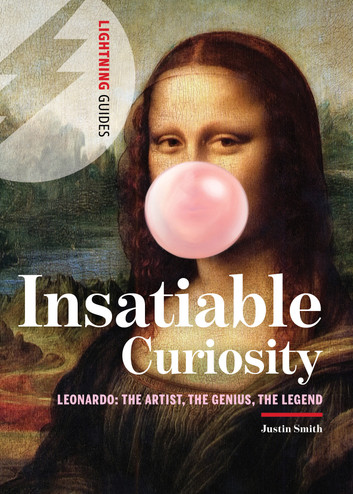
Leonardo: Insatiable Curiosity – A Complete Synopsis of the Artist, Genius, and Legend
Introduction: Understanding Leonardo: Insatiable Curiosity
“Leonardo: Insatiable Curiosity” by Lightning Guides examines Leonardo da Vinci’s journey from illegitimate birth to legendary status. It reveals how his boundless curiosity fueled genius across disciplines, showing that his greatness stemmed from relentless questioning along with talent.
Lightning Guides presents Leonardo as more than just an artist or inventor. Instead, they show him as a complete Renaissance man whose interests spanned everything. Furthermore, the guide emphasizes that his curiosity seamlessly connected art, science, and engineering. Therefore, readers discover the human side of this legendary figure.
Leonardo: Insatiable Curiosity Begins in Vinci
Leonardo di ser Piero da Vinci was born in 1452 near the Tuscan village of Vinci. He was the illegitimate son of a notary and a peasant woman. Consequently, his birth status shaped his unconventional life path. However, this outsider position also freed him from traditional constraints.
Young Leonardo showed artistic talent early in his childhood years. His father recognized this ability and apprenticed him to Andrea del Verrocchio. Additionally, Florence’s vibrant Renaissance culture nurtured his developing talents. Therefore, Leonardo absorbed techniques from master artists as he developed his unique vision.
The apprenticeship in Verrocchio’s workshop proved transformative for young Leonardo. He learned painting, sculpture, and metal. The apprenticeship in Verrocchio’s workshop proved transformative for young Leonardo. He learned painting, sculpture, and metalworking alongside other talented students. He also began asking questions that would define his entire career. Additionally, he started observing nature with unprecedented attention to detail.s.
The Mona Lisa remains the world’s most famous painting even today. Additionally, The Last Supper revolutionized religious art with its dramatic composition. However, Leonardo completed fewer than two dozen paintings during his lifetime.
His perfectionism often kept him from finishing commissioned works, as curiosity drew him to new projects. Many patrons grew frustrated with his pace. However, his completed works changed art forever.
Leonardo developed innovative painting techniques that set him apart from his contemporaries. Sfumato became his signature method, creating soft, smoky transitions between colors. Furthermore, he studied light, shadow, and perspective with scientific precision. Therefore, his paintings achieved unprecedented realism and emotional depth.
The Virgin of the Rocks exemplifies Leonardo’s command of light and design. His unfinished Adoration of the Magi exposes his intricate planning process. His portraiture revealed psychological nuance never before seen. Thus, Leonardo transformed painting from a manual craft into an intellectual pursuit.
Scientific Inquiries and Anatomical Studies
Leonardo’s curiosity extended far beyond the canvas into scientific exploration. He dissected over 30 human corpses to thoroughly understand anatomy. Moreover, he created the most accurate anatomical drawings of his era. Furthermore, these studies directly improved the realism in his artwork.
His notebooks contain detailed observations of muscles, bones, and organs. He studied how the body moves to paint figures with accuracy. For Leonardo, art and science were inseparable.
Leonardo explored fields from botany to geology with equal passion.
He posed questions such as “Why is the sky blue?” and “How do birds fly?” He also conducted experiments to examine his theories on natural phenomena. He recorded everything systematically in his famous notebooks.
His scientific method systematically combined observation, experimentation, and documentation. Additionally, he used drawing as a tool for understanding complex concepts. Consequently, his notebooks became visual encyclopedias of Renaissance knowledge. Therefore, Leonardo pioneered an interdisciplinary approach to learning.
Engineering Designs and Inventions
Leonardo sketched designs for machines centuries ahead of their time. His notebooks contain plans for flying machines, submarines, and tanks. Moreover, he designed innovative weapons, bridges, and architectural structures. Furthermore, many designs remained theoretical because the technology couldn’t yet support them.
The famous helicopter sketch shows his understanding of aerodynamics and mechanics. He also designed a self-propelled cart resembling modern cars. Historians recognize him as a visionary engineer whose imagination surpassed his era’s limits.
Leonardo worked as a military engineer for various Italian rulers and patrons. He designed fortifications, canals, and urban plans. Leonardo worked as a military engineer for various Italian rulers and patrons. He designed fortifications, canals, and urban planning projects for Milan.
Additionally, he created theatrical devices and elaborate stage machinery for court entertainments. This engineering work funded his artistic and scientific pursuits.el before bronze casting began. Consequently, this became one of his most famous unfinished projects. Nevertheless, the preparatory drawings showcase his engineering brilliance.
The Notebooks: Windows into Genius
Leonardo filled over 7,200 surviving notebook pages with observations and ideas. He wrote in mirror script, possibly to protect his ideas or accommodate left-handedness. Moreover, his pages seamlessly combine text, diagrams, and detailed illustrations. Furthermore, these notebooks reveal how his mind constantly questioned everything.
His to-do lists included quirky items like “describe the tongue of the woodpecker.” Additionally, he recorded observations on his to-do lists, including quirky items such as “describe the tongue of the woodpecker.”
He also recorded observations about water flow, cloud formations, and plant growth. As a result, his notebooks became a comprehensive record of Renaissance knowledge. They offer unprecedented insight into his thought processes. Pressions to mechanical gears with precision. Moreover, he used visual thinking to solve complex problems across disciplines. Furthermore, his drawings often communicated ideas better than words alone.
Modern scholars continue to discover new insights within Leonardo’s extensive notebook collection. Additionally, these pages influenced countless artists, scientists, and inventors after him. Consequently, the notebooks represent his most enduring legacy beyond individual artworks. Therefore, they prove that curiosity itself can be humanity’s greatest achievement.
Key Characteristics of Leonardo’s Genius
Leonardo embodied qualities that set him apart from contemporaries:
- Relentless questioning of accepted knowledge and conventional wisdom
- Keen observation of natural phenomena with unprecedented attention to detail
- Interdisciplinary thinking that connected art, science, and engineering
- Visual learning through drawing as a tool for understanding
- Perfectionism that drove excellence but also prevented completion
- Childlike wonder that never diminished despite growing expertise
- An experimental mindset that tests theories through hands-on investigation
These characteristics worked together to create his unique approach to knowledge. Moreover, they demonstrate that genius results. These characteristics worked together to create his unique approach to knowledge. Importantly, they demonstrate that genius results from habits and mindset, not magic.
In fact, anyone can cultivate these qualities to enhance their own creativity. Thus, Leonardo’s example remains relevant for modern innovators and thinkers. Complete works. His insatiable curiosity constantly pulled him toward new interests and projects. Moreover, he often reworked paintings for years, never quite satisfied. Consequently, patrons grew frustrated, and relationships sometimes soured.
The Adoration of the Magi remained unfinished when Leonardo left Florence for Milan. Additionally, the massive equestrian statue of Ludovico Sforza was never completed. Furthermore, numerous scientific treatises and inventions existed only as notebook sketches. Therefore, the world received only a fraction of his conceived brilliance.
However, his unfinished works still demonstrate extraordinary talent and innovative thinking. Moreover, they reveal his creativity. However, his unfinished works still demonstrate extraordinary talent and innovative thinking. In addition, they reveal his creative process and evolving ideas over time.
Some argue that his perfectionism itself drove innovation forward. Even incomplete works, as a result, influenced generations of artists and thinkers. Originally requested it. Moreover, he considered it perpetually unfinished despite its apparent perfection. Therefore, this masterpiece exemplifies both his genius and his struggle with perfectionism.
The Quintessential Renaissance Man
Leonardo represents the Renaissance polymath ideal, excelling in painting, sculpture, architecture, science, mathematics, and engineering. He saw only connections among these disciplines, demonstrating the power of interdisciplinary thinking.
The Renaissance enthusiastically celebrated individuals who cultivated knowledge across multiple fields. Florence particularly encouraged such intellectual diversity and creative exploration during this period. Additionally, the era’s spirit of rebirth and rediscovery inspired Leonardo’s approach. Consequently, he became the embodiment of Renaissance values and aspirations.
Leonardo’s ability to connect disparate fields produced his most innovative insights. He applied anatomical knowledge to improve the realism and accuracy of his paintings. Moreover, he used artistic skills to document scientific observations with precision. Furthermore, his engineering designs reflected both aesthetic beauty and functional efficiency.
Modern specialization often discourages the kind of broad learning Leonardo practiced. However, his example reminds us that creativity flourishes at disciplinary intersections. Additionally, his life demonstrates that curiosity-driven learning leads to unexpected innovations. Therefore, Leonardo remains an inspiration for anyone seeking to think beyond boundaries.
Legacy: How Leonardo: Insatiable Curiosity Changed the World
Leonardo died in 1519, leaving behind fewer than two dozen completed paintings. However, his influence on art, science, and human thought proved immeasurable. Moreover, his notebooks inspired countless inventors, artists, and scientists across centuries. Furthermore, he established new standards for observational accuracy and artistic excellence.
His artistic techniques, particularly sfumato, influenced generations of painters. Additionally, his anatomical drawings advanced medical understanding for centuries to come. Consequently, both artistic and scientific communities claim him as a foundational figure. Therefore, his interdisciplinary legacy continues to grow even today.
The Mona Lisa alone has influenced popular culture more than any artwork. Moreover, Leonardo’s inventions anticipated technologies that emerged centuries later, including helicopters and tanks. Furthermore, his scientific method of observation and documentation became standard practice. Thus, his impact extends far beyond his own lifetime.
“Leonardo: Insatiable Curiosity” by Lightning Guides ultimately argues that curiosity matters most. Leonardo’s genius stemmed from his relentless questioning and observation of everything. Moreover, his willingness to explore multiple disciplines simultaneously produced unprecedented innovations. Furthermore, his life demonstrates that anyone can cultivate curiosity to enhance creativity.
Conclusion: Lessons from Leonardo’s Life
Leonardo da Vinci’s story teaches us that genius isn’t purely innate talent. Instead, it develops through consistent curiosity, observation, and interdisciplinary exploration over time. Moreover, his life shows that asking questions matters more than having answers. Furthermore, connecting different fields of knowledge produces the most innovative breakthroughs.
“Leonardo: Insatiable Curiosity” presents him as an accessible model rather than an untouchable genius. The Lightning Guides book emphasizes his human qualities alongside his achievements. Additionally, it shows how his habits and mindset created his extraordinary capabilities. Consequently, readers can apply his principles to their own creative pursuits.
His unfinished projects remind us that perfectionism has costs as well as benefits. Moreover, his diverse interests show that specialization isn’t the only path forward. Furthermore, his notebooks prove that documenting observations enhances learning and creativity. Therefore, Leonardo’s methods remain relevant for modern innovators and artists.
The book ultimately celebrates curiosity as humanity’s most powerful tool for growth. Leonardo’s insatiable desire to understand everything drove all his accomplishments across disciplines. Moreover, his life proves that wonder and questioning should never diminish. Furthermore, his legacy inspires us to observe deeply, question constantly, and connect broadly. Therefore, “Leonardo: Insatiable Curiosity” offers timeless wisdom for anyone seeking creative excellence.


Reviews
There are no reviews yet.