

Description
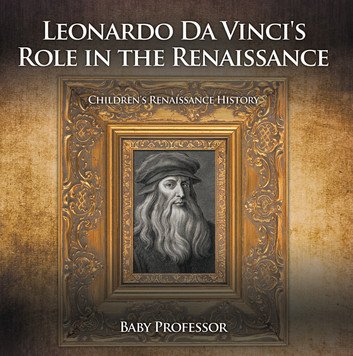
Leonardo Da Vinci’s Role in the Renaissance: A Children’s Guide to History’s Greatest Genius
Introduction: Meet Leonardo da Vinci
Leonardo da Vinci stands as one of history’s most brilliant minds. Moreover, he lived during an exciting time called the Renaissance. This book introduces young readers to his amazing life and work.
Children will discover how one man changed the world forever. Additionally, they’ll learn about art, science, and invention. The Renaissance became a time of incredible creativity and discovery.
This educational journey makes history fun and accessible. Furthermore, it shows how curiosity leads to greatness. Young minds will find inspiration on every page.
Who Was Leonardo da Vinci?
Leonardo da Vinci was born in Italy in 1452. He grew up in a small town called Vinci. His curiosity about the world started very early in childhood.
As a young boy, he loved nature and drawing. He asked questions about everything he saw. His teachers noticed his special talents right away.
Leonardo became an apprentice to a famous artist. He learned painting, sculpture, and many other skills. However, he wanted to learn even more than just art.
Leonardo da Vinci and the Renaissance Period
The Renaissance was a special time in European history. It began in Italy during the 1300s and lasted for centuries. People started thinking differently about art, science, and learning.
During this period, artists and thinkers explored new ideas. They studied ancient Greek and Roman knowledge. Moreover, they created beautiful works that still amaze us today.
Leonardo lived right in the heart of this exciting time. He embodied everything the Renaissance represented. His work combined art, science, and endless curiosity perfectly.
The Renaissance encouraged people to question and explore. Artists began painting more realistic pictures. Scientists started conducting experiments to understand nature better.
Leonardo’s Amazing Artistic Achievements
Leonardo created some of the world’s most famous paintings. The Mona Lisa remains the most recognized artwork ever made. Additionally, The Last Supper decorates a church wall in Milan.
His paintings showed incredible detail and emotion. He studied how light falls on different surfaces. Furthermore, he understood human anatomy better than most artists.
Leonardo developed new painting techniques that others copied. He used a method called sfumato for soft edges. This technique made his paintings look more realistic and alive.
Key Artistic Contributions:
- Painted the Mona Lisa with her mysterious smile
- Created The Last Supper showing Jesus and his disciples
- Developed new techniques for realistic painting
- Studied light, shadow, and perspective carefully
- Drew thousands of sketches and detailed studies
His drawings filled countless notebooks with observations. He sketched plants, animals, and human faces constantly. Each drawing taught him something new about the world.
Leonardo as an Inventor and Scientist
Leonardo wasn’t just an artist; he was also an inventor. He designed flying machines hundreds of years before airplanes existed. His notebooks contained ideas that seemed like science fiction.
He studied birds to understand how flight worked. Then, he drew plans for wings humans could wear. Although these machines weren’t built during his lifetime, they inspired future inventors.
Leonardo also designed weapons, bridges, and buildings. He created plans for submarines and tanks. Moreover, he invented musical instruments and water systems.
His scientific curiosity knew no boundaries or limits. He dissected bodies to understand how muscles worked. This knowledge helped him paint more realistic human figures.
Leonardo’s Inventions and Ideas:
- Flying machines inspired by bird wings
- Armored vehicles similar to modern tanks
- Underwater breathing devices for divers
- Parachutes for safe descents from heights
- Musical instruments with unique sounds
- Engineering designs for bridges and canals
How Leonardo Changed the Renaissance
Leonardo da Vinci influenced countless artists and thinkers. His approach combined art with scientific observation. Therefore, he showed that creativity and logic work together beautifully.
Other Renaissance artists studied his techniques and methods. They learned from his attention to detail. His influence spread throughout Italy and beyond its borders.
Leonardo proved that one person could master many subjects. He painted, sculpted, invented, and studied nature simultaneously. This made him the perfect “Renaissance man.”
His notebooks inspired scientists for generations after his death. Engineers studied his mechanical designs centuries later. Artists still learn from his painting techniques today.
Leonardo’s Curiosity and Learning Methods
Leonardo believed in learning through careful observation. He watched everything around him with intense focus. Then, he recorded his discoveries in detailed notebooks.
He wrote backwards, from right to left across pages. This mirror writing kept his notes private and protected. However, anyone could read them using a mirror.
Leonardo asked questions that others never considered. Why do birds fly? How do waves move? What makes the sky blue?
He never stopped learning throughout his entire life. Even as an old man, he continued studying. His curiosity remained as strong as when he was young.
Lessons Children Can Learn from Leonardo
Young readers discover that curiosity leads to amazing discoveries. Leonardo never stopped asking questions about the world. Therefore, children learn that wondering “why” is important.
The book teaches that practice makes skills stronger. Leonardo drew constantly to improve his abilities. Additionally, he studied subjects that interested him deeply.
Children learn that combining different interests creates something special. Art and science worked together in Leonardo’s mind. This shows that all subjects connect in meaningful ways.
Important Lessons from Leonardo’s Life:
- Stay curious and ask lots of questions
- Practice your skills every single day
- Combine different interests in creative ways
- Observe the world carefully around you
- Never stop learning new things
- Keep notebooks to record your ideas
- Don’t be afraid to try new approaches
Why This Book Matters for Young Readers
This educational book makes Renaissance history accessible and fun. Complex ideas become simple through clear explanations. Moreover, colorful illustrations help children understand better.
Young readers connect with Leonardo’s childhood curiosity. They see that great people start as curious children. This inspires them to explore their own interests.
The book shows history as exciting rather than boring. Children discover that real people created amazing things. Furthermore, they learn that they can make history too.
Conclusion: Leonardo’s Lasting Legacy
Leonardo da Vinci left an incredible mark on human history. His paintings hang in museums where millions admire them. His inventions inspired technologies we use every day.
The Renaissance flourished partly because of his contributions. He showed what human potential could achieve. Moreover, he proved that curiosity drives all great discoveries.
This book helps children understand why Leonardo matters today. His life teaches valuable lessons about creativity and persistence. Young readers finish feeling inspired to explore their world.
Leonardo’s story reminds us that learning never ends. Each question leads to more fascinating discoveries. Therefore, children should embrace their natural curiosity always.
By studying Leonardo da Vinci, young minds discover their potential. They learn that ordinary children can accomplish extraordinary things. The Renaissance spirit lives on in every curious child.


Reviews
There are no reviews yet.