

Description
Leonardo da Vinci: Artist, Inventor, and Scientist – The Ultimate Renaissance Genius for Kids
Introduction: Meet Leonardo da Vinci, the Man Who Could Do Everything
Leonardo da Vinci was one of history’s greatest geniuses and most fascinating people. He lived over 500 years ago in Italy during the Renaissance period. Moreover, Leonardo da Vinci excelled as an artist, inventor, and scientist all at once. Few people in history have mastered so many different skills so brilliantly.
This remarkable man painted the world’s most famous artwork, the Mona Lisa. He also designed flying machines, studied human anatomy, and invented incredible devices. Furthermore, Leonardo da Vinci’s curiosity knew no bounds or limitations whatsoever. He wanted to understand everything about the world around him completely.
Baby Professor’s e-book introduces children to this extraordinary Renaissance master’s amazing life. Kids will discover how one person became great at art, science, and invention. Additionally, they’ll learn that curiosity and hard work lead to incredible achievements. Leonardo da Vinci’s story inspires young minds to explore their own talents and interests.
The book makes learning about this genius fun, exciting, and easy to understand. It uses simple language that children can follow without getting confused or bored. Therefore, both kids and parents will enjoy discovering Leonardo’s incredible accomplishments together. His life proves that learning different subjects makes you smarter and more creative.
Leonardo da Vinci: The Artist Who Painted Masterpieces
Leonardo da Vinci created some of the most famous paintings in human history. His artwork hangs in museums where millions of people visit every year. Moreover, his paintings show incredible skill, beauty, and mysterious qualities that fascinate viewers. He spent years perfecting each painting until it looked absolutely perfect.
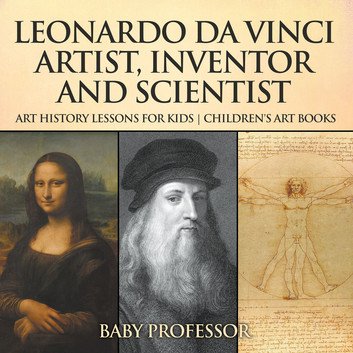
The Mona Lisa is Leonardo’s most celebrated and recognized painting in the world. This portrait shows a woman with a mysterious smile that captivates everyone. Furthermore, people have debated the meaning of her expression for over 500 years. The painting hangs in the Louvre Museum in Paris, France, behind protective glass.
Leonardo also painted The Last Supper, showing Jesus with his twelve disciples. This enormous wall painting covers an entire wall in a Milan monastery. Additionally, it captures the dramatic moment when Jesus announces someone will betray him. Each disciple shows different emotions through their faces and body language perfectly.
His painting technique was revolutionary and changed art forever in important ways. Leonardo used a method called sfumato, which creates soft, smoky edges and shadows. Moreover, he studied light, shadow, and perspective to make paintings look incredibly realistic. His attention to detail was extraordinary and unmatched by most other artists.
Leonardo da Vinci’s Most Famous Artworks:
- Mona Lisa – The world’s most famous portrait with a mysterious smile
- The Last Supper – A dramatic scene of Jesus with his disciples
- Vitruvian Man – A famous drawing showing perfect human proportions
- Lady with an Ermine – A beautiful portrait of a young woman
- The Annunciation – An early painting showing the angel Gabriel visiting Mary
Leonardo da Vinci: The Inventor Who Dreamed of the Future
Leonardo da Vinci designed machines and inventions that were centuries ahead of his time. His notebooks contain thousands of drawings showing incredible devices and mechanical contraptions. Furthermore, many of his inventions predicted modern technology like helicopters, tanks, and submarines. His imagination knew absolutely no limits or boundaries at all.
He designed a flying machine inspired by studying birds and how they fly. Leonardo believed humans could fly if they understood the principles of flight. Additionally, he drew plans for a helicopter-like device called an aerial screw. This invention wouldn’t be built successfully until the 20th century arrived finally.
Leonardo also invented military weapons and devices for the rulers who hired him. He designed tanks, giant crossbows, and defensive fortifications for protecting cities effectively. Moreover, he created plans for a diving suit that would let people breathe underwater. His military inventions showed his understanding of engineering, physics, and practical mechanics.
Many of Leonardo’s inventions were never actually built during his lifetime, unfortunately. The technology and materials needed didn’t exist in the 1500s yet. However, modern engineers have built his designs and proven they actually work. Therefore, Leonardo da Vinci truly was a visionary who saw the future clearly.
Children will be amazed that Leonardo invented things like parachutes and robots. He drew plans for a mechanical knight that could move its arms. Furthermore, he designed bridges, canals, and city planning systems that were incredibly advanced. His inventive mind never stopped creating, designing, and imagining new possibilities constantly.
Leonardo da Vinci: The Scientist Who Studied Everything
Leonardo da Vinci was also a brilliant scientist who studied nature with incredible detail. He dissected over 30 human bodies to understand anatomy and how bodies work. Moreover, Leonardo drew detailed illustrations of muscles, bones, and organs with amazing accuracy. His anatomical drawings are still studied by medical students today in schools.
He studied water, observing how it flows, creates waves, and moves around objects. Leonardo filled notebooks with observations about water’s behavior and properties in nature. Additionally, he designed systems for controlling rivers and preventing floods in Italian cities. His scientific approach combined careful observation with practical engineering solutions effectively.
Leonardo also studied plants, animals, rocks, and weather patterns throughout his entire life. He believed that understanding nature would make him a better artist and inventor. Furthermore, he dissected animals to compare their anatomy with human bodies carefully. This comparative approach helped him understand how living things work and function.
His scientific method was remarkably modern for someone living 500 years ago. Leonardo observed carefully, asked questions, conducted experiments, and recorded his findings in notebooks. Therefore, he’s considered one of the early pioneers of modern scientific thinking. His curiosity drove him to investigate everything he encountered in the world.
The book explains how Leonardo’s scientific studies improved his art and inventions significantly. Understanding anatomy made his painted figures look more realistic and lifelike than others. Moreover, studying birds helped him design better flying machines with proper wing shapes. His different interests all connected and supported each other in fascinating ways.
Why Leonardo da Vinci Was Called a “Renaissance Man”
The Renaissance was a special period in European history from about 1300 to 1600. During this time, people rediscovered ancient Greek and Roman knowledge and learning. Furthermore, they believed that individuals should develop many different skills and talents together. Leonardo da Vinci perfectly embodied this Renaissance ideal of the complete person.
A “Renaissance man” means someone who excels at many different subjects and activities. Leonardo mastered art, science, engineering, mathematics, music, and writing all at once. Additionally, he studied architecture, botany, geology, and cartography throughout his long life. His range of knowledge and skills was truly extraordinary and almost unbelievable.
Leonardo believed that all knowledge was connected and related in important ways. Studying anatomy made him a better artist because he understood muscles and movement. Moreover, understanding mathematics helped him create perfect perspective in his paintings accurately. His scientific observations improved his inventions by teaching him about natural principles.
This approach to learning teaches children an important lesson about education and growth. You don’t have to choose just one interest or talent to develop exclusively. Furthermore, learning different subjects actually makes you better at all of them. Leonardo da Vinci proved that curiosity and diverse interests lead to genius-level achievements.
Leonardo da Vinci’s Notebooks: Windows Into a Genius Mind
Leonardo da Vinci kept detailed notebooks throughout his entire life, filling thousands of pages. These notebooks contain drawings, observations, ideas, and plans for countless projects and inventions. Moreover, he wrote everything backward in mirror writing, which you can only read using a mirror. Historians still debate why he used this unusual writing method consistently.
His notebooks show how his mind worked and how he approached problems creatively. He drew detailed sketches of everything he observed in nature and daily life. Additionally, he wrote notes about his thoughts, experiments, and ideas for future projects. These notebooks are like treasure chests filled with the thoughts of a genius.
The notebooks reveal that Leonardo rarely finished projects he started enthusiastically at first. He would begin a painting, then get distracted by a scientific question or invention. Furthermore, he would abandon that to study something else that caught his attention. This habit frustrated the people who hired him to complete specific projects.
However, his notebooks also show incredible dedication to understanding the world completely and thoroughly. He would draw the same object from multiple angles to understand it better. Moreover, he would return to the same questions years later with fresh insights. His persistence in seeking knowledge was truly remarkable and inspiring for young learners.
Children will find Leonardo’s notebooks fascinating because they show how a genius thinks. The drawings are beautiful, detailed, and often include fantastical creatures and machines. Therefore, kids can see that even geniuses doodle, make mistakes, and explore ideas playfully. This makes Leonardo feel more human and relatable to young readers today.
What You’ll Find in Leonardo da Vinci’s Notebooks:
- Detailed anatomical drawings of humans and animals with labels and notes
- Designs for flying machines, weapons, and mechanical devices of all kinds
- Studies of water, plants, rocks, and natural phenomena observed carefully
- Sketches for paintings and sculptures, some finished and others abandoned
- Mathematical calculations, geometric patterns, and architectural plans for buildings
- Personal observations, shopping lists, and notes about daily life in Renaissance Italy
Leonardo da Vinci’s Early Life and Training as an Artist
Leonardo da Vinci was born on April 15, 1452, in a small town called Vinci in Italy. His parents were not married, which affected his social status and opportunities. Moreover, he couldn’t attend university or become a doctor or lawyer because of this. However, this limitation pushed him toward art, which didn’t require formal university education.
As a young boy, Leonardo showed incredible talent for drawing and observing nature. His father noticed his artistic abilities and decided to help him develop them. Furthermore, he arranged for Leonardo to apprentice with Andrea del Verrocchio, a famous artist. This apprenticeship in Florence began when Leonardo was about 14 years old.
In Verrocchio’s workshop, Leonardo learned painting, sculpture, and metalworking from master craftsmen. He studied alongside other apprentices and helped with large projects for important clients. Additionally, he learned how to mix paints, prepare canvases, and use different tools. The workshop system was how young artists learned their craft in Renaissance Italy.
A famous story tells how Leonardo painted an angel in one of Verrocchio’s paintings. His angel was so beautiful and lifelike that Verrocchio reportedly never painted again. Moreover, the master recognized that his student had surpassed him in talent already. This story shows Leonardo’s exceptional abilities even as a young apprentice learning.
Leonardo stayed in Florence for many years, developing his skills and reputation steadily. He began receiving his own commissions for paintings and other artistic projects. Therefore, he established himself as an independent master artist by his late twenties. His early training gave him the technical foundation for his later masterpieces.
Leonardo da Vinci’s Life in Milan and His Greatest Works
In 1482, Leonardo moved to Milan to work for Duke Ludovico Sforza. He offered his services as an engineer, architect, and military designer primarily. Furthermore, he promised to create sculptures, paintings, and entertainment for the duke’s court. This move to Milan marked an important period in Leonardo’s creative life.
During his time in Milan, Leonardo painted The Last Supper on a monastery wall. This massive painting took several years to complete because of his perfectionism. Moreover, Leonardo experimented with a new painting technique that unfortunately didn’t work well. The painting began deteriorating almost immediately, requiring constant restoration efforts ever since.
He also worked on a giant bronze horse statue that would have been magnificent. The statue was meant to honor the duke’s father and show Milan’s power. Additionally, Leonardo created detailed plans and a full-size clay model for the sculpture. However, the bronze needed for the statue was used for cannons instead.
Leonardo lived in Milan for nearly 17 years, his longest stay anywhere during his life. He conducted scientific experiments, designed buildings, and created art for the duke’s court. Furthermore, he organized elaborate festivals and theatrical productions with mechanical special effects. His diverse talents made him valuable to the duke in many different ways.
The Milan period shows how Leonardo balanced his artistic work with other interests. He didn’t just paint; he also engineered, invented, and entertained the court regularly. Therefore, children learn that having multiple talents and interests is valuable and enriching. Leonardo’s example encourages kids to explore different subjects without limiting themselves unnecessarily.
Leonardo da Vinci’s Later Years and Final Masterpieces
After leaving Milan, Leonardo traveled to various Italian cities seeking new opportunities and patrons. He worked in Venice, Florence, and Rome at different times during his later years. Moreover, he continued painting, inventing, and studying science wherever he went throughout Italy. His reputation as a genius followed him, attracting attention from powerful rulers.
During this period, Leonardo painted the Mona Lisa, his most famous work ever. He worked on this portrait for several years, constantly refining and perfecting it. Furthermore, he carried the painting with him wherever he traveled, never considering it finished. This perfectionism was typical of Leonardo’s approach to his art and work.
In 1516, King Francis I of France invited Leonardo to live in France. The king gave him a comfortable house and a generous salary without demanding specific work. Additionally, Francis simply wanted Leonardo nearby to talk with him about art and ideas. This arrangement allowed Leonardo to spend his final years in relative peace.
Leonardo died on May 2, 1519, at the age of 67 in France. He left behind thousands of notebook pages, several paintings, and an incredible legacy. Moreover, his influence on art, science, and invention continues to inspire people today. His life proves that curiosity, hard work, and diverse interests lead to greatness.
The book helps children understand that Leonardo’s greatest achievement was his endless curiosity. He never stopped asking questions, observing the world, and trying to understand everything. Therefore, his example teaches kids that learning is a lifelong adventure worth pursuing. Leonardo da Vinci shows that being curious makes life more interesting and meaningful.
Why Leonardo da Vinci Matters to Kids Today
Leonardo da Vinci lived over 500 years ago, but his work still matters today. His paintings hang in museums where millions of people visit them every year. Furthermore, his inventions predicted modern technology that we use in our daily lives. His scientific observations contributed to our understanding of anatomy, engineering, and natural phenomena.
Children can learn important lessons from Leonardo’s life and approach to learning everything. He showed that you don’t have to choose between art and science exclusively. Moreover, he proved that curiosity and asking questions lead to amazing discoveries and achievements. His example encourages kids to explore all their interests without limiting themselves unnecessarily.
Leonardo’s story also teaches children about persistence and dedication to excellence in everything. He spent years on single paintings, trying to make them absolutely perfect. Additionally, he filled thousands of notebook pages with observations and ideas throughout his life. This dedication shows kids that greatness requires hard work, not just natural talent.
The book makes Leonardo da Vinci accessible and interesting to young readers effectively. It uses simple language and exciting stories that capture children’s imaginations and attention. Furthermore, it connects his achievements to things kids understand and care about today. This approach makes history feel relevant, exciting, and worth learning about carefully.
Parents and teachers will appreciate how the book inspires children to be curious. Leonardo’s example shows that learning can be fun, exciting, and lead to incredible achievements. Therefore, this book plants seeds that may grow into lifelong love of learning. It encourages kids to observe the world carefully and ask questions about everything.
How Leonardo da Vinci’s Three Talents Connected and Supported Each Other
Leonardo da Vinci’s skills as an artist, inventor, and scientist weren’t separate or unrelated. Instead, each talent strengthened and improved the others in fascinating and important ways. Moreover, his artistic training taught him to observe details that most people miss. This observation skill made him a better scientist and inventor throughout his life.
His scientific studies of anatomy made his painted figures look incredibly realistic and lifelike. Understanding how muscles work helped him show movement and emotion in his art. Furthermore, studying light and shadow scientifically improved his painting techniques like sfumato significantly. Science and art worked together perfectly in Leonardo’s approach to both fields.
Leonardo’s inventions often combined his artistic eye with his scientific understanding of nature. He designed flying machines after carefully studying and drawing birds in flight. Additionally, his engineering projects used mathematical principles he learned through artistic perspective studies. His diverse knowledge allowed him to solve problems creatively and effectively always.
This interconnection teaches children an important lesson about learning and education in general. Subjects like art, science, and math aren’t completely separate or unrelated to each other. Moreover, learning one subject often helps you understand others better and more deeply. Leonardo da Vinci proved that being well-rounded makes you smarter and more creative overall.
The book encourages kids to explore different subjects and find connections between them. Maybe studying nature will inspire artwork, or math will help with building projects. Therefore, children learn that all knowledge is valuable and potentially useful in unexpected ways. Leonardo’s example shows that curiosity about everything leads to the greatest achievements possible.
How Leonardo’s Three Talents Worked Together:
- Artist + Scientist = Realistic paintings showing accurate anatomy and natural lighting
- Scientist + Inventor = Machines based on careful observation of nature and physics
- Inventor + Artist = Beautiful, detailed drawings of mechanical devices and contraptions
- All Three Together = A complete understanding of how the world works visually
Perfect for Young Learners and Future Geniuses
Baby Professor designed this e-book specifically for children interested in art, science, and history. The content is age-appropriate, engaging, and educational without being boring or too difficult. Moreover, the book uses simple vocabulary that young readers can understand easily themselves. Parents can read it aloud, or kids can explore it independently with confidence.
The book includes colorful illustrations and reproductions of Leonardo’s famous artworks and inventions. Visual learning helps children remember information better and stay engaged with the content. Furthermore, seeing Leonardo’s actual paintings and drawings makes his achievements feel more real. Kids can observe the details that made this Renaissance master so special.
Each section builds knowledge gradually without overwhelming young minds with too much information. The book balances fun facts with educational content in an engaging, exciting way. Additionally, it encourages children to think creatively and ask questions about the world. This approach develops critical thinking skills alongside historical knowledge and artistic appreciation.
Teachers and homeschooling parents will find this resource incredibly valuable for lesson planning. The content covers art history, science history, and Renaissance studies all at once. Furthermore, it provides discussion points for classroom conversations or family reading time together. The book makes Leonardo da Vinci accessible and interesting to elementary school students.
Inspiring the Next Generation of Artists, Inventors, and Scientists
Reading about Leonardo da Vinci plants seeds of curiosity and creativity in young minds. Children see that one person can be interested in many different things. Moreover, they learn that asking questions and observing carefully leads to amazing discoveries. Leonardo’s example shows kids that they don’t have to choose just one path.
The book demonstrates that making mistakes and experimenting are important parts of learning. Leonardo tried techniques that didn’t always work, like his Last Supper painting method. However, he kept experimenting, learning, and trying new approaches throughout his entire life. Therefore, kids learn that failure is just part of the journey to success.
Young readers discover that passion and curiosity matter more than being perfect immediately. Leonardo wasn’t born knowing everything; he learned through years of study and practice. Additionally, he never stopped learning, even in his old age when most people retire. His lifelong dedication to learning inspires children to stay curious about the world.
The book also shows children that their different interests can work together beautifully. Maybe they love both art and science, or building things and drawing pictures. Furthermore, Leonardo’s example proves that combining interests makes you more creative and capable. Kids learn that being well-rounded is a strength, not a weakness or distraction.
Conclusion: Leonardo da Vinci’s Lasting Legacy for Children
Leonardo da Vinci remains one of history’s most fascinating and accomplished individuals ever. His achievements as an artist, inventor, and scientist continue to amaze people today. Moreover, his insatiable curiosity and diverse talents make him the perfect role model. Children learning about Leonardo discover what’s possible when you never stop asking questions.
Baby Professor’s e-book brings this Renaissance genius to life for young readers effectively. It presents Leonardo’s story in an engaging, accessible way that captures children’s imaginations. Furthermore, it shows kids that learning about history can be exciting and personally relevant. The book makes Leonardo feel like a real person, not just a name.
By studying Leonardo da Vinci, children gain inspiration to explore their own talents and interests. They learn that hard work, curiosity, and persistence lead to amazing achievements and discoveries. Therefore, this book offers valuable lessons that extend far beyond art history alone. It encourages kids to observe the world carefully and think creatively about problems.
Leonardo da Vinci’s life proves that one person can make a lasting difference. His paintings still inspire artists, his inventions still amaze engineers, and his observations still teach scientists. Moreover, his example shows children that learning is a lifelong adventure worth pursuing. This book plants seeds that may grow into future artists, inventors, and scientists.
The next time children see the Mona Lisa or hear about Leonardo da Vinci, they’ll understand why he matters so much. They’ll know about his incredible paintings, his futuristic inventions, and his scientific discoveries. Furthermore, they’ll remember that curiosity, hard work, and diverse interests lead to greatness. Leonardo da Vinci’s legacy continues inspiring new generations to dream big and learn everything.



Reviews
There are no reviews yet.