

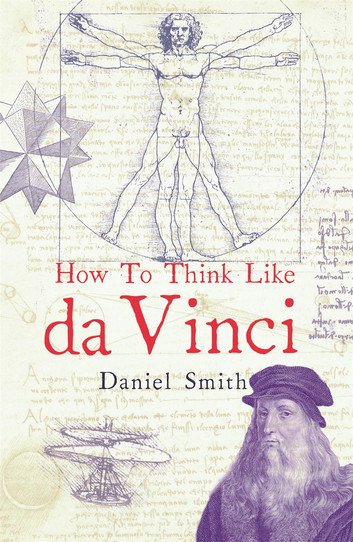
Description
How to Think Like da Vinci: Unlocking Renaissance Genius for Modern Success
How to Think Like da Vinci by Daniel Smith reveals the mental strategies of history’s greatest polymath. This book teaches readers to adopt Leonardo da Vinci’s revolutionary approach to creativity, problem-solving, and innovation. Moreover, How to Think Like da Vinci provides practical techniques for developing genius-level thinking in everyday life. Furthermore, the How to Think Like series makes complex intellectual methods accessible to everyone seeking growth.
How to Think Like da Vinci explores the mind of Leonardo da Vinci, the ultimate Renaissance man. Daniel Smith decodes the thinking patterns that made da Vinci extraordinary across multiple disciplines simultaneously. Additionally, this book demonstrates how da Vinci’s approach to observation, curiosity, and experimentation transformed entire fields. The methods in How to Think Like da Vinci remain powerfully relevant five centuries after his death.
Leonardo da Vinci achieved mastery in painting, sculpture, engineering, anatomy, architecture, and countless other domains. His ability to think like da Vinci came from specific mental habits and practices anyone can learn. Furthermore, Daniel Smith shows how da Vinci’s thinking integrates art with science, creativity with logic. This synthesis yields breakthrough insights that conventional thinking alone cannot achieve.
Understanding Leonardo da Vinci’s Revolutionary Mind
Leonardo da Vinci (1452-1519) stands as history’s most celebrated genius and creative innovator across disciplines. His paintings, like the Mona Lisa and The Last Supper, revolutionized art with unprecedented realism. Moreover, da Vinci’s scientific notebooks contained designs for helicopters, tanks, and submarines centuries before technology existed. Furthermore, his anatomical drawings advanced medical knowledge through meticulous observation and detailed documentation of structures.
How to Think Like da Vinci examines what made this Renaissance master’s mind so extraordinarily productive. Daniel Smith reveals that da Vinci’s genius wasn’t purely innate talent but developed through deliberate practice. Additionally, Leonardo da Vinci cultivated specific mental habits that amplified his natural abilities exponentially over time. These habits form the foundation of da Vinci’s thinking that anyone can adopt and develop.
The key to thinking like da Vinci lies in understanding his insatiable curiosity about everything. Leonardo da Vinci questioned assumptions, observed details others missed, and constantly connected ideas across different fields. Furthermore, he documented his observations and experiments in thousands of notebook pages filled with insights. How to Think Like da Vinci teaches readers to develop this same systematic approach to learning.
The How to Think Like Series: Making Genius Accessible
The How to Think Like series by Michael O’Mara Books demystifies the thinking methods of history’s greatest minds. Each book in the series breaks down complex intellectual approaches into understandable, actionable strategies. Moreover, How to Think Like da Vinci continues this tradition by making Renaissance genius accessible to everyone. Furthermore, Daniel Smith presents da Vinci’s methods in clear, practical terms that readers can immediately apply.
This series recognizes that genius thinking follows identifiable patterns that can be learned and practiced deliberately. How to Think Like da Vinci doesn’t promise to make readers into Leonardo clones overnight. Additionally, it provides realistic frameworks for developing the mental habits that made da Vinci so remarkably effective. The series empowers readers to enhance their own thinking rather than merely admiring historical figures.
How to Think as da Vinci fits within a broader collection examining Einstein, Shakespeare, Sherlock Holmes, and others. Each book explores different aspects of exceptional thinking suited to various goals and personality types. Furthermore, da Vinci’s approach offers unique value by integrating multiple thinking styles into one comprehensive system. This makes How to Think Like da Vinci particularly valuable for people seeking holistic intellectual development.
Core Principles of How to Think Like da Vinci
How to Think Like da Vinci identifies seven fundamental principles that guided Leonardo’s extraordinary intellectual achievements consistently:
- Curiosità: Cultivate insatiable curiosity and question everything around you relentlessly and systematically
- Dimostrazione: Test knowledge through experience and learn from mistakes rather than accepting dogma blindly
- Sensazione: Continuously refine your senses to observe the world with greater clarity and precision
- Sfumato: Embrace ambiguity and paradox rather than demanding simple black-and-white answers always
- Arte/Scienza: Balance logic with imagination and integrate analytical thinking with creative intuition beautifully
- Corporalità: Develop grace and physical awareness because the mind and body function as integrated systems
- Connessione: Recognize patterns and connections between seemingly unrelated phenomena and ideas constantly
These principles form the foundation of da Vinci’s thinking that Daniel Smith explores throughout the book. Moreover, each principle builds upon the others to create a comprehensive system for intellectual development. Furthermore, How to Think Like da Vinci provides specific exercises for developing each principle in your life.
The Power of Observation in da Vinci’s Approach
Leonardo da Vinci possessed extraordinary observational skills that set him apart from contemporaries in every field. He noticed subtle details in nature, human anatomy, and mechanical systems that others completely overlooked. Moreover, da Vinci’s approach to observation was systematic rather than casual, involving deliberate focus and documentation. Furthermore, How to Think Like da Vinci teaches readers to develop this same level of observational precision.
Da Vinci’s thinking begins with truly seeing rather than merely looking at the world around you. Leonardo da Vinci would spend hours studying how water flows, how birds fly, or how light reflects. Additionally, he sketched what he observed from multiple angles to fully and accurately understand three-dimensional forms. This intensive observation served as the basis for his artistic mastery and scientific discoveries.
How to Think Like da Vinci offers practical exercises to sharpen observational skills in everyday situations. Daniel Smith suggests activities like drawing objects without looking at the paper to enhance hand-eye coordination. Furthermore, he recommends keeping detailed observation journals to train the mind to notice patterns. These da Vinci methods transform passive perception into active, engaged observation that generates insights and understanding.
Integrating Art and Science: The da Vinci Synthesis
Leonardo da Vinci refused to separate artistic creativity from scientific inquiry in his work and thinking. He understood that art requires scientific knowledge of anatomy, optics, and mathematics to achieve realism. Moreover, da Vinci’s approach recognized that science benefits from artistic visualization and creative problem-solving techniques. Furthermore, How to Think Like da Vinci demonstrates how this integration creates breakthrough thinking unavailable to specialists.
The da Vinci thinking model rejects the false dichotomy between left-brain logic and right-brain creativity entirely. Leonardo da Vinci used both modes simultaneously, allowing them to enhance each other in productive synergy. Additionally, his anatomical drawings exemplify this synthesis—they’re scientifically accurate yet artistically beautiful and compelling. How to Think Like da Vinci teaches readers to develop both analytical and creative capacities together.
Modern education often forces people to choose between the arts and sciences early in their development. Da Vinci’s methods show that this separation limits potential and reduces overall thinking quality. Furthermore, Daniel Smith shows how thinking like da Vinci means cultivating diverse skills across multiple domains. This interdisciplinary approach generates innovations that specialized thinking alone cannot achieve.
Note-Taking and Documentation Techniques from da Vinci
Leonardo da Vinci filled over 13,000 pages of notebooks with observations, sketches, ideas, and experiments throughout life. His documentation practice wasn’t mere record-keeping but an active thinking tool that generated insights. Moreover, da Vinci’s approach to note-taking combined words with detailed drawings to capture ideas comprehensively. Furthermore, How to Think Like da Vinci reveals how systematic documentation amplifies learning and creative thinking.
Da Vinci’s thinking involves externalizing thoughts onto paper to examine them from new perspectives and angles. Leonardo da Vinci wrote in mirror script, possibly to keep ideas private or because left-handedness made it natural. Additionally, he organized notebooks thematically, allowing ideas to flow freely without a rigid structure that would constrain creativity. This balance between organization and spontaneity characterizes effective da Vinci methods for capturing thoughts.
How to Think Like da Vinci encourages readers to develop personalized documentation systems suited to their needs. Daniel Smith suggests combining sketches with written notes, even for people who don’t consider themselves artists. Furthermore, he emphasizes that the act of drawing forces closer observation and deeper understanding. These da Vinci techniques transform note-taking from passive recording into active thinking and learning processes.
Pattern Recognition and Connecting Disparate Ideas
Leonardo da Vinci excelled at recognizing patterns across different domains and connecting seemingly unrelated phenomena together. He noticed similarities between water flow and hair movement, applying insights from one to the other. Moreover, da Vinci’s approach to pattern recognition stemmed from studying diverse subjects rather than specializing in a narrow field. Furthermore, How to Think Like da Vinci teaches readers to develop this cross-domain thinking ability systematically.
Da Vinci’s thinking involves actively seeking connections between different fields, problems, and observations throughout daily life. Leonardo da Vinci studied anatomy to improve his painting, but also applied artistic principles to engineering. Additionally, he recognized that nature’s patterns repeat at different scales, from tiny to massive structures. This da Vinci method of finding universal principles generates insights that specialists often miss completely.
How to Think Like da Vinci offers exercises to develop pattern-recognition skills through deliberate practice and attention. Daniel Smith suggests keeping a “connections journal” to record links between ideas and observations. Furthermore, he recommends studying subjects outside your expertise to expand your mental database of patterns. These practices cultivate the da Vinci thinking style that sees unity beneath apparent diversity and chaos.
Creative Problem-Solving Strategies Like da Vinci
Leonardo da Vinci approached problems from multiple angles rather than accepting the first solution that came to mind. He generated numerous alternatives, sketched different approaches, and tested ideas through experimentation and practical application. Moreover, da Vinci’s approach to problem-solving combined logical analysis with imaginative leaps and creative intuition. Furthermore, How to Think Like da Vinci reveals specific strategies for developing this flexible, innovative problem-solving ability.
Da Vinci’s thinking reframes problems as opportunities for creative exploration rather than obstacles requiring quick fixes. Leonardo da Vinci often worked on multiple projects simultaneously, allowing ideas from one to inform others. Additionally, he wasn’t afraid to abandon approaches that didn’t work, viewing “failures” as learning opportunities. This experimental mindset characterizes da Vinci’s methods that generate breakthrough solutions through persistent exploration and testing.
How to Think Like da Vinci teaches readers to ask better questions rather than rush to premature answers. Daniel Smith emphasizes that Leonardo da Vinci initially spent more time defining problems than solving them. Furthermore, he shows how da Vinci’s habit of questioning assumptions opened possibilities that conventional thinking missed. These problem-solving strategies remain powerfully effective for modern challenges that require innovative, creative thinking.
How Curiosity Drives da Vinci’s Methodology
Leonardo da Vinci possessed a boundless curiosity that drove him to investigate everything from bird flight to human emotions. His notebooks contain questions about why the sky is blue, how woodpeckers avoid headaches, and countless others.
Moreover, da Vinci’s approach to curiosity was systematic—he actively cultivated it rather than waiting for inspiration. Furthermore, How to Think Like da Vinci demonstrates how developing curiosity enhances all aspects of thinking and learning.
Da Vinci’s thinking begins with the simple practice of asking “why?” and “how?” about everyday phenomena. Leonardo da Vinci never accepted surface explanations but always probed deeper to understand underlying mechanisms and principles. Additionally, he maintained lists of questions to investigate, ensuring his curiosity remained active and directed. This structured approach to curiosity distinguishes da Vinci’s methods from mere casual interest in various topics.
How to Think Like da Vinci provides practical techniques for rekindling childlike curiosity that education often suppresses. Daniel Smith suggests keeping a “curiosity list” of questions that arise during daily activities and observations. Furthermore, he recommends dedicating time to exploring these questions through research, experimentation, or discussion with others. These practices develop the da Vinci thinking habit of treating the world as an endless source of fascination.
The Relationship Between Creativity and Critical Thinking
Leonardo da Vinci demonstrated that creativity and critical thinking aren’t opposites but complementary aspects of effective thinking. His creative visions were grounded in rigorous observation, measurement, and logical analysis of natural phenomena. Moreover, da Vinci’s approach used critical thinking to refine creative ideas and test their validity through experimentation. Furthermore, How to Think Like da Vinci shows how integrating these thinking modes consistently produces superior results.
Da Vinci’s thinking involves generating creative possibilities while simultaneously evaluating them with critical judgment and analysis. Leonardo da Vinci sketched fantastical flying machines, but also calculated whether they could actually work practically. Additionally, he used artistic creativity to visualize scientific concepts and critical thinking to perfect artistic techniques. This balance between imagination and analysis characterizes da Vinci’s methods that achieve both beauty and functionality.
How to Think Like da Vinci teaches readers to deliberately alternate between creative and critical thinking modes. Daniel Smith explains that Leonardo da Vinci separated idea generation from idea evaluation to maximize both. Furthermore, he shows how premature criticism kills creativity, while uncritical acceptance produces impractical fantasies. Learning to think like da Vinci means knowing when to dream and when to analyze.
Practical Exercises to Develop da Vinci Thinking
How to Think Like da Vinci includes numerous exercises that readers can practice to develop Renaissance thinking skills. Daniel Smith provides step-by-step instructions for activities that build observational skills, creativity, and analytical thinking. Moreover, these da Vinci methods don’t require specialized equipment or a significant time commitment to practice regularly. Furthermore, the exercises progress from simple to complex, allowing readers to develop skills gradually and systematically.
Da Vinci’s thinking develops through consistent practice rather than one-time insights or sudden transformations of ability. Leonardo da Vinci spent decades refining his observational and creative skills through daily practice and experimentation. Additionally, How to Think Like da Vinci emphasizes that small, regular efforts produce better results than sporadic intensity. This approach makes da Vinci’s methods accessible to busy people seeking gradual improvement over time.
The exercises in How to Think Like da Vinci include drawing practice, observation challenges, and creative problem-solving. Daniel Smith suggests activities like describing familiar objects in extreme detail to sharpen observational precision. Furthermore, he recommends brainstorming sessions where you generate 100 solutions to a single problem without judgment. These da Vinci techniques train the mental muscles that support genius-level thinking in any field or endeavor.
Modern Applications of da Vinci’s Ancient Methods
How to Think Like da Vinci demonstrates that Leonardo’s 500-year-old methods of thinking remain remarkably relevant to contemporary challenges. The integration of art and science that characterized da Vinci’s approach perfectly suits today’s complex problems. Moreover, modern innovation increasingly requires the interdisciplinary thinking that Leonardo da Vinci exemplified throughout his career. Furthermore, da Vinci’s thinking offers antidotes to the over-specialization that limits creativity in many professional fields.
Da Vinci’s methods apply directly to fields like design thinking, systems thinking, and creative problem-solving today. Leonardo da Vinci’s emphasis on observation and experimentation aligns with scientific method and user-centered design approaches. Additionally, his integration of diverse knowledge areas mirrors the interdisciplinary collaboration that drives modern innovation. How to Think Like da Vinci shows how ancient wisdom addresses contemporary needs for creative thinking.
The digital age paradoxically makes da Vinci’s approach more valuable rather than obsolete. Leonardo da Vinci’s deep observation counters the superficial scanning that internet culture encourages in daily life. Furthermore, his systematic documentation provides models for managing information overload through thoughtful organization and synthesis. Thinking like da Vinci helps people navigate modern complexity with Renaissance clarity and focused attention.
Why da Vinci’s Methods Remain Relevant Today
Leonardo da Vinci addressed timeless aspects of human thinking that transcend specific historical periods or technological contexts. His methods for observation, creativity, and problem-solving work regardless of available tools or contemporary knowledge. Moreover, da Vinci’s approach to learning and thinking develops capacities that artificial intelligence cannot replicate easily. Furthermore, How to Think Like da Vinci argues that human creativity becomes more valuable as automation handles routine tasks.
Da Vinci’s thinking cultivates uniquely human capacities, such as curiosity, aesthetic judgment, and cross-domain insight, that machines lack. Leonardo da Vinci’s integration of emotion with logic and art with science creates a holistic understanding beyond data analysis. Additionally, his emphasis on direct observation and hands-on experimentation counters the abstract, screen-mediated experience dominating life. These da Vinci methods help people remain fully human in an increasingly technological world today.
How to Think Like da Vinci shows that Leonardo’s relevance stems from addressing fundamental questions about thinking itself. Daniel Smith argues that da Vinci’s genius lay not in what he knew but how he thought. Furthermore, this means his methods transfer across any content area or professional field requiring creative thinking. Learning to think like da Vinci develops meta-cognitive skills that enhance performance in any domain or endeavor.
Implementation Strategies for Readers
How to Think Like da Vinci provides clear guidance for practically implementing Leonardo’s thinking methods in everyday life. Daniel Smith recommends starting with one principle or practice rather than attempting everything simultaneously and becoming overwhelmed. Moreover, he suggests creating environmental supports, like keeping notebooks accessible, to encourage da Vinci’s documentation habits. Furthermore, the book emphasizes that da Vinci’s thinking develops gradually through consistent practice over months and years.
Da Vinci methods integrate most effectively when aligned with existing routines and interests rather than imposed artificially. Leonardo da Vinci developed his practices organically through pursuing his genuine curiosities and passions throughout life. Additionally, How to Think Like da Vinci encourages readers to adapt techniques to their personalities and circumstances. This flexible approach makes da Vinci’s approach accessible to diverse people with different lifestyles and goals.
The implementation strategy in How to Think Like da Vinci includes tracking progress and celebrating small wins. Daniel Smith suggests keeping a journal documenting how da Vinci’s thinking practices affect your work and creativity. Furthermore, he recommends finding communities of practice where people support each other in developing these skills. These strategies help readers sustain motivation and continue developing da Vinci methods over the long term.
Benefits of Adopting da Vinci’s Thinking Style
How to Think Like da Vinci offers numerous benefits for people who consistently adopt Leonardo’s thinking methods. Enhanced creativity and problem-solving abilities emerge naturally from practicing da Vinci’s approach to observation and experimentation. Moreover, readers develop greater intellectual flexibility and the ability to see connections others miss completely. Furthermore, da Vinci’s thinking increases the enjoyment of learning by cultivating curiosity and wonder about the world.
Leonardo da Vinci’s methods improve both professional performance and personal fulfillment through a more engaged, creative way of living. Da Vinci’s thinking helps people break out of mental ruts and approach familiar challenges with fresh perspectives. Additionally, the integration of art and science that characterizes da Vinci’s approach creates more balanced, holistic thinking. These benefits extend beyond career success to enhance overall quality of life and intellectual satisfaction.
How to Think Like da Vinci demonstrates that adopting Leonardo’s methods transforms how you experience everyday reality. Daniel Smith shows how da Vinci’s thinking makes ordinary experiences more interesting through heightened observation and curiosity. Furthermore, readers report that da Vinci’s methods increase confidence in their creative abilities and problem-solving capacity. Learning to think like da Vinci ultimately means living more fully, creatively, and consciously in every moment.
Conclusion: Becoming a Renaissance Thinker for the Modern Age
How to Think Like da Vinci by Daniel Smith offers a comprehensive guide to developing Renaissance genius. The book makes Leonardo da Vinci’s thinking methods accessible through clear explanations and practical exercises anyone can follow. Moreover, da Vinci’s approach to creativity, observation, and problem-solving remains powerfully relevant for contemporary challenges and opportunities. Furthermore, the How to Think Like series provides an invaluable resource for people seeking intellectual growth.
Da Vinci’s thinking represents an antidote to the narrow specialization and superficial thinking that modern life encourages. Leonardo da Vinci demonstrated that integrating diverse knowledge and skills produces breakthrough insights and extraordinary achievements. Additionally, his methods for cultivating curiosity, observation, and creativity can be learned by anyone willing to practice. How to Think Like da Vinci empowers readers to develop their own genius through systematic application of principles.
For anyone seeking to enhance creativity, solve problems more effectively, or simply think more clearly, How to Think Like da Vinci provides proven strategies. Daniel Smith’s accessible presentation makes da Vinci’s methods immediately applicable to modern life and contemporary challenges.
Furthermore, the book demonstrates that genius isn’t mysterious or unattainable but results from specific, learnable practices. Begin your journey to thinking like da Vinci today and unlock your creative potential for tomorrow.






Reviews
There are no reviews yet.