

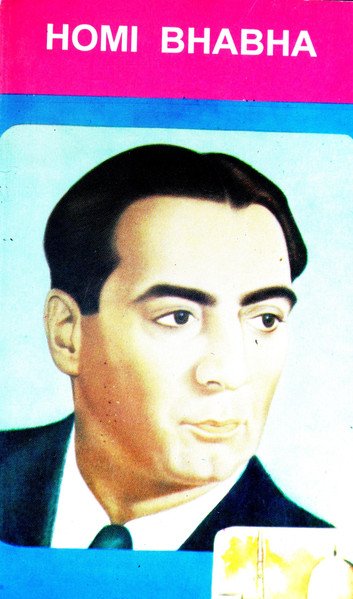
Description
Homi Bhabha Biography: The Visionary Who Built India’s Nuclear Dream
Discover the Father of India’s Atomic Energy Program
This Homi Bhabha biography unveils the remarkable life of India’s greatest scientific visionary. Dr. Homi Jehangir Bhabha transformed India from a newly independent nation into a nuclear power. Furthermore, he laid the foundation for India’s scientific renaissance. This comprehensive Homi Bhabha biography explores his genius, determination, and unwavering commitment to national progress.
K.C. Shivappa’s meticulously researched work brings to life the man behind India’s atomic energy establishment. Moreover, it reveals how one scientist’s vision shaped an entire nation’s destiny. Consequently, readers gain insight into the making of modern India’s scientific infrastructure.
Early Life: The Making of a Genius
Privileged Beginnings in Mumbai
Homi Bhabha was born on October 30, 1909, into a prominent Parsi family in Mumbai. His father, Jehangir Bhabha, was a successful lawyer. Meanwhile, his mother, Meheren, came from an equally distinguished family. Therefore, young Homi grew up surrounded by culture, education, and intellectual stimulation.
The Bhabha family valued education immensely. Additionally, they encouraged curiosity and independent thinking. Hence, Homi developed a passion for learning from an early age. His childhood home buzzed with discussions about art, science, and philosophy.
Educational Excellence from the Start
Homi attended Cathedral and John Connon School in Mumbai. Subsequently, he joined Elphinstone College before moving to England. At just fifteen, he sailed to Cambridge University. Moreover, he initially enrolled to study mechanical engineering, following his father’s wishes.
However, Bhabha’s true passion lay in theoretical physics. Therefore, he convinced his father to let him pursue physics instead. Consequently, he joined Caius College, Cambridge, in 1927. This decision would change India’s scientific future forever.
Academic Brilliance: Cambridge and Beyond
Studying Under Scientific Giants
At Cambridge, Bhabha studied under legendary physicists like Paul Dirac and Niels Bohr. Furthermore, he worked at the Cavendish Laboratory, the world’s premier physics research center. His brilliance quickly became evident to his professors. Moreover, he completed his doctorate in just four years.
Bhabha’s doctoral thesis on cosmic radiation earned widespread acclaim. Additionally, he published groundbreaking papers on quantum theory. Hence, he established himself as a rising star in theoretical physics. His work on cascade showers of cosmic rays became particularly influential.
The Bhabha-Heitler Theory
In 1937, Bhabha and Walter Heitler developed their famous theory. This theory explained cosmic ray showers through electron-positron interactions. Moreover, it became a cornerstone of particle physics. Consequently, Bhabha gained international recognition at just twenty-eight years old.
The theory demonstrated Bhabha’s exceptional mathematical abilities. Furthermore, it showed his deep understanding of quantum mechanics. Therefore, leading institutions across Europe sought his collaboration. His future in European academia seemed assured.
The Fateful Return to India
Stranded by World War II
In 1939, Bhabha visited India for a brief vacation. However, World War II broke out during his stay. Consequently, he couldn’t return to Cambridge as planned. This unexpected turn of events proved fortunate for India.
Initially, Bhabha felt frustrated by the limited research facilities in India. Nevertheless, he decided to make the best of the situation. Moreover, he joined the Indian Institute of Science in Bangalore. There, he worked under Nobel laureate C.V. Raman.
Building India’s Scientific Foundation
Bhabha quickly realized India needed strong scientific institutions. Furthermore, he understood that independence would require technological self-reliance. Therefore, he began planning India’s scientific infrastructure. His vision extended far beyond personal research achievements.
He convinced the Sir Dorabji Tata Trust to fund a new research institute. Moreover, he presented a compelling case for India’s scientific development. Consequently, the Tata Institute of Fundamental Research (TIFR) was established in 1945. This marked the beginning of India’s scientific revolution.
The Tata Institute: A Temple of Science
Creating World-Class Research Facilities
The Homi Bhabha biography highlights his role in establishing TIFR in Mumbai. He envisioned an institution matching the best laboratories worldwide. Furthermore, he insisted on complete academic freedom for researchers. Hence, TIFR attracted brilliant minds from across India and abroad.
Bhabha personally recruited talented scientists and provided them excellent facilities. Additionally, he fostered a culture of innovation and excellence. Therefore, TIFR quickly became India’s premier research institution. Its reputation soon rivaled established European and American centers.
Multidisciplinary Approach to Research
Bhabha believed in breaking down barriers between scientific disciplines. Moreover, he encouraged collaboration between physicists, mathematicians, and engineers. Consequently, TIFR developed a unique interdisciplinary culture. This approach yielded remarkable breakthroughs across multiple fields.
The institute focused on several key areas:
- Theoretical physics and cosmic ray research
- Mathematics and pure sciences
- Nuclear physics and reactor technology
- Electronics and instrumentation
- Astronomy and astrophysics
Father of India’s Nuclear Program
The Three-Stage Nuclear Power Vision
Bhabha developed an ingenious three-stage nuclear power program for India. This plan addressed India’s unique resource constraints brilliantly. Furthermore, it leveraged India’s abundant thorium reserves strategically. Hence, it promised long-term energy independence for the nation.
The first stage involved natural uranium reactors producing plutonium. Subsequently, the second stage would use fast breeder reactors. Finally, the third stage would utilize thorium-based reactors. Moreover, this vision demonstrated Bhabha’s exceptional strategic thinking.
Establishing the Atomic Energy Commission
In 1948, India’s government established the Atomic Energy Commission. Furthermore, Prime Minister Nehru appointed Bhabha as its first chairman. Consequently, Bhabha gained unprecedented authority over India’s nuclear program. He reported directly to the Prime Minister.
Bhabha used this position to accelerate India’s nuclear development. Additionally, he secured substantial funding for research and infrastructure. Therefore, India made rapid progress in nuclear technology. His leadership proved instrumental in achieving these goals.
Major Scientific Achievements and Contributions
Pioneering Research in Cosmic Rays
Bhabha’s research on cosmic rays earned him international acclaim. Moreover, his work on electron cascades advanced particle physics significantly. Consequently, scientists worldwide cited his papers extensively. His contributions remain relevant even today.
He established India’s first cosmic ray research station in Ooty. Furthermore, he equipped it with state-of-the-art detection equipment. Hence, Indian scientists could conduct world-class research domestically. This facility produced numerous important discoveries.
Building India’s First Nuclear Reactor
Under Bhabha’s leadership, India built its first nuclear reactor, Apsara. Moreover, it became operational in 1956, achieving criticality successfully. Consequently, India joined the exclusive club of nuclear-capable nations. This achievement demonstrated India’s growing technological prowess.
Apsara was Asia’s first nuclear reactor. Additionally, it served as a training ground for Indian nuclear scientists. Therefore, it played a crucial role in developing indigenous expertise. Bhabha personally oversaw every aspect of its construction.
International Recognition and Honors
Bhabha received numerous prestigious awards and honors throughout his career. Furthermore, he was elected Fellow of the Royal Society in 1941. Additionally, he served as president of the International Union of Pure and Applied Physics. Hence, he represented India on the global scientific stage.
He also presided over the first UN Conference on Peaceful Uses of Atomic Energy in 1955. Moreover, his eloquent speeches impressed delegates from around the world. Consequently, India’s scientific capabilities gained international respect. His diplomatic skills matched his scientific brilliance.
Vision for India’s Scientific Development
Science as the Path to Progress
This Homi Bhabha biography emphasizes his belief in science-driven development. He argued that scientific research was essential for national prosperity. Furthermore, he convinced political leaders to invest heavily in research infrastructure. Therefore, India established numerous scientific institutions during his lifetime.
Bhabha believed developing nations must master modern technology. Moreover, he rejected the idea of permanent technological dependence. Consequently, he advocated for indigenous research and development. His vision inspired generations of Indian scientists.
Training the Next Generation
Bhabha understood that institutions alone weren’t enough. Additionally, India needed thousands of trained scientists and engineers. Hence, he established comprehensive training programs at TIFR and other institutions. These programs produced world-class researchers.
He personally mentored many young scientists. Furthermore, he encouraged them to pursue ambitious research projects. Therefore, his students went on to lead India’s scientific establishment. His legacy lives on through their contributions.
Balancing Pure and Applied Research
Bhabha advocated for both fundamental and applied research. Moreover, he believed pure science ultimately led to practical applications. Consequently, he ensured TIFR maintained this balance carefully. This approach proved remarkably successful.
He argued that developing nations shouldn’t merely copy Western technology. Instead, they should develop indigenous capabilities through fundamental research. Furthermore, this would ensure long-term technological independence. His philosophy shaped India’s scientific policy for decades.
Leadership Style and Personal Qualities
Visionary Yet Practical
Bhabha combined visionary thinking with practical implementation skills. Moreover, he could inspire others while managing complex projects efficiently. Consequently, he achieved what many considered impossible. His leadership style became a model for scientific administrators.
He set ambitious goals but broke them into achievable steps. Additionally, he monitored progress closely without micromanaging. Therefore, his teams remained motivated and productive. His management approach was ahead of its time.
Aesthetic Sensibility and Cultural Interests
Beyond science, Bhabha was deeply interested in arts and culture. Furthermore, he was an accomplished painter and classical music enthusiast. Hence, he insisted that TIFR’s campus should be architecturally beautiful. He believed aesthetics enhanced scientific creativity.
He collected contemporary Indian art and supported struggling artists. Moreover, he ensured TIFR had an excellent art collection. Consequently, the institute became a cultural center as well. This holistic approach was uniquely Bhabha’s.
Building International Collaborations
Bhabha maintained strong connections with scientists worldwide. Additionally, he facilitated collaborations between Indian and foreign researchers. Therefore, Indian scientists gained exposure to cutting-edge research. These partnerships accelerated India’s scientific progress significantly.
He negotiated agreements with several countries for nuclear cooperation. Moreover, he ensured these agreements respected India’s sovereignty. Consequently, India acquired technology while maintaining independence. His diplomatic skills proved invaluable.
Tragic Death and Enduring Legacy
The Mysterious Air Crash
On January 24, 1966, Bhabha died in a plane crash near Mont Blanc. Furthermore, he was traveling to Vienna for an IAEA meeting. The crash killed all 117 people aboard. Consequently, India lost its greatest scientific leader.
The circumstances surrounding the crash remain controversial. Moreover, some theories suggest sabotage, though nothing was proven. Nevertheless, his death was a devastating blow to India. The nation mourned the loss of an irreplaceable visionary.
Institutions That Bear His Name
Several institutions honor Bhabha’s memory and contributions. The Bhabha Atomic Research Centre (BARC) is India’s premier nuclear research facility. Furthermore, numerous scholarships and awards carry his name. Hence, his legacy continues inspiring young scientists.
The Homi Bhabha National Institute offers advanced degrees in nuclear sciences. Additionally, many schools and colleges are named after him. Therefore, millions of students learn about his contributions. His name remains synonymous with scientific excellence.
Impact on India’s Scientific Establishment
Bhabha’s vision shaped India’s entire scientific infrastructure. Moreover, the institutions he founded continue leading Indian research. Consequently, India has become a major scientific power. His three-stage nuclear program remains India’s energy roadmap.
Today, India has a thriving space program, nuclear capabilities, and research institutions. Furthermore, Indian scientists contribute significantly to global scientific knowledge. Therefore, Bhabha’s dream of a scientifically advanced India is being realized. His influence extends far beyond his lifetime.
Why Read This Biography?
Inspiration for Aspiring Scientists
This biography offers invaluable lessons for young scientists and engineers. Moreover, it demonstrates how one person’s vision can transform a nation. Consequently, readers gain motivation to pursue their own ambitious goals. Bhabha’s story proves that dedication and brilliance can overcome any obstacle.
His journey from Cambridge student to national leader inspires countless Indians. Furthermore, his achievements show what’s possible with proper support and determination. Therefore, this book is essential reading for science students. It provides both inspiration and practical insights.
Understanding India’s Scientific Journey
The book provides crucial context for understanding modern India’s capabilities. Additionally, it explains how India developed its nuclear and space programs. Hence, readers gain appreciation for the foundation Bhabha laid. His strategic thinking continues influencing Indian policy.
Many Indians don’t fully understand Bhabha’s contributions. Moreover, younger generations may not know his story at all. Consequently, this biography fills an important educational gap. It preserves vital history for future generations.
Lessons in Leadership and Vision
Bhabha’s leadership style offers lessons applicable beyond science. Furthermore, his ability to inspire and manage complex projects is remarkable. Therefore, business leaders and administrators can learn from his approach. His methods remain relevant in today’s world.
He demonstrated how to build world-class institutions from scratch. Additionally, he showed how to navigate bureaucracy while maintaining standards. Hence, his story provides a masterclass in organizational leadership. These lessons transcend time and context.
A Compelling Human Story
Beyond achievements, this is a deeply human story. Moreover, it reveals Bhabha’s personality, passions, and struggles. Consequently, readers connect with him as a person, not just an icon. The biography brings his character to life vividly.
His love for art, his friendships, and his personal sacrifices make compelling reading. Furthermore, his untimely death adds poignancy to the narrative. Therefore, the book engages readers emotionally while educating them. It’s both informative and moving.
What Makes This Biography Special?
Comprehensive Research and Documentation
K.C. Shivappa conducted extensive research for this biography. Moreover, he consulted archives, interviewed colleagues, and reviewed scientific papers. Consequently, the book provides accurate, well-documented information. It’s both scholarly and accessible.
The author presents complex scientific concepts in understandable language. Additionally, he contextualizes Bhabha’s work within broader historical developments. Therefore, even non-scientists can appreciate Bhabha’s contributions. The writing balances depth with readability.
Part of the Indian Scientists Series
This biography belongs to a valuable series celebrating Indian scientific achievements. Furthermore, it helps readers understand India’s scientific heritage comprehensively. Hence, it contributes to national pride and scientific awareness. The series fills an important gap in popular science literature.
By highlighting Indian scientists’ contributions, the series inspires young Indians. Moreover, it challenges stereotypes about developing nations’ scientific capabilities. Consequently, it serves both educational and motivational purposes. Each volume is carefully researched and engagingly written.
Accessible Format and Engaging Style
The e-book format makes this biography widely accessible. Additionally, the writing style engages readers without sacrificing accuracy. Therefore, it appeals to both casual readers and serious students. The book successfully bridges academic and popular writing.
Shivappa uses anecdotes and personal details to humanize his subject. Moreover, he maintains narrative momentum throughout the biography. Consequently, readers remain engaged from beginning to end. The book reads like a compelling story, not a dry academic text.
Conclusion: A Must-Read Biography
This Homi Bhabha biography by K.C. Shivappa is essential reading for anyone interested in science, history, or leadership. Moreover, it tells the story of how one man’s vision transformed an entire nation. Consequently, it offers inspiration, education, and insight in equal measure.
Bhabha’s life demonstrates the power of scientific thinking and strategic vision. Furthermore, his achievements prove that developing nations can achieve technological excellence. Therefore, his story remains relevant and inspiring today. His legacy continues shaping India’s future.
Whether you’re a student, scientist, educator, or simply curious about India’s development, this book offers valuable insights. Additionally, it’s written in an engaging, accessible style that makes complex topics understandable. Hence, it deserves a place in every library and on every reading list.
The biography preserves the memory of India’s greatest scientific visionary. Moreover, it ensures future generations understand his contributions and vision. Consequently, it serves both historical and inspirational purposes. Reading this book is an investment in understanding India’s scientific journey.
Get your copy today and discover the remarkable story of the man who built India’s atomic age. Furthermore, learn how vision, determination, and brilliance can overcome seemingly impossible obstacles. Therefore, let Homi Bhabha’s life inspire your own journey toward excellence. His story proves that one person truly can change the world.






Reviews
There are no reviews yet.