

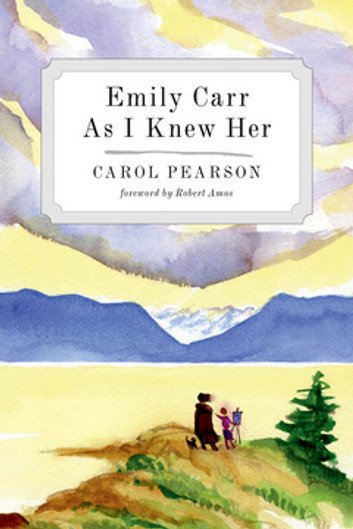
Description
Emily Carr As I Knew Her: An Intimate Portrait of Canada’s Legendary Artist
“Emily Carr As I Knew Her” by Carol Pearson offers a deeply personal glimpse into the life of Canada’s most celebrated artist. This memoir presents Emily Carr through the eyes of someone who knew her intimately. Moreover, Pearson’s firsthand account reveals the woman behind the iconic paintings and public persona. The book provides insights that traditional biographies simply cannot capture through research alone.
Carol Pearson knew Emily Carr during the artist’s later years in Victoria, British Columbia. Their relationship gave Pearson unique access to Carr’s daily life, thoughts, and creative process. Furthermore, this proximity allowed Pearson to observe the artist’s personality in unguarded moments. “Emily Carr As I Knew Her” transforms historical distance into immediate, living memory.
Carol Pearson: The Author Behind the Memoir
Carol Pearson was more than just an observer of Emily Carr’s life. She developed a genuine friendship with the aging artist during Carr’s final years. Additionally, Pearson served as a companion and helper to Carr when health issues limited her independence. This close relationship provided Pearson with extraordinary insights into Carr’s character and daily existence.
Pearson’s role in Carr’s life gave her access few others enjoyed during that period. She witnessed Carr’s struggles, triumphs, and everyday routines with remarkable clarity and understanding. Moreover, Pearson understood the responsibility of preserving these memories for future generations. Her memoir stands as a testament to their friendship and Carr’s enduring legacy.
The author writes with affection but also honesty about her famous friend’s complexities. Pearson doesn’t idealize Carr but presents her as a fully human, multifaceted individual. Furthermore, her narrative style makes readers feel present in Carr’s world and daily life. This authenticity distinguishes “Emily Carr As I Knew Her” from more distant biographical accounts.
Emily Carr: Canada’s Pioneering Artistic Voice
Emily Carr revolutionized Canadian art through her bold, expressive paintings of West Coast landscapes. She captured the spirit of British Columbia’s forests and Indigenous villages with unprecedented power. Moreover, Carr developed a distinctive style that merged European modernism with deeply Canadian subjects. Her work helped define what Canadian art could be and represent.
Carr faced significant challenges as a female artist in early twentieth-century Canada. Society expected women to pursue domestic roles rather than professional artistic careers. However, Carr refused to abandon her calling despite social pressure and financial hardship. Her determination paved the way for future generations of Canadian women artists.
Her artistic journey took her from Victoria to England, France, and back to Canada. Carr studied European modernist techniques but applied them to uniquely Canadian landscapes and themes. Additionally, she developed deep respect for Indigenous cultures and their artistic traditions. This combination created paintings that were both modern and rooted in place.
What Makes Emily Carr As I Knew Her Unique
“Emily Carr As I Knew Her” differs fundamentally from academic biographies and art historical analyses. Pearson writes from lived experience rather than archival research or critical distance. Moreover, her memoir captures Carr’s voice, mannerisms, and personality in vivid, immediate detail. Readers encounter Emily Carr as a living person rather than a historical figure.
The book reveals aspects of Carr’s character that formal biographies often miss or minimize. Pearson describes Carr’s humor, her frustrations, her kindnesses, and her occasional difficult moments. Furthermore, the memoir shows how Carr lived day-to-day during her later years. These intimate details create a three-dimensional portrait of the artist as a complete person.
Key insights readers gain from this personal account include:
- Emily Carr’s daily routines and creative habits
- Her relationships with animals, especially her beloved dogs and monkey
- Her struggles with health issues and aging
- Her thoughts about her own work and artistic legacy
- Her interactions with friends, neighbors, and the Victoria community
- Her spiritual beliefs and connection to nature
- Her sense of humor and capacity for joy despite hardships
Pearson’s firsthand observations provide context that enriches understanding of Carr’s later paintings. The memoir helps readers see connections between Carr’s life experiences and her artistic output. Additionally, it reveals the person behind the increasingly recognized and celebrated artwork.
Emily Carr’s Personality and Character
“Emily Carr As I Knew Her” portrays Carr as a complex, sometimes contradictory individual. She could be warm and generous but also stubborn and demanding at times. Moreover, Carr possessed fierce independence that sometimes isolated her from potential supporters and friends. Pearson presents these contradictions honestly without diminishing Carr’s achievements or character.
Carr maintained strong opinions about art, society, and proper behavior throughout her life. She didn’t suffer fools gladly and spoke her mind regardless of social consequences. However, she also showed deep compassion for animals and genuine kindness to those she trusted. This combination made her both challenging and deeply rewarding as a friend.
The artist’s relationship with nature profoundly shaped her personality and worldview. Carr found spiritual renewal and artistic inspiration in British Columbia’s forests and coastlines. Furthermore, she believed nature held truths that human society often obscured or ignored. This conviction drove both her art and her approach to living authentically.
The Historical Context of Carr’s Life
Emily Carr lived through tremendous social and artistic changes in Canadian history. She was born in Victorian-era Victoria and lived into the mid-twentieth century. Moreover, she witnessed Canada’s evolution from colonial outpost to independent nation with distinct culture. Her life and work reflected these broader historical transformations in meaningful ways.
Carr worked during a period when Canadian art was finding its own voice. Earlier Canadian artists often imitated European styles without adapting them to Canadian subjects. However, Carr and her contemporaries sought to create authentically Canadian artistic expressions. This movement helped establish Canada’s cultural identity separate from Britain and Europe.
The artist also lived through both World Wars and the Great Depression’s economic devastation. These events affected her personally and shaped the context in which she worked. Additionally, changing attitudes toward Indigenous peoples influenced how her paintings were received and interpreted. Understanding this context enriches appreciation of her artistic choices and subject matter.
Carr’s Journey as Artist and Woman
“Emily Carr As I Knew Her” illuminates Carr’s struggles to balance artistic ambition with practical survival. She spent years running a boarding house to support herself when paintings didn’t sell. Moreover, she endured long periods when the art world ignored or dismissed her work. These challenges tested her commitment but ultimately strengthened her artistic vision and resolve.
Carr experienced a career renaissance in her fifties when Eastern Canadian artists discovered her work. This late recognition brought validation but also complicated feelings about lost time and opportunities. Furthermore, health problems increasingly limited her ability to paint during her final decades. Pearson witnessed how Carr navigated these challenges with courage and continued creative determination.
The memoir shows how Carr maintained her artistic identity despite society’s expectations for women. She never married and prioritized her art over conventional domestic roles throughout her life. Additionally, she refused to compromise her artistic vision to make her work more commercially appealing. This integrity cost her financially but preserved her artistic authenticity and eventual legacy.
The Value of Personal Testimony
“Emily Carr As I Knew Her” preserves memories that would otherwise have been lost to history. Pearson’s firsthand account captures details no researcher could reconstruct from documents or artifacts. Moreover, her memoir provides emotional truth alongside factual information about Carr’s later years. This combination creates understanding that purely academic approaches cannot achieve alone.
The book serves as a bridge between Emily Carr’s time and contemporary readers. Pearson’s voice makes the past feel immediate and accessible rather than distant. Furthermore, her affection for Carr invites readers to connect emotionally with the artist. This personal connection enhances appreciation for Carr’s art and life story significantly.
Personal memoirs like this one humanize historical figures who might otherwise seem remote. Readers discover that Emily Carr faced struggles, doubts, and joys like anyone else. Additionally, they see how extraordinary achievement emerges from ordinary human experience and determination. This perspective makes Carr’s accomplishments both more impressive and more relatable simultaneously.
Emily Carr’s Enduring Legacy
Emily Carr’s influence on Canadian art and culture continues growing decades after her death. Her paintings hang in major museums and inspire contemporary artists across Canada. Moreover, her life story encourages artists, especially women, to pursue their visions despite obstacles. Carr demonstrated that authentic artistic voice matters more than immediate commercial success or recognition.
“Emily Carr As I Knew Her” contributes to preserving and understanding Carr’s legacy for future generations. Pearson’s memoir ensures that Carr remains a living presence rather than merely a historical name. Furthermore, the book helps new audiences discover and appreciate Carr’s contributions to Canadian culture. Each generation can find fresh relevance in Carr’s art and life example.
Conclusion: A Portrait Worth Discovering
“Emily Carr As I Knew Her” offers readers an invaluable window into a remarkable artist’s life. Carol Pearson’s intimate memoir brings Emily Carr to life with warmth, honesty, and deep affection. Moreover, the book provides insights that enrich understanding of Carr’s art and historical significance. Anyone interested in Canadian art, women’s history, or artistic biography will find tremendous value here.
This personal account reminds us that great artists are also complex human beings. Pearson shows us Emily Carr’s struggles, joys, and daily realities with touching authenticity. Furthermore, she preserves memories that help us understand how Carr’s life shaped her artistic vision. The memoir stands as both tribute to friendship and important historical document.
“Emily Carr As I Knew Her” ensures that future generations can know Emily Carr as a person, not just a name. Pearson’s gift to readers is this intimate, honest, and loving portrait of Canada’s greatest artist.



Reviews
There are no reviews yet.