

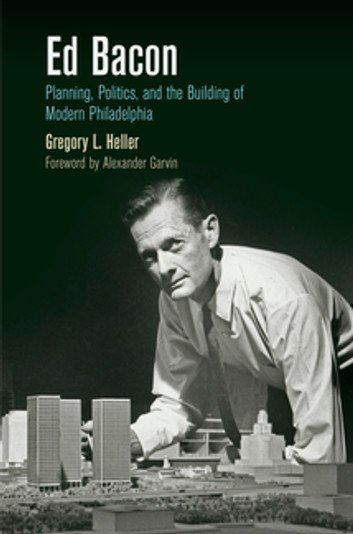
Description
Ed Bacon: The Visionary Who Transformed Philadelphia’s Urban Landscape
Ed Bacon’s Revolutionary Impact on Philadelphia
Ed Bacon stands as one of America’s most influential urban planners. From 1949 to 1970, he served as Philadelphia’s executive director of the City Planning Commission. Moreover, his ambitious vision reshaped the city’s physical and social fabric. Ed Bacon championed modernist planning principles that prioritized open spaces, pedestrian movement, and architectural harmony.
Gregory L. Heller and Alexander Garvin explore his complex legacy in their comprehensive book. Furthermore, they examine how Ed Bacon navigated the turbulent waters of mid-century urban renewal.
The Making of a Planning Director
Bacon’s journey to Philadelphia’s planning helm began with his architectural training. He studied at Cornell University and later at the Cranbrook Academy of Art. Additionally, he spent time in China, which influenced his design philosophy. These experiences shaped his belief in comprehensive, large-scale urban interventions. Therefore, when he assumed leadership in Philadelphia, he brought bold ideas. His appointment marked a turning point for the city’s development trajectory.
Penn Center: Bacon’s Signature Achievement
Penn Center represents Bacon’s most celebrated accomplishment. This massive project replaced the elevated “Chinese Wall” railroad tracks with modern office towers. Moreover, it created a new commercial district in the heart of Philadelphia. The development connected City Hall to the Schuylkill River with open plazas. Consequently, Penn Center became a model for urban renewal nationwide. However, critics later questioned whether it truly served pedestrians effectively.
Society Hill: Historic Preservation Meets Urban Renewal
Society Hill showcased Bacon’s approach to historic neighborhood revitalization. He combined preservation of colonial-era buildings with new residential towers. Furthermore, the project attracted middle-class residents back to the city center. Bacon believed mixing old and new architecture created dynamic urban environments. The Society Hill Towers, designed by I.M. Pei, became iconic landmarks. Additionally, the project demonstrated how historic districts could be economically viable.
Major Planning Projects and Initiatives
Bacon’s tenure produced numerous transformative projects across Philadelphia:
- Market East redevelopment connecting downtown to residential neighborhoods
- Independence Mall creation near Independence Hall
- Schuylkill River waterfront improvements and parkway development
- Washington Square revitalization in the historic district
- Food Distribution Center relocation to improve traffic flow
Each initiative reflected his comprehensive planning philosophy. Moreover, these projects aimed to make Philadelphia competitive with other major cities.
The Planning Philosophy Behind the Vision
Bacon’s approach emphasized visual order and monumental civic spaces. He drew inspiration from European cities, particularly Rome and Paris. Therefore, he advocated for grand boulevards, plazas, and carefully composed vistas. His philosophy prioritized the pedestrian experience over automobile convenience. However, this sometimes conflicted with emerging suburban automobile culture. Bacon believed cities needed strong visual frameworks to guide development.
Political Challenges and Power Dynamics
Navigating Philadelphia’s complex political landscape proved challenging for Bacon. He worked under multiple mayors with varying levels of support. Moreover, he faced opposition from neighborhood groups and business interests. The city’s political machine sometimes resisted his ambitious plans. Consequently, Bacon developed skills in coalition-building and compromise. His relationship with Mayor Richardson Dilworth was particularly productive. However, later administrations proved less supportive of his vision.
The Jane Jacobs Controversy
Bacon’s relationship with critic Jane Jacobs represents a pivotal urban planning debate. Jacobs famously opposed large-scale urban renewal projects like Bacon championed. Furthermore, she advocated for organic, neighborhood-based development instead. Their philosophical differences highlighted tensions within the planning profession. Jacobs criticized projects that displaced existing communities. However, Bacon believed comprehensive planning was necessary for urban revival. This debate continues to influence urban planning discussions today.
Controversies and Criticisms
Despite his achievements, Bacon faced significant criticism throughout his career. Urban renewal projects often displaced low-income and minority residents. Moreover, some developments prioritized aesthetics over community needs. Critics argued his modernist approach destroyed neighborhood fabric. The demolition of historic buildings for new construction sparked controversy. Additionally, some projects failed to achieve their intended economic impacts. These criticisms grew louder as the 1960s progressed.
Community Displacement and Social Justice
The social costs of Bacon’s projects remain contentious issues. Thousands of residents were relocated to accommodate new developments. Furthermore, African American neighborhoods bore disproportionate burdens of displacement. The promise of improved housing often went unfulfilled for displaced families. Consequently, urban renewal earned the nickname “Negro removal” among critics. Bacon struggled to balance his vision with social equity concerns. This tension reflects broader failures of mid-century urban policy.
Architectural Legacy and Design Principles
Bacon’s influence extended beyond individual projects to design philosophy. He promoted collaboration between planners, architects, and civic leaders. Moreover, he emphasized the importance of three-dimensional urban design. His concept of “design idea” guided comprehensive planning efforts. Bacon believed cities should be experienced as coherent visual compositions. Therefore, he advocated for height limits and architectural guidelines. His approach influenced generations of urban designers and planners.
The Authors’ Perspectives: Heller and Garvin
Gregory L. Heller and Alexander Garvin bring complementary expertise to this biography. Heller specializes in urban history and planning history research. Garvin, a renowned planner and architect, offers practical insights. Together, they provide balanced analysis of Bacon’s complex legacy. Moreover, they contextualize his work within broader planning movements. The authors examine both achievements and failures with scholarly rigor. Their collaboration enriches understanding of mid-century urban development.
The City in the Twenty-First Century Series
This book appears in the prestigious City in the Twenty-First Century series. The series examines how historical urban development shapes contemporary cities. Furthermore, it explores lessons from past planning efforts for current challenges. Each volume connects historical analysis to present-day urban issues. Therefore, Bacon’s story offers insights for modern planners and policymakers. The series emphasizes the continuing relevance of urban history.
Bacon’s Influence on Modern Philadelphia
Philadelphia’s contemporary landscape still reflects Bacon’s vision in many ways. Penn Center remains a vital commercial district despite later modifications. Moreover, Society Hill continues as a desirable residential neighborhood. His emphasis on public spaces influenced subsequent park development. However, the city has also moved beyond his modernist approach. Current planning embraces community participation and incremental development. Nevertheless, Bacon’s projects form the foundation of modern Philadelphia’s identity.
Lessons for Twenty-First Century Urban Planning
Bacon’s career offers crucial lessons for contemporary urban planners. His comprehensive approach demonstrates the power of long-term vision. Moreover, his failures highlight the importance of community engagement. Modern planners must balance aesthetic goals with social equity concerns. Additionally, they should learn from displacement caused by urban renewal. Bacon’s story illustrates both possibilities and pitfalls of ambitious planning. Therefore, studying his work remains essential for planning education.
Relevance to Current Urban Challenges
Today’s cities face challenges that echo Bacon’s era in many ways. Urban cores compete with suburbs for residents and businesses. Moreover, cities struggle to balance development with affordability. Infrastructure requires massive investment and comprehensive planning. However, contemporary approaches emphasize inclusion and sustainability more than Bacon did. His emphasis on public space remains relevant for livable cities. Consequently, planners can adapt his strengths while avoiding his mistakes.
The Book’s Contribution to Planning Literature
Heller and Garvin’s work fills an important gap in planning scholarship. Few comprehensive biographies examine individual planners’ careers in such depth. Furthermore, the book connects personal biography to broader urban trends.
It provides detailed analysis of specific projects and their outcomes. Moreover, the authors use extensive archival research and interviews. This thorough approach makes the book valuable for scholars and practitioners. Additionally, it serves as an accessible introduction for general readers.
Understanding Mid-Century Urban Renewal
The book illuminates the urban renewal era’s complexity and contradictions. This period transformed American cities through massive federal investment. However, it also caused unprecedented displacement and community destruction. Bacon’s career exemplifies both the ambitions and failures of this era. Therefore, understanding his work helps explain contemporary urban landscapes. The book contextualizes urban renewal within postwar economic and social changes. Moreover, it examines how planning ideology shaped physical outcomes.
Conclusion: Ed Bacon’s Enduring Legacy
Ed Bacon remains a towering figure in American urban planning history. His vision transformed Philadelphia from a declining industrial city into a modern metropolis. Moreover, his projects demonstrated the potential of comprehensive planning.
However, his legacy also includes the costs of top-down urban intervention. The displacement and community disruption caused by his projects cannot be ignored. Nevertheless, his emphasis on design quality and public space offers valuable lessons. Gregory L. Heller and Alexander Garvin’s thorough examination helps contemporary planners learn from both his successes and failures.
Furthermore, their book demonstrates how individual leaders shape urban development trajectories. As cities face twenty-first century challenges, Bacon’s story remains instructive. His career illustrates the power of vision, the necessity of political skill, and the importance of balancing ambition with community needs. Therefore, this book serves as essential reading for anyone interested in urban planning, Philadelphia history, or the ongoing challenge of creating livable, equitable cities.





Reviews
There are no reviews yet.