

Description
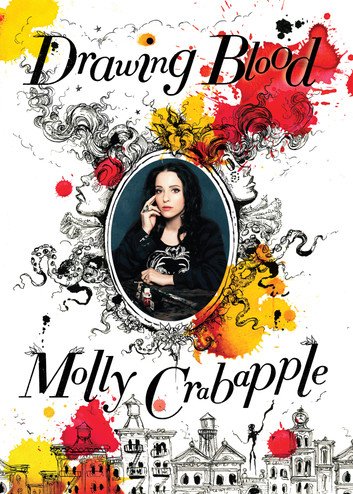
Drawing Blood by Molly Crabapple: A Comprehensive Synopsis
Introduction: An Artist’s Unflinching Memoir
“Drawing Blood” is Molly Crabapple’s memoir about art as survival and rebellion, tracing her rise from poverty to artistic prominence. The book shows how she transformed her sketchbook into a force for social change. Spanning post-9/11 America and the Occupy Wall Street movement, it reveals her path through a turbulent world, using creativity as her primary tool.
From Queens to Reinvention: Crabapple’s Early Years
Born Jennifer Caban in Queens, New York, Crabapple grew up feeling trapped and powerless. She hated childhood because she felt helpless. At age twelve, she discovered punk rock, sparking her rebellious spirit and artistic vision. Her family moved to Cedarhurst on Long Island, but she never felt like she belonged there.
Crabapple was determined and rebellious from a young age, rejecting convention and forging a new persona as “Molly Crabapple.” This decision marked the start of her self-driven journey in art and identity.
Surviving Through Art: The Struggle Years
To fund her art education, Crabapple worked as a naked model and took unconventional jobs. Though poverty shaped her early adulthood, she continued creating, relying on her sketchbook as her lifeline.
She traveled the world while struggling financially, documenting her experiences through art. These shaped her unique voice, and her work began to reflect the social injustices she witnessed. Each drawing captured raw reality.
Drawing Blood: Art Meets Activism
The memoir reveals how Crabapple fused art and activism, using illustration for social commentary and change. She covered events like Occupy Wall Street, Guantanamo Bay, and Syrian refugees, giving visibility to marginalized voices.
Crabapple’s work appeared in venues such as MOMA’s permanent collection, and major publications featured her illustrations and writing. She proved art could be both beautiful and politically powerful, showing activism takes many forms. Her sketchbook became her weapon against injustice.
Key Themes in Drawing Blood
The memoir explores several interconnected themes that define Crabapple’s journey:
- Survival and resilience in the face of poverty and uncertainty
- Artistic reinvention and the power of choosing your own identity
- Social justice and using creativity to challenge oppressive systems
- Female empowerment through unconventional career choices and self-determination
- The intersection of art and activism in contemporary America
The Writing Style: Fresh and Visceral
Crabapple’s prose is immediate, visceral, and personal, blending an accessible tone with raw honesty. Even tough subjects, such as sexual assault, are presented so that readers connect fully to her perspective.
The book features Crabapple’s own irreverent illustrations, which enhance the written narrative and provide insight into her artistic evolution. This combination creates a unique reading experience, making “Drawing Blood” both a memoir and an art book.
From 9/11 to Occupy: A Turbulent Era
The memoir covers September 11, 2001, to Occupy Wall Street—a period of major upheaval in America and the rise of new activism. Crabapple placed herself at the heart of these movements, documenting them through her distinctive lens.
She witnessed how terrorism, war, and economic collapse shaped her generation, and how young people responded with creativity and resistance. Her drawings captured the era’s anger, hope, and determination, making the book both a personal and historical document.
The Artist as Witness
Crabapple traveled to conflict zones and marginalized communities worldwide, drawing what she saw without filters. She brought attention to stories overlooked by mainstream media—her work from Guantanamo Bay highlighted detained prisoners, while her Syrian refugee portraits humanized a distant crisis.
She believes artists have a responsibility to bear witness and that drawing can be a form of journalism. Her illustrations often appeared alongside her reportage, making her both an artist and activist journalist—a dual role that defines her contribution.
Breaking Boundaries: Unconventional Choices
The memoir celebrates unconventional career paths. Crabapple worked as a nude model without shame or apology and embraced sex work as legitimate labor. She rejected societal expectations and carved out space for herself on her own terms.
Her story challenges traditional narratives about artistic success. She didn’t follow the typical art school-to-gallery path; instead, she built her career through hustle, talent, determination, social media, and self-promotion. She represents a new generation of independent artists.
The Power of Reinvention
Central to “Drawing Blood” is the theme of self-creation. Crabapple literally changed her name and built a new identity. Moreover, she shows that anyone can reinvent themselves through determination. Her transformation from Jennifer Caban to Molly Crabapple symbolizes personal liberation. Additionally, it demonstrates the power of choosing your own narrative.
She argues that we’re not bound by origins or circumstances and proves that creativity can be a path to freedom. Her story inspires readers to reject limits—the memoir serves as a guide to personal transformation and resonates with those seeking change.
Critical Reception and Impact
“Drawing Blood” received critical acclaim for its honest narrative voice. Critics praised Crabapple’s blend of personal and political. The book reached audiences beyond typical memoir readers and appealed to artists, activists, and young people seeking inspiration.
The memoir established Crabapple as an important cultural voice and showed that illustrated memoirs could tackle serious subjects. Her success paved the way for other artist-activists, influencing both literary and artistic communities.
Conclusion: A Testament to Creative Resistance
“Drawing Blood” shows how art transforms lives. Crabapple’s journey from poverty to influence demonstrates that creative activism truly changes the world, underscoring the power of an individual armed with a sketchbook.
The book is a coming-of-age story, an artistic and political manifesto, and a testament to reinvention and resistance. Crabapple’s illustrated memoir proves art matters outside theory, making “Drawing Blood” essential for anyone drawn to art, activism, or personal storytelling.
Crabapple’s story urges everyone to forge their own path. It proves creativity is survival and resistance, and inspires readers to use their talents for social change, extending her influence beyond her own work.



Reviews
There are no reviews yet.