

Description
A Charlie Brown Religion: Charles M. Schulz’s Spiritual Life and Comic Legacy
Introduction: Charles M. Schulz and His Spiritual Journey
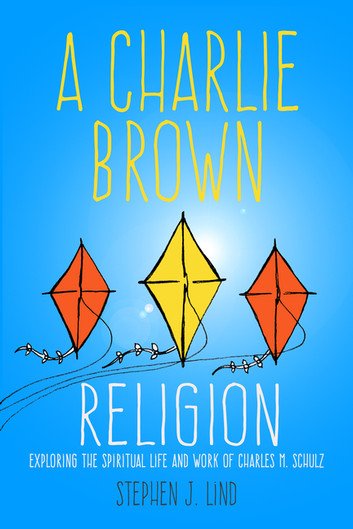
A Charlie Brown Religion: Exploring the Spiritual Life and Work of Charles M. Schulz by Stephen J. Lind examines faith in comics. Charles M. Schulz created the beloved Peanuts comic strip, which ran for 50 years. Furthermore, he boldly incorporated religious themes into mainstream popular culture through his work. Therefore, this spiritual biography reveals how faith shaped one of America’s most influential cartoonists.
Stephen J. Lind offers readers a comprehensive look at Charles M. Schulz’s spiritual life. The book appears in the Great Comics Artists Series from the University Press of Mississippi. Moreover, it explores how Schulz navigated faith, doubt, and belief throughout his career. Consequently, readers discover the religious foundation behind Charlie Brown, Snoopy, and the entire Peanuts gang.
Charles M. Schulz taught Sunday school and studied theology throughout his lifetime. He incorporated over 560 religious or spiritual references into nearly 17,800 Peanuts newspaper strips. Additionally, he created “A Charlie Brown Christmas,” which features Linus reciting Scripture on national television. Therefore, Schulz demonstrated remarkable courage in bringing faith into secular entertainment media.
This spiritual biography examines both Schulz’s devotion and his crisis of faith. Lind investigates how the cartoonist’s beliefs evolved over decades of creative work. Furthermore, the book analyzes how religious themes function within the Peanuts comic strip itself. Thus, readers gain insight into both the man and his spiritually infused artistic legacy.
Charles M. Schulz: Creator of Peanuts and Sunday School Teacher
Charles M. Schulz, affectionately known as “Sparky,” created Peanuts in 1950. The comic strip became one of the most successful and beloved in history. Moreover, it reached millions of readers daily through worldwide newspaper syndication. Consequently, Schulz influenced popular culture for half a century through his simple yet profound storytelling.
Before achieving fame, Charles M. Schulz taught Sunday school at his local church. He studied the Bible extensively and engaged deeply with theological questions throughout his life. Additionally, he attended church regularly and participated actively in his faith community. Therefore, religion was not merely a theme in his work but central to his identity.
The cartoonist’s faith background profoundly influenced his approach to the Peanuts characters and storylines. He created characters who asked big questions about life, meaning, and spirituality. Furthermore, he wasn’t afraid to tackle theological concepts in a medium primarily aimed at entertainment. Thus, Charles M. Schulz pioneered a unique blend of humor and spiritual reflection in comics.
His Sunday school teaching experience informed how he presented religious ideas to broad audiences. He understood how to communicate complex spiritual concepts in accessible, relatable ways. Moreover, he recognized that children and adults alike grappled with questions of faith and doubt. Consequently, his characters resonated with readers across generations and belief systems.
Religious and Spiritual Themes Throughout Peanuts
Charles M. Schulz incorporated religious themes into Peanuts with remarkable frequency and boldness. More than 560 of his nearly 17,800 strips contain religious, spiritual, or theological references. Furthermore, these weren’t merely superficial mentions but substantive explorations of faith and belief. Therefore, Peanuts became a vehicle for spiritual conversation in American popular culture.
The comic strip regularly addressed prayer, doubt, theology, church attendance, and biblical stories. Characters discussed God, questioned religious practices, and explored spiritual meaning in everyday situations. Additionally, Schulz presented these themes with humor and humanity rather than preachiness. Thus, readers engaged with spiritual content without feeling lectured or manipulated.
Linus van Pelt often served as the theological voice within the Peanuts universe. He quoted Scripture, discussed religious concepts, and expressed faith with childlike sincerity. Moreover, his famous blanket symbolized the human need for comfort and security. Consequently, Linus became one of the most spiritually significant characters in comic strip history.
Charlie Brown’s existential struggles reflected deeper questions about meaning, purpose, and faith. His constant failures and persistent hope mirrored the human spiritual journey. Furthermore, his vulnerability made him an ideal character for exploring doubt and belief. Therefore, Charles M. Schulz used Charlie Brown to authentically examine the complexities of faith.
“A Charlie Brown Christmas” and Bold Faith in Media
“A Charlie Brown Christmas” represents Charles M. Schulz’s most famous faith-driven creative achievement. The 1965 television special features Linus reciting the Nativity story from the Gospel of Luke. Moreover, network executives initially opposed including this explicit biblical content in the program. However, Schulz insisted, asking, “If we don’t do it, who will?”
The special’s climactic scene shows Linus standing alone on stage reciting Scripture. He explains the true meaning of Christmas through the biblical account of Jesus’s birth. Additionally, this two-minute sequence became “the most magical two minutes in all of TV animation.” Therefore, Charles M. Schulz successfully brought the Gospel to millions through mainstream entertainment.
Network executives worried that religious content would alienate viewers and hurt ratings. They suggested cutting Linus’s biblical recitation to make the special more commercially viable. Furthermore, they doubted that audiences wanted explicit Christianity in their holiday entertainment. Yet Schulz remained firm in his conviction that the special needed spiritual substance.
The special’s enormous success completely vindicated Charles M. Schulz’s faith-driven creative vision. “A Charlie Brown Christmas” became a beloved annual tradition watched by millions. Moreover, it demonstrated that audiences welcomed authentic spiritual content in popular media. Consequently, Schulz proved that faith and commercial success could coexist in entertainment.
Stephen J. Lind’s Spiritual Biography Approach
Stephen J. Lind provides readers with a comprehensive spiritual biography of Charles M. Schulz. He examines the cartoonist’s faith journey from childhood through his final years. Furthermore, Lind analyzes how Schulz’s beliefs influenced his creative work throughout five decades. Therefore, the book offers both personal biography and artistic analysis simultaneously.
Lind serves as assistant professor of business communication at Washington and Lee University. His academic background brings scholarly rigor to this examination of Schulz’s spiritual life. Additionally, his accessible writing style makes complex theological concepts understandable for general readers. Thus, the book succeeds as both an academic study and a popular biography.
The author explores how Charles M. Schulz navigated the tension between faith and doubt. He examines the cartoonist’s crisis of faith and its impact on his work. Moreover, Lind investigates how Schulz reconciled personal spiritual struggles with public religious expression. Consequently, readers see a complete, honest portrait of a complex spiritual journey.
Lind’s research includes careful analysis of Peanuts strips, interviews, and biographical materials. He documents patterns in the appearance of religious themes throughout Schulz’s fifty-year career. Furthermore, he contextualizes Schulz’s faith within broader American religious and cultural history. Therefore, the book provides both an intimate portrait and a historical perspective on this influential artist.
Charles M. Schulz’s Crisis of Faith and Spiritual Struggles
Charles M. Schulz experienced significant spiritual struggles despite his public religious expression. He grappled with doubt, questioned traditional beliefs, and wrestled with theological complexities. Moreover, his faith journey included periods of crisis that challenged his earlier certainties. Consequently, his spiritual life was far more complex than simple Sunday school teacher narratives suggest.
The cartoonist’s crisis of faith became widely publicized and discussed among fans and critics. Some labeled him a fundamentalist Christian, while others saw him as spiritually ambiguous. Additionally, Schulz himself made statements over time that seemed contradictory regarding his beliefs. Therefore, understanding his true spiritual position requires careful examination of his life and work.
Lind’s book addresses these spiritual struggles with sensitivity and scholarly thoroughness. He doesn’t present Charles M. Schulz as a simple faith hero or religious hypocrite. Furthermore, he acknowledges the genuine complexity of the cartoonist’s spiritual journey. Thus, readers encounter an honest portrayal of faith that includes both devotion and doubt.
The crisis of faith actually enriched Schulz’s ability to create authentic spiritual content. His personal struggles made his characters’ theological questions more genuine and relatable. Moreover, his willingness to express doubt made his expressions of faith more powerful. Consequently, Charles M. Schulz’s spiritual complexity became an artistic strength rather than a weakness.
How Schulz Incorporated Faith into Popular Culture
Charles M. Schulz pioneered the integration of explicit religious content into mainstream entertainment. He demonstrated that spiritual themes could coexist with commercial success in popular media. Furthermore, he showed that audiences welcomed authentic expressions of faith in their daily entertainment. Therefore, Schulz opened doors for other creators to explore religious themes in comics and animation.
The cartoonist’s approach balanced accessibility with theological substance throughout his work. He never dumbed down spiritual concepts but presented them through relatable characters and situations. Additionally, he used humor to make religious themes approachable rather than intimidating. Thus, Charles M. Schulz made theology accessible to millions who might never read religious texts.
His success challenged the assumption that religion and popular culture must remain separate. Peanuts proved that spiritual content could attract rather than repel mainstream audiences. Moreover, the comic strip’s popularity demonstrated widespread hunger for meaningful spiritual reflection. Consequently, Schulz’s work influenced how American culture approached religion in entertainment media.
The cartoonist’s influence extended beyond comics to television, film, and broader cultural conversations. “A Charlie Brown Christmas” particularly impacted how holiday specials could incorporate religious content. Furthermore, his example encouraged other artists to explore faith themes in their creative work. Therefore, Charles M. Schulz’s legacy includes both his own creations and the doors he opened for others.
Major Spiritual Themes and Contributions
Charles M. Schulz’s spiritual contributions to American culture deserve recognition and celebration:
- Over 560 religious references in nearly 17,800 Peanuts comic strips
- Sunday school teaching that informed his approach to spiritual storytelling
- “A Charlie Brown Christmas” featuring explicit Scripture on national television
- Theological exploration through characters like Linus and Charlie Brown
- Prayer and faith are depicted regularly in mainstream entertainment
- Doubt and belief presented honestly and authentically
- Biblical literacy promoted through accessible, humorous storytelling
- Spiritual conversation has been a part of popular culture for five decades.
These contributions demonstrate how one artist can influence culture’s spiritual landscape. Furthermore, they reveal Charles M. Schulz’s courage in maintaining faith themes despite commercial pressures. Therefore, his legacy extends far beyond entertainment into spiritual and cultural impact.
Controversy and Criticism of Schulz’s Religious Expression
Charles M. Schulz faced criticism from multiple directions regarding his religious expression. Some Christians felt he didn’t go far enough in promoting orthodox theology. Conversely, secular critics argued that he inappropriately inserted religion into children’s entertainment. Additionally, his own evolving beliefs created confusion about his true spiritual position.
Conservative religious communities sometimes criticized Schulz for theological imprecision or liberal tendencies. They questioned whether his expressions of faith were sufficiently evangelical or doctrinally sound. Moreover, some felt his crisis of faith undermined his earlier religious witness. Therefore, the cartoonist couldn’t satisfy all religious expectations placed upon him.
Secular critics worried that Charles M. Schulz was proselytizing through popular entertainment. They objected to explicit biblical content in supposedly neutral comic strips and television specials. Furthermore, some argued that religious themes had no place in children’s media. Thus, Schulz navigated criticism from both religious and secular perspectives throughout his career.
Despite controversy, millions of readers and viewers appreciated Schulz’s spiritual honesty. His willingness to explore faith and doubt resonated with people’s real experiences. Moreover, his gentle approach to religious themes felt inviting rather than threatening. Consequently, Charles M. Schulz’s spiritual expression ultimately connected with audiences more than it alienated them.
Impact on Readers, Fans, and American Culture
Charles M. Schulz’s spiritual work profoundly impacted multiple generations of readers and viewers. Children encountered biblical stories and theological concepts through beloved characters they trusted. Furthermore, adults found their own spiritual questions reflected in Charlie Brown’s existential struggles. Therefore, Peanuts became a shared spiritual vocabulary for American culture.
The comic strip created space for spiritual conversation in secular settings. People could discuss faith, doubt, and meaning through references to Peanuts characters and storylines. Additionally, the strip’s humor made these conversations feel safe and accessible. Thus, Charles M. Schulz facilitated spiritual dialogue across diverse audiences and belief systems.
Many readers credit Peanuts with introducing them to religious concepts and biblical literacy. Linus’s Scripture quotations familiarized millions with biblical passages and Christian theology. Moreover, the strip’s treatment of prayer normalized spiritual practices for young readers. Consequently, Schulz’s work served an educational function alongside its entertainment value.
The cartoonist’s influence extended to how Americans think about faith in public life. He demonstrated that religious expression could be both authentic and widely appealing. Furthermore, he showed that spiritual content enhanced rather than diminished popular entertainment. Therefore, Charles M. Schulz permanently changed American culture’s relationship with religion in the media.
The Great Comics Artists Series Context
“A Charlie Brown Religion” appears in the Great Comics Artists Series from University Press of Mississippi. This series examines influential comic creators and their cultural contributions with scholarly rigor. Moreover, it places comic art within broader artistic, cultural, and historical contexts. Therefore, Lind’s book benefits from this established framework for serious comics scholarship.
The series recognizes comics as a legitimate art form worthy of academic study and analysis. It treats comic creators as significant artists whose work merits careful examination. Additionally, it explores how comics reflect and influence culture, politics, and social values. Thus, Charles M. Schulz receives the serious scholarly attention his work deserves.
Lind’s spiritual biography fits perfectly within the series’ mission to illuminate comics’ cultural significance. Religious themes in Peanuts represent an important but often overlooked aspect of comics history. Furthermore, Schulz’s faith-driven work influenced how subsequent creators approached spiritual content. Consequently, this book fills an important gap in comics scholarship and cultural history.
The Great Comics Artists Series makes academic comics scholarship accessible to general readers. Books in the series balance scholarly rigor with engaging, readable prose. Moreover, they appeal to both comics enthusiasts and academic researchers simultaneously. Therefore, “A Charlie Brown Religion” reaches diverse audiences interested in Schulz’s spiritual legacy.
Legacy of Charles M. Schulz’s Spiritual Work
Charles M. Schulz’s spiritual legacy extends far beyond his fifty-year career creating Peanuts. He demonstrated that faith could thrive in mainstream popular culture without compromise. Furthermore, he showed that spiritual authenticity resonated with audiences more than religious sanitization. Therefore, his example continues to influence how creators approach faith themes in entertainment.
The cartoonist’s willingness to explore doubt alongside belief created a more honest spiritual conversation. He didn’t present faith as simple or struggle-free but as complex and real. Moreover, he validated the spiritual questions that many people carry but rarely express. Consequently, Charles M. Schulz gave voice to authentic spiritual experience in popular media.
His work continues to reach new generations through reprints, television specials, and digital media. “A Charlie Brown Christmas” remains an annual tradition introducing children to the Nativity story. Additionally, Peanuts strips continue to appear in newspapers and on online platforms worldwide. Thus, Schulz’s spiritual influence persists decades after his death in 2000.
Stephen J. Lind’s “A Charlie Brown Religion” ensures that this spiritual legacy receives proper recognition. The book documents how Charles M. Schulz courageously integrated faith into popular culture. Moreover, it preserves his story for future generations of readers, scholars, and spiritual seekers. Therefore, this spiritual biography serves as both a historical record and a continuing inspiration.
Conclusion: Understanding Charles M. Schulz’s Faith Journey
A Charlie Brown Religion: Exploring the Spiritual Life and Work of Charles M. Schulz offers essential insights into an American cultural icon. Stephen J. Lind provides a comprehensive examination of how faith shaped Schulz’s life and creative work. Furthermore, the book reveals the courage required to maintain spiritual authenticity in commercial entertainment. Therefore, readers gain a deeper appreciation for both the man and his enduring legacy.
Charles M. Schulz created more than beloved characters and humorous situations in Peanuts. He built a spiritual vocabulary that helped millions explore faith, doubt, and meaning. Moreover, he demonstrated that popular culture could address profound theological questions with intelligence and heart. Consequently, his work transcends entertainment to achieve lasting cultural and spiritual significance.
This spiritual biography belongs on the shelves of Peanuts fans, comics scholars, and spiritual seekers alike. It illuminates how one artist’s faith journey influenced American culture for five decades. Additionally, it provides a model for understanding the intersection of creativity and spirituality. Therefore, “A Charlie Brown Religion” enriches our understanding of both Charles M. Schulz and faith in popular culture.
Read this book to discover the spiritual foundation behind Charlie Brown’s persistent hope. Learn how Charles M. Schulz navigated faith and doubt while creating America’s most beloved comic strip. Furthermore, explore how one artist courageously brought religious themes into mainstream entertainment. This remarkable cartoonist’s spiritual journey offers both historical insight and timeless inspiration for contemporary readers.





Reviews
There are no reviews yet.